


Pearl Necklace Buying Guide: 6 Quality Factors & What to Look For

Most people walk into pearl shopping knowing only that they want something that looks "classic and elegant." That's fine — but without understanding the 6 quality factors, it's easy to overspend on the wrong things or underspend and end up with a piece that dulls within a year. This guide explains exactly what separates a $30 pearl necklace from a $3,000 one — and how to find the best value at any budget.
Shop pearl jewelry: AJLuxe Pearl Jewelry Collection — curated freshwater pearl pieces in sterling silver settings.
Part of our Complete Pearl Jewelry Guide cluster.
The 6 Pearl Quality Factors
The pearl industry grades pearls on six factors. Understanding these is the difference between buying a pearl that glows with inner light and one that looks like a painted bead within two years.
| Factor | What It Means | What to Look For | Weight in Price |
|---|---|---|---|
| Luster | The intensity and sharpness of light reflected from the pearl's surface — the "mirror" quality | Look for a sharp reflection you can almost see yourself in; look for the inner "orient" glow. Avoid chalky or dull surfaces. | Very high — the single biggest driver of perceived quality |
| Surface | The presence of blemishes: pits, chips, scratches, wrinkles, or discoloration on the nacre | AAA = fewer than 5% surface blemishes; AA = under 10%; A = under 25%. Some minor surface variation is normal and authentic. | High — AAA vs. A can double the price |
| Shape | How spherical the pearl is: round, near-round, oval, button, baroque, keshi | Round commands the highest premium. Near-round is barely detectable to the eye. Baroque shapes are increasingly fashionable and often better value. | Medium to high — round adds a significant premium |
| Color | The pearl's body color (white, cream, pink, lavender) and overtone (secondary hue) | Color is entirely personal preference — there is no objectively "better" color. Match to skin tone: pink/lavender for cooler tones, cream/peach for warmer. | Low (for freshwater) to medium (for Akoya, where cream/white commands a slight premium) |
| Size | Diameter measured in millimeters — ranges from 2mm (tiny Akoya) to 20mm (large South Sea) | Every additional mm in diameter can increase price by ~50%. For everyday wear, 6–8mm is ideal. Larger is not always better. | Very high — exponential price impact as size increases |
| Matching | How uniform the pearls are across a strand: size, shape, color, and luster should all be consistent | Hold the necklace up in natural light and look for differences between pearls. Poorly matched strands show obvious variation in color and size. | Medium — poorly matched strands can reduce price significantly |
The most common mistake: Buyers focus on size and ignore luster. A 10mm pearl with poor luster looks dull and cheap. A 7mm pearl with exceptional luster looks alive and luxurious. When in doubt, prioritize luster over size.
What's the Difference Between a $50 and a $5,000 Pearl Necklace?
Here's the full breakdown by price tier — what you're actually getting at each level.
| Price Tier | Pearl Type | Luster | Surface Grade | Shape | Size | Setting |
|---|---|---|---|---|---|---|
| $30–75 | Freshwater | Good | A grade | Near-round | 5–7mm | Silver-tone or sterling |
| $75–200 | Freshwater (premium) | Excellent | AA grade | Near-round to round | 7–9mm | Sterling silver or gold-plated |
| $200–600 | Akoya (entry) | Very good | AA | Round | 6–7mm | Gold-plated or 10K gold |
| $600–2,000 | Akoya (fine) | Exceptional | AAA | Round | 7–8mm | 14K or 18K gold |
| $2,000+ | South Sea / Tahitian | Exceptional | AAA | Round | 10mm+ | Fine gold (18K) |
The honest truth: between $30 and $200, the jump in quality is dramatic and visible. Between $200 and $2,000, you're primarily paying for Akoya's higher roundness consistency and the prestige of the pearl type. Beyond $2,000, you're in genuine luxury/investment territory. Most people buying pearl jewelry for everyday wear or as a gift will find the $50–$200 freshwater range represents the best real-world value.

Pearl Necklace Types and Lengths
Pearl necklaces come in standardized lengths, each with a specific name and best use. Length is one of the most important practical decisions — it determines what necklines work, how formal it reads, and how it layers with other jewelry.
| Style | Length | Best For |
|---|---|---|
| Collar | 12–13 inches | High necklines, very formal or fashion-forward looks; sits flat against the throat |
| Choker | 14–16 inches | V-necks, scoop necks, wedding looks; sits at or just above the collarbone; modern and elegant |
| Princess | 17–19 inches | The most versatile length — works with almost all necklines; sits just below the collarbone; the classic pearl necklace length |
| Matinee | 20–24 inches | Business attire, higher necklines, casual layering; sits between collarbone and bust |
| Opera | 28–36 inches | Formal wear; can be worn single or doubled; suits open necklines and evening gowns |
| Rope | 37 inches+ | Dramatic fashion statements; can be knotted, doubled, or tripled; most versatile in terms of styling options |
For a first pearl necklace: Princess length (17–19 inches) is almost always the right call. It works with the widest range of outfits and occasions and is what most people picture when they think "pearl necklace."
Freshwater vs. Akoya Pearl Necklaces — The Real Difference
The single most common buying question: "Should I buy freshwater or Akoya pearls?" The short answer depends entirely on budget:
- Under $200: Buy freshwater. Akoya pearls in this price range have thin nacre layers over a large bead nucleus — they dull faster and look inferior to premium freshwater at the same price.
- $200–$400: Both are viable, but compare luster directly rather than trusting the pearl type label.
- Over $400: Akoya pearls justify their premium — the roundness consistency and luster ceiling are genuinely higher at this tier.
The "freshwater is inferior" reputation dates from the 1990s when Chinese freshwater pearls were lower quality. Modern premium freshwater pearls (sometimes labeled "Edison" or "AAAA" grade) now rival traditional Akoya. See our full comparison: Freshwater vs. Saltwater Pearls.
What to Look for When Buying Pearl Necklaces Online
Online pearl shopping has specific risks that in-person shopping doesn't. Here's what to check before you buy.
Photo Quality
Any legitimate pearl seller provides multiple angles, including close-up macro shots that show the surface texture. If you can only see a clean stock photo with no surface detail, you cannot evaluate luster or surface grade. Avoid those listings.
Grading Disclosure
Look for explicit AAA/AA/A grading. Be aware that grading is not standardized across the industry — a seller's "AAA" may be another's "AA." Ask retailers exactly what their grades mean. For nucleated pearls (Akoya, South Sea, Tahitian), reputable sellers will disclose nacre thickness — look for at least 0.35–0.4mm for durability.
Material Specificity
The listing should state exactly what the setting is made of: "925 sterling silver," "14K gold," "gold-plated brass," etc. Vague terms like "alloy" or "silver-tone" typically mean base metal, which can tarnish and cause skin reactions.
Return Policy
Legitimate pearl sellers offer 30+ day return policies. Pearl jewelry is difficult to evaluate in photos alone — a generous return window signals the seller is confident in their product and protects you if luster or color doesn't match expectations.
Language Red Flags
- "Pearl-like" or "simulated pearl" = not real pearls
- "Shell pearl" = manufactured shell bead, not a genuine cultured pearl
- "Majorica pearl" = brand name for high-quality imitation pearl (real nacre coating, but not a grown pearl)
- "Baroque freshwater" with no luster disclosure = possibly low-grade filler pearl
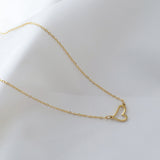
If you want to see the look in a real piece, AJLuxe's Freshwater Pearl Necklace for Women — 14K Gold Plated Chain, Natural Pearl Pendant is a genuine example in 925 sterling silver with 18K gold plating.
Frequently Asked Questions
What are the 6 pearl quality factors?
Luster (most important), surface (blemish level), shape (round vs. baroque), color (personal preference only), size (mm — exponential price impact), and matching (uniformity across a strand). A freshwater pearl necklace with excellent luster at $50–150 outperforms a dull Akoya at $500.
What is the difference between a $50 and a $5,000 pearl necklace?
Pearl type, size, luster, surface grade, and setting. A $50 necklace uses 5–7mm freshwater pearls with good luster in a silver-tone setting. A $5,000 necklace uses 7–8mm+ Akoya or South Sea pearls with exceptional luster, AAA surface grade, near-perfect roundness, and solid gold setting. The price jump between tiers is exponential, not linear.
What length pearl necklace should I buy?
Princess length (17–19 inches) is the most versatile — it works with almost all necklines and occasions. For something more casual, matinee (20–24 inches) works well layered. For formal wear, opera length (28–36 inches) or choker (14–16 inches) makes a statement.
What does AAA, AA, and A grade mean for pearls?
AAA means highest quality: mirror-like luster, fewer than 5% surface blemishes, near-perfect round shape. AA means very good luster, under 10% blemishes. A grade has visible blemishes (under 25%) and less uniform luster. Note: this grading is not standardized across the industry — always verify what a specific retailer's grades mean.
Are freshwater pearl necklaces better than Akoya?
Under $200, freshwater wins significantly — cheap Akoya has thin nacre and poor luster. Over $400–500, Akoya offers higher roundness consistency and a slightly higher luster ceiling. Modern premium freshwater pearls (Edison/AAAA grade) can rival Akoya quality at a lower price point.
How do I know if a pearl necklace is real when buying online?
Look for macro close-up photos showing surface texture, explicit grading disclosure (AAA/AA/A), clear material specification (sterling silver vs. base metal), and a 30+ day return policy. Avoid "simulated," "shell," or "pearl-like" in the description — those are not real pearls.
What size pearl necklace is best for everyday wear?
6–8mm pearls in a princess-length strand (17–19 inches) are ideal for everyday wear. A single pearl pendant (7–9mm) on a delicate chain is even more versatile for daily use.
What is orient in pearls?
Orient is the iridescent glow visible beneath the surface of high-quality pearls — a secondary color that seems to shift as the pearl moves. It's caused by light diffracting between the microscopic nacre layers. Orient indicates thick, high-quality nacre and is a sign of exceptional luster.
Is pearl color a quality factor?
No — pearl body color (white, cream, pink, lavender, peach) is personal preference, not a quality indicator. All colors are equivalent in quality if luster, surface, and shape are the same. The exception is matching: in a strand, color uniformity across all pearls is a quality factor.
What is a good pearl necklace under $100?
Look for freshwater cultured pearls (6–8mm, near-round, good to excellent luster) in a sterling silver setting, princess length (17–19 inches), with explicit labeling as cultured freshwater pearls. Avoid "simulated," "shell," or "pearl-like" listings — those are imitation pearls.
Do pearl necklaces need to be knotted between each pearl?
Quality pearl strands are knotted between each pearl to prevent pearls from rubbing together (which damages nacre) and to prevent scattering if the strand breaks. Look for individually knotted silk or nylon cord in any pearl strand you buy.
Final Thoughts
Buying a pearl necklace comes down to one core principle: prioritize luster above everything else. A freshwater pearl with exceptional luster will look more beautiful — and age more gracefully — than an Akoya with poor luster at three times the price. Once you've found a piece with strong luster, evaluate surface and matching, then choose your preferred size, shape, and color.
For most buyers, the $50–$200 freshwater range represents the sweet spot of quality, durability, and value. If your budget stretches to $400+, Akoya pearls begin to justify their premium with more consistent roundness and a slightly higher luster ceiling.
Shop pearl jewelry: AJLuxe Pearl Jewelry Collection — curated freshwater pearl pieces in sterling silver settings. Also explore our gemstone necklaces and crystal jewelry for pearl-adjacent styles.
Return to the Complete Pearl Jewelry Guide | Also see: Types of Pearls | Freshwater vs. Saltwater Pearls
Toutes les marques, noms de marque et noms de produits tiers sont la propriété de leurs détenteurs respectifs. AJLuxe n’est affilié à aucune marque tierce citée dans cet article, ni approuvé ou sponsorisé par celle-ci. Les noms de marque sont utilisés uniquement à des fins de comparaison factuelle, et les descriptions de matériaux reflètent les spécifications produit publiées par chaque marque au moment de la rédaction.
You Might Also Like
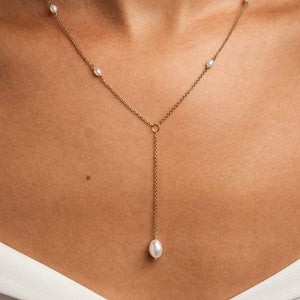

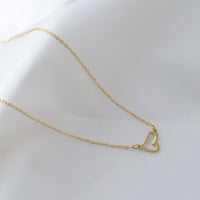
The piece they're describing → Collier Cœur Délicat pour Femme — Plaqué Or 18 Carats, Pendentif Cœur Minimaliste en Or
Personalize Yours


