


Yes — rose gold is generally hypoallergenic, but the honest answer depends on two things competitors gloss over: whether it's solid rose gold or plated, and what's underneath. Solid rose gold (10K–18K) is a gold-and-copper alloy with no nickel, so it's safe for the vast majority of nickel-allergic wearers. Rose gold plating is only as hypoallergenic as its base metal — rose gold plated over 925 sterling silver (nickel-free) is safe for sensitive skin, but rose gold plated over brass (common in fast fashion) frequently contains nickel and can trigger reactions once the thin gold layer wears through. The rare exception: a true copper allergy, which is uncommon but means even nickel-free rose gold can irritate you.
Is Rose Gold Jewelry Hypoallergenic and Safe for Sensitive Skin?
Yes — rose gold is generally hypoallergenic. Solid rose gold (10K–18K) is a gold-and-copper alloy that contains no nickel, the metal responsible for most jewelry allergies. Rose gold plated over 925 sterling silver or stainless steel is also nickel-free at every layer, even after the plating wears. The only real risks are rose gold plated over an undisclosed brass base, or the rare case of a true copper allergy.
If you've dealt with itchy, red, or blistered skin from cheap jewelry before, you're right to ask this question before buying anything rose gold. The pink hue that makes rose gold so popular comes from copper — and copper behaves very differently on skin than nickel does. But "rose gold" on a label can mean a $2,000 solid 18K ring or a $12 plated pair of earrings with an undisclosed base metal, and those two pieces have very different allergy profiles.
Here's the complete picture: what's actually in rose gold, why copper isn't the allergen nickel is, how plated rose gold differs from solid, and how to tell which one you're buying.
What Is Rose Gold, Actually?
Rose gold isn't a separate precious metal — it's a color achieved by alloying pure gold (which is naturally yellow) with copper. The more copper in the mix, the pinker or deeper red the gold appears. A typical breakdown:
- 18K rose gold: 75% pure gold, roughly 22.25% copper, 2.75% silver — a soft, warm pink. (See the GIA gem encyclopedia for more on gold alloy composition.)
- 14K rose gold: 58.3% pure gold, roughly 36.5% copper, 5.2% silver — a more pronounced rose/pink tone.
- 10K rose gold: 41.7% pure gold, up to ~55% copper — deeper, redder, and the least pure of common karats.
This is different from rose gold plated jewelry, where a thin layer of rose gold (often 14K or 18K) is electroplated onto a base metal core — commonly brass, sterling silver, or stainless steel. The plating gives the same pink color, but the allergy story is entirely about what's underneath.
Why Rose Gold Is Generally Hypoallergenic
The reason rose gold has a good reputation for sensitive skin comes down to one fact: standard rose gold alloys don't contain nickel. According to the American Academy of Dermatology, nickel is the most common cause of allergic contact dermatitis, affecting more than 18% of people in North America. Nickel allergy is why cheap earrings turn ears red and itchy within a day of wearing them.
Rose gold sidesteps this because its pink color comes from copper, not a nickel-white-gold bleaching agent. Copper allergy exists, but it is far rarer than nickel allergy — most dermatology sources treat it as an uncommon sensitivity rather than a widespread one. So for the large percentage of people whose "gold allergy" is actually a nickel allergy in disguise, rose gold is one of the safer color options in the gold family.
That said, "generally hypoallergenic" is not the same as "guaranteed safe for everyone." Two things change the equation: whether the piece is plated or solid, and whether you have the rarer copper sensitivity. We'll cover both below.
Rose Gold Plated vs. Solid: The Difference That Matters
This is the single biggest factor in whether your rose gold jewelry will bother your skin — and it's the part most articles on this topic skip entirely.
Solid rose gold (10K, 14K, or 18K throughout) has the same composition all the way through the metal. There's no "underneath" to worry about. If the alloy is nickel-free, the whole piece is nickel-free, permanently.
Rose gold plated jewelry is a thin layer of rose gold — sometimes only a few microns thick — bonded to a base metal core. The plating itself is typically nickel-free. But plating wears with friction, moisture, and time, and eventually the base metal underneath makes direct skin contact. What that base metal is determines what happens next:
- Rose gold plated over 925 sterling silver: When the plating wears, skin contacts nickel-free sterling silver. Safe for the vast majority of nickel-sensitive wearers, even after the color fades.
- Rose gold plated over stainless steel: Similarly safe — surgical-grade stainless steel is a standard hypoallergenic base.
- Rose gold plated over brass: This is the risky combination. Brass is a copper-zinc alloy that frequently includes nickel as a hardening agent, and cheap fast-fashion jewelry rarely discloses this. Once the plating rubs off — often within weeks of regular wear — nickel-sensitive skin can react.
The takeaway: the phrase "rose gold plated" on its own tells you nothing about allergy safety. "Rose gold plated over 925 sterling silver" tells you everything you need to know.
Rose Gold vs. Yellow Gold vs. White Gold vs. Sterling Silver
Here's how rose gold stacks up against the other common options for sensitive skin, at a glance:
| Metal Type | Nickel Content | Allergy Risk | Relative Cost | Durability |
|---|---|---|---|---|
| Rose gold (solid, 14–18K) | None (gold + copper alloy) | Low — copper allergy is rare | High | Very durable; copper adds hardness |
| Rose gold plated (over 925 silver) | None at either layer | Low — safe even after plating wears | Budget-friendly | Plating fades over months–years; base stays safe |
| Rose gold plated (over brass) | Often present in base alloy | High once plating wears through | Lowest cost | Plating wears fast; base exposure common |
| Yellow gold (solid, 14–18K) | None (gold + silver + copper alloy) | Low | High | Durable, softer than rose gold |
| White gold (solid) | Often present (nickel used to "bleach" the alloy white) | Higher — most common allergy trigger in the gold family | High | Durable; usually rhodium-plated, which wears |
| 925 sterling silver | None (92.5% silver, 7.5% copper) | Low | Most affordable | Can tarnish; strengthened by copper alloy |
The pattern here: nickel — not gold color — is what drives allergy risk. Rose gold and yellow gold are both typically nickel-free at the solid-alloy level. White gold is the outlier because nickel is sometimes used specifically to whiten the alloy (palladium-based white gold avoids this, but isn't universal). Sterling silver is the safest and most affordable nickel-free base, which is exactly why rose gold plated over sterling silver — rather than plated over brass — is the combination worth seeking out.
The Rare Exception: Copper Allergy
Nickel gets all the attention, but copper allergy is the one thing that can make even genuinely nickel-free rose gold irritate sensitive skin. True copper contact allergy is uncommon — far less prevalent than nickel allergy — but it does exist, and because rose gold has a higher copper content than yellow gold (up to roughly 55% in 10K rose gold), it's the gold color most likely to trigger a reaction in someone with this specific sensitivity.
Signs you might be reacting to copper rather than nickel: the irritation appears with rose gold specifically but not with yellow gold or sterling silver jewelry you've worn without issue. If that's your pattern, higher-karat rose gold (18K, with less copper by percentage) may be tolerable where 10K or 14K isn't — or you may be better served by yellow gold or nickel-free white gold instead.
Does Karat Weight Change the Allergy Risk?
Yes, in a specific way. Higher karat rose gold contains a higher percentage of pure gold and a lower percentage of copper alloy:
- 18K rose gold (75% gold, ~22–25% copper): the least reactive option for anyone with borderline copper sensitivity, and the slowest to show wear.
- 14K rose gold (58.3% gold, ~36–42% copper): the most common karat for rose gold jewelry — a good balance of durability, color saturation, and price, with a moderate copper percentage.
- 10K rose gold (41.7% gold, up to ~55% copper): the deepest pink/red tone and the most copper-heavy, which means it carries the highest (still low) risk for someone with true copper sensitivity.
For most nickel-allergic buyers, karat weight isn't the deciding factor — any solid rose gold karat is nickel-free. Karat weight matters more if you suspect a copper sensitivity or if you're choosing rose gold plating thickness, since higher-karat plating layers tend to be slightly more wear-resistant.
Tarnish, Fade, and When Base Metal Gets Exposed
Solid rose gold doesn't tarnish the way sterling silver can, though the copper content means it can develop a very subtle patina over years, which polishing restores. Allergy risk stays essentially flat over the life of the piece because the composition never changes.
Plated rose gold is a different timeline. How fast the color fades depends on plating thickness, how often the piece is worn, and exposure to moisture, lotion, and friction:
- Rings wear fastest — constant hand contact and friction against surfaces. Expect visible fading within 6–18 months of daily wear on lower-quality plating.
- Necklaces and bracelets wear moderately — friction points at clasps and where the piece rests.
- Stud and huggie earrings wear slowest — minimal friction against the earlobe, so quality plating can look fresh for years.
The allergy-relevant point: once plating wears through, you're wearing whatever's underneath for the rest of the piece's life. This is why the base metal matters more than the plating itself for anyone buying rose gold specifically for sensitive skin — a piece that starts safe can become unsafe later if the base is brass.
Is Rose Gold Safe for Earrings and Fresh Piercings?

For healed piercings, rose gold — solid or plated over sterling silver — is a good choice, and earrings are actually one of the best use cases. Ear tissue is often more reactive than other skin, which is why cheap nickel-alloy earrings are a classic trigger for ear allergies. Rose gold huggies and studs experience relatively low friction against the earlobe compared to rings, so plating holds up well and the nickel-free surface stays in contact with skin longer.
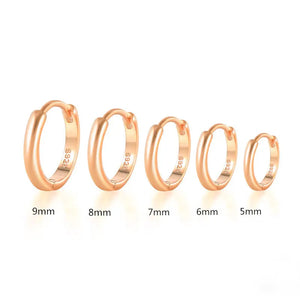
For fresh piercings (generally under 6–8 weeks, per most piercing studios), surgical steel, titanium, or solid 14K+ gold is the standard recommendation during initial healing, since new piercings are more sensitive to any metal that isn't verified implant-grade. Once healed, rose gold plated over sterling silver — like AJLuxe's rose gold huggie hoops — is a safe, comfortable everyday option.
How to Tell If Your Rose Gold Is Actually Safe
Before buying, check for these details:
- Is it solid or plated? Listings should specify. "Rose gold" alone without "plated," "vermeil," or "filled" usually (not always) means solid — but always confirm.
- If plated, what's the base metal? Look for "rose gold plated over 925 sterling silver" or "over stainless steel." Avoid listings that don't disclose the base, or that only say "gold plated" or "alloy" with no further detail.
- Is it marked "nickel-free" or "hypoallergenic" explicitly? Reputable sellers will state this directly, not just imply it from the color. Jewelry retailers that follow Jewelers of America disclosure standards are generally more reliable on this point.
- What's the karat, if solid or plated in gold? 14K or 18K is standard for quality pieces; extremely low prices on "18K rose gold" are a red flag for mislabeling.
- Do a patch test if you have a known allergy. Wear the piece against a small area of skin (inner wrist) for a few hours before committing to all-day wear, especially with a new brand.
Related reading: Hypoallergenic Silver Bracelets: What Actually Works for Sensitive Skin (2026).
Frequently Asked Questions
Is rose gold hypoallergenic?
Generally, yes. Solid rose gold is an alloy of gold and copper with no nickel, which is the leading cause of jewelry-related skin reactions. Rose gold plated over 925 sterling silver or stainless steel is also nickel-free at every layer. The main exceptions are rose gold plated over undisclosed base metals (often brass, which can contain nickel) and the rarer case of a true copper allergy.
Does rose gold contain nickel?
Standard rose gold alloys (10K, 14K, 18K) do not contain nickel — the pink color comes from copper, not nickel. Nickel only becomes a risk in rose gold plated jewelry if the base metal underneath the plating is a nickel-containing alloy like brass, which is common in low-cost, non-disclosed jewelry.
Can you be allergic to rose gold?
Yes, in two scenarios: a true copper allergy, which is uncommon but means the higher copper content in rose gold (compared to yellow gold) is more likely to trigger a reaction; or wearing rose gold plated jewelry where the base metal (often brass) contains nickel and becomes exposed once the plating wears down.
Is rose gold or white gold more hypoallergenic?
Rose gold is generally more hypoallergenic than white gold. White gold is often alloyed or plated with nickel to achieve its white color and brightness (rhodium plating over a nickel-white-gold base is common), making it one of the more allergy-triggering gold colors. Rose gold's copper-based alloy avoids nickel entirely in most formulations.
Is rose gold plated jewelry safe for sensitive skin?
It depends entirely on the base metal. Rose gold plated over 925 sterling silver or surgical stainless steel is safe for sensitive skin, including after the plating wears, because both bases are nickel-free. Rose gold plated over brass is riskier, since brass frequently contains nickel and the plating layer is thin enough to wear through with regular use.
Does 14K or 18K rose gold matter for allergies?
For nickel allergy, karat weight doesn't change much — any solid karat is nickel-free. For a rarer copper sensitivity, higher karat (18K, with about 75% pure gold and less copper) carries slightly lower risk than lower karat rose gold like 10K, which can be up to roughly 55% copper.
How long does rose gold plating last before it wears off?
It varies by piece type and plating quality. Rings typically show fading within 6–18 months of daily wear due to high friction. Necklaces and bracelets last longer. Stud and huggie earrings, which see minimal friction against the earlobe, often keep their color for years. Avoiding lotion, perfume, and water contact extends plating life.
Is rose gold safe for a nickel allergy?
Yes, for the large majority of people with nickel allergy. Solid rose gold and rose gold plated over sterling silver or stainless steel contain no nickel at any layer that touches skin. Always avoid rose gold plated jewelry that doesn't disclose its base metal, since undisclosed bases are frequently nickel-containing brass.
What's the difference between rose gold and rose gold vermeil?
Rose gold vermeil is a specific, regulated category: a layer of gold (U.S. standard requires at least 10K, typically 2.5 microns or thicker) plated over solid sterling silver. Generic "rose gold plated" jewelry has no such standard and can be plated over any base metal, including brass. Vermeil's guaranteed sterling silver base makes it a safer bet for sensitive skin than unlabeled plated jewelry.
Can rose gold turn skin green?
True solid rose gold and quality plating over sterling silver rarely cause green skin discoloration — that reaction is typically linked to copper oxidizing on skin in the presence of moisture, sweat acidity, or low-quality alloys with excess base metal. It's a cosmetic residue, not a true allergic reaction, and washing the skin removes it. Frequent green discoloration can be a sign of lower-quality plating with more exposed base metal.
Final Thoughts: Is Rose Gold Right for Your Sensitive Skin?
For most people with nickel allergy or general sensitive skin, rose gold — solid or plated over sterling silver — is a safe, comfortable choice. The pink tone comes from copper, not the nickel that causes the vast majority of jewelry reactions, and that holds true whether you're buying a solid 18K piece or a plated one with a nickel-free base.
The two things worth remembering: always check what's underneath plated rose gold (sterling silver or stainless steel is safe; undisclosed or brass bases are the risk), and if you have a rare copper sensitivity specifically, higher-karat rose gold or a different gold color may serve you better.
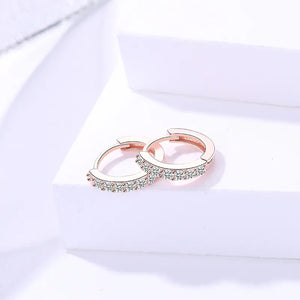
AJLuxe's rose gold pieces — including the Rose Gold Huggie Earrings, Rose Gold Choker Necklace, and Rose Gold Micro Pave CZ Huggies — are all rose gold plated over 925 sterling silver, so the metal against your skin is nickel-free from day one through years of wear.
Shop Hypoallergenic Rose Gold Jewelry
Shop Rose Gold Huggie EarringsWritten by the AJLuxe team — specialists in personalized sterling silver jewelry. Last updated: July 2026.
Toutes les marques, noms de marque et noms de produits tiers sont la propriété de leurs détenteurs respectifs. AJLuxe n’est affilié à aucune marque tierce citée dans cet article, ni approuvé ou sponsorisé par celle-ci. Les noms de marque sont utilisés uniquement à des fins de comparaison factuelle, et les descriptions de matériaux reflètent les spécifications produit publiées par chaque marque au moment de la rédaction.
You Might Also Like

The piece they're describing → Boucles d'oreilles Huggie pour femmes en or rose — Argent sterling 925, Plaqué or rose, Hypoallergéniques
Personalize Yours


