


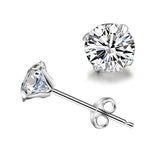
- Cubic zirconia (CZ) is a synthetic, chemically stable stone — it doesn't cause allergic reactions on its own.
- Ear irritation from CZ jewelry almost always comes from the metal setting, especially nickel-containing alloys.
- CZ is “real” in that it's a genuine lab-created gemstone; it's just not a diamond, and no honest seller claims otherwise.
- Neither CZ nor properly plated 925 sterling silver turns skin green — thin base-metal plating wearing off is usually the cause.
- CZ scores 8-8.5 on the Mohs hardness scale, tougher than Swarovski crystal (6-7) and softer than diamond (10).
- Shop for “nickel-free” or “hypoallergenic” 925 sterling silver settings, not just “CZ,” if you're buying for sensitive ears.
If your ears turn red, itchy, or swollen after a night in cheap studs, it's natural to blame the sparkly stone. But cubic zirconia earrings get an unfair reputation — the stone is one of the more chemically stable materials used in fashion jewelry. What actually decides whether a pair of CZ earrings bothers your ears in 2026 is what's underneath the stone: the metal post and setting. Here's what's really going on, plus how to shop for CZ pieces that won't leave your ears red.
What Makes Cubic Zirconia Hypoallergenic — or Not
Cubic zirconia is hypoallergenic on its own because it's a synthetic zirconium oxide crystal with no metal content, so it can't trigger the nickel reactions responsible for most jewelry-related ear irritation. The reactions people blame on “CZ earrings” almost always come from what's underneath the stone: many budget CZ earrings use nickel-alloy or brass posts with a thin plating layer that flakes off within weeks, exposing skin to raw nickel. Buying CZ set in solid, nickel-free 925 sterling silver removes that risk regardless of the stone sitting on top.
Is Cubic Zirconia Real?
Cubic zirconia is real in the sense that it's a genuine, lab-created gemstone — zirconium dioxide grown under controlled heat and pressure — it's simply not a diamond, and reputable sellers never claim it is. The “fake” label people apply to CZ is really about price and origin, not authenticity: it's a real, durable, intentionally manufactured stone prized for looking similar to a diamond at a fraction of the cost.
Does Cubic Zirconia Turn Your Skin Green?
No, cubic zirconia itself doesn't turn skin green — that greenish tint comes from oxidized base metal underneath or around the stone, not from the CZ. It typically happens when a cheap alloy, often copper-heavy, reacts with sweat, lotion, or air, especially once thin gold or rhodium plating wears through and exposes the base metal beneath it. Solid 925 sterling silver with genuine 18K gold plating resists this far better than hollow base-metal costume pieces.
Does Cubic Zirconia Tarnish?
Cubic zirconia doesn't tarnish — as a stable synthetic mineral, it won't dull, cloud, or discolor with normal wear or age. What can tarnish is the metal it's set in: uncoated base metals oxidize quickly, and even sterling silver can dull over months if it's stored in humid air or exposed to perfume and lotion regularly. Wiping earrings dry after wear and storing them in a sealed pouch keeps both the metal and the stone looking new.
What Is Better, Swarovski or Cubic Zirconia?
Neither is universally better — cubic zirconia is harder and closer in optical sparkle to a diamond, while Swarovski crystal is a glass-based product with more color variety and a softer, glassier shine. For sensitive ears specifically, the choice between them matters far less than the metal setting underneath, since neither stone itself contains nickel.
| Feature | Cubic Zirconia | Swarovski Crystal | Natural Diamond |
|---|---|---|---|
| Material | Synthetic zirconium dioxide | Glass crystal | Natural carbon crystal |
| Hardness (Mohs scale) | 8-8.5 | 6-7 | 10 |
| What touches your skin | The metal setting, not the stone | The metal setting, not the stone | The metal setting, not the stone |
| Typical price per pair | Roughly $20-$80 | Roughly $30-$150 | $500 and up |
| Safest setting for sensitive ears | Nickel-free 925 sterling silver | Nickel-free 925 sterling silver | Nickel-free precious metal |
What Jewelry Is Best for Sensitive Ears?
The best jewelry for sensitive ears is anything set in a nickel-free, hypoallergenic metal — implant-grade titanium, niobium, or 925 sterling silver — regardless of which stone or crystal sits on top. Look for listings that explicitly say “nickel-free” or “hypoallergenic” rather than assuming a stone type like cubic zirconia guarantees safety on its own, since the metal against your skin is what actually triggers reactions.
What Are the Cons of Cubic Zirconia?
The main drawbacks of cubic zirconia are cosmetic and financial, not safety-related: CZ can look slightly too flawless or glassy under bright light compared to a diamond's natural inclusions, it holds essentially no resale value, and lower-grade cuts can look cloudy over years of wear even though the stone itself doesn't degrade. None of these drawbacks relate to skin irritation — as covered above, that's a metal issue, not a stone issue.
Can You Wear Cubic Zirconia Earrings Every Day?
Yes, you can wear cubic zirconia earrings every day, because the stone is hard enough — 8 to 8.5 on the Mohs scale — to resist scratching from normal daily contact with hair, clothing, and skin. The only daily-wear consideration is the metal setting: keep it dry, avoid sleeping in unsealed metal posts, and choose a hypoallergenic base like nickel-free 925 sterling silver if you wear earrings most days.
18K gold plating option
Nickel-free, safe for daily wear
Boxed, no extra charge
Insured shipping, easy returns
Which Cubic Zirconia Earrings Are Right for Sensitive Ears?
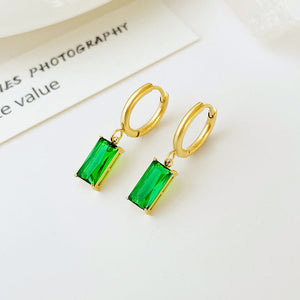
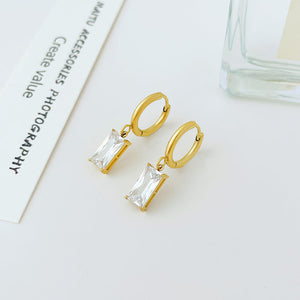
If sensitive ears are your main concern, judge the metal, not the stone: choose cubic zirconia set in solid 925 sterling silver with a nickel-free, hypoallergenic finish, and treat the cut and clarity of the CZ as a secondary decision. The CZ Stud Earrings for Women — 925 Sterling Silver, Cubic Zirconia, Hypoallergenic ($22.99) are built on exactly that logic: solid nickel-free sterling silver posts under a genuine CZ stone, so you get the sparkle without gambling on irritation. They're gift-ready out of the box and built on the same 925 silver and 18K gold plating standard behind AJLuxe's wider CZ earring range, including dangle styles in white, red, and green CZ if studs aren't your style.

For general background on nickel allergy and jewelry sensitivities, the American Academy of Dermatology is a genuine authority on the subject: aad.org.
Shop the Red Heart Stud Earrings
925 sterling silver studs set with a heart-cut red cubic zirconia in an open 3-prong basket — unplated, nickel-free, butterfly back.
Shop the Red Heart Stud Earrings →Frequently Asked Questions
What jewelry is best for sensitive ears?
The best jewelry for sensitive ears is anything set in a nickel-free, hypoallergenic metal — implant-grade titanium, niobium, or 925 sterling silver — regardless of which stone or crystal sits on top. Check the listing specifically for “nickel-free” or “hypoallergenic” rather than assuming the stone matters more than the metal.
What is better, Swarovski or cubic zirconia?
Neither is universally better: cubic zirconia is harder and closer to a diamond's sparkle, while Swarovski crystal offers more color variety at a softer, glassier shine. For sensitive ears, the metal setting matters far more than which of the two stones you pick.
What are the cons of cubic zirconia?
The main cons of cubic zirconia are cosmetic and financial rather than safety-related — it can look too flawless up close, it has little resale value, and lower-grade cuts can look glassy over time. It is not a source of skin irritation on its own.
Can you wear cubic zirconia earrings every day?
Yes, cubic zirconia earrings are hard enough (8-8.5 on the Mohs scale) to wear daily without scratching, as long as the metal setting is dry, clean, and hypoallergenic.
Is cubic zirconia real?
Yes, cubic zirconia is a real, lab-created gemstone made of zirconium dioxide — it's simply not a diamond, and no reputable seller markets it as one.
Does cubic zirconia turn green?
No, the CZ stone itself doesn't turn skin green; a greenish tint comes from oxidized base metal underneath the stone, usually a cheap alloy with worn-through plating.
Does cubic zirconia tarnish?
No, cubic zirconia is a stable mineral that doesn't tarnish. The metal setting around it can tarnish over time, especially uncoated base metals, which is why the setting matters more than the stone.
Toutes les marques, noms de marque et noms de produits tiers sont la propriété de leurs détenteurs respectifs. AJLuxe n’est affilié à aucune marque tierce citée dans cet article, ni approuvé ou sponsorisé par celle-ci. Les noms de marque sont utilisés uniquement à des fins de comparaison factuelle, et les descriptions de matériaux reflètent les spécifications produit publiées par chaque marque au moment de la rédaction.
You Might Also Like
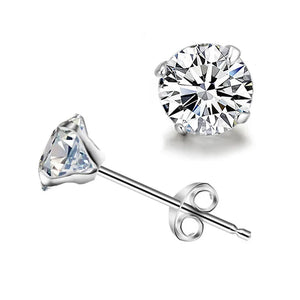
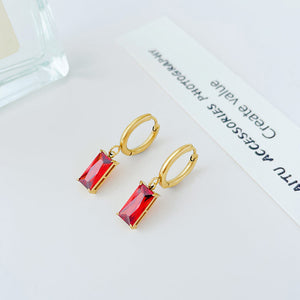
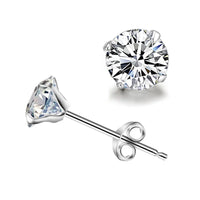
The piece they're describing → Puces d'oreilles en oxyde de zirconium pour femme — Argent sterling 925, oxyde de zirconium, hypoallergéniques
Personalize Yours


