


- 18K gold = 75% pure gold, 25% alloy metal. 21K gold = 87.5% pure gold, 12.5% alloy metal.
- Nickel in the alloy — not the gold itself — is what actually causes most gold-earring allergic reactions.
- 21K has less alloy metal overall, so it's statistically the lower-risk option, but it's softer, pricier, and harder to find in US stores.
- 18K is more common, more durable, and can be just as safe if it's made with a nickel-free alloy (palladium or fine silver instead).
- 18K gold plated jewelry is a base metal — usually 925 sterling silver — coated in gold, which sidesteps the alloy question if the base metal itself is hypoallergenic.
- If you have a known nickel allergy, a nickel-free 925 sterling silver base is the safer bet over guessing at an unlisted solid-gold alloy.
If you've ever pulled a pair of gold earrings out of your ears to find red, itchy lobes underneath, karat purity is usually the reason why — but not for the reason most people assume. 18K and 21K are both real, solid gold alloys, and the metals mixed in to strengthen them are what typically causes reactions in sensitive ears, not the gold itself. Here's how the two actually compare, and where a plated alternative fits in if you're still not sure which way to go.
What Is the Difference Between 18K and 21K Gold?
18K gold is 75% pure gold alloyed with 25% other metals, while 21K gold is 87.5% pure gold alloyed with just 12.5% other metals — the higher the karat number, the less alloy metal is mixed in. On the broader karat scale, 24K is 99.9% pure gold, 22K is 91.7%, 21K is 87.5%, 18K is 75%, 14K is 58.3%, and 10K is 41.7%. Pure 24K gold is too soft to hold its shape in earrings, which is why every karat below it is blended with metals like copper, silver, zinc, palladium, or nickel to add strength, change color, or bring down cost.

Which Karat Is Better for Sensitive Ears: 18K or 21K?
21K gold is generally the safer choice for sensitive ears because it contains roughly half the alloy metal of 18K gold, leaving less room for nickel or other irritants to be present. But the deciding factor is always which alloy metals were actually used, not the karat number by itself. Reputable 18K jewelry — especially in the US and UK — is commonly alloyed with palladium, fine silver, or copper rather than nickel, which makes it just as wearable for sensitive ears as 21K. Nickel tends to show up more often in white gold alloys, where it's added specifically to shift the color and add hardness, so a yellow 18K or 21K piece is statistically lower-risk than a white gold piece at either karat.
What Makes Gold Earrings Trigger Allergic Reactions?
Nickel is the alloy metal responsible for the vast majority of gold-earring allergic reactions, not the gold content itself. It's added to harden the metal or shift its color toward white, and even trace amounts sitting against the skin for hours at a time — as earrings do — can trigger contact dermatitis in people who are sensitive to it. Symptoms usually show up as redness, itching, swelling, or a rash right where the earring touches the lobe, sometimes days after you first put it on.
18K vs 21K Gold Earrings: Full Comparison
Side by side, the tradeoffs come down to purity versus practicality — here's how they stack up.
| Factor | 18K Gold | 21K Gold |
|---|---|---|
| Gold purity | 75% | 87.5% |
| Alloy metal content | 25% | 12.5% |
| Nickel-reaction risk | Depends on alloy; lower risk if nickel-free | Lower overall due to less total alloy |
| Durability / scratch resistance | More durable, holds shape well | Softer, scratches and dents more easily |
| Color range | Yellow, white, or rose | Almost always rich yellow |
| Typical cost | Lower | Higher (more gold by weight) |
| Availability in the US | Common | Uncommon; mostly specialty or imported |
What Is 18K Gold Plated Jewelry?
18K gold plated jewelry is a base metal — commonly 925 sterling silver — coated with a thin layer of 18K gold through electroplating, rather than being solid gold all the way through. This changes the safety question entirely: instead of asking which alloy metals are hiding inside a solid-gold piece, you're asking whether the base metal underneath the plating is hypoallergenic. A nickel-free 925 sterling silver base, like the one AJLuxe uses across its 18K gold plated earrings, sidesteps the alloy guesswork altogether while still giving you the warm gold look.
What Are the Best Earrings for Sensitive Ears if You React to Gold?
The best earrings for sensitive ears use a nickel-free, hypoallergenic base metal — like 925 sterling silver or surgical-grade titanium — regardless of what karat of gold sits on the surface. If you've already had a reaction to a solid-gold piece and don't know which alloy caused it, switching to a documented nickel-free base removes the uncertainty instead of trying to track down the exact alloy composition of your next pair.
18K gold plating option
Nickel-free, safe for daily wear
Boxed, no extra charge
Insured shipping, easy returns
Which Should You Actually Buy for Sensitive Ears?
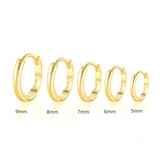
If you have a known nickel sensitivity, skip the solid-gold karat debate altogether and choose a nickel-free 925 sterling silver base with 18K gold plating instead — you get the same warm gold look without gambling on an alloy the listing never discloses. AJLuxe's Gold Huggie Earrings ($34.99) are built this way: 925 sterling silver, 18K gold plated, hypoallergenic, and gift-boxed as standard. If you prefer a fuller hoop, the Gold Hoop Earrings ($31.99) and Teardrop Hoop Earrings ($31.99) use the same nickel-free base. If you specifically want solid 18K or 21K gold, that's still worth sourcing from a fine jeweler who discloses the alloy — but for everyday sensitive-ear wear, plated sterling silver is the lower-risk, lower-cost way to get the look.
Metal content is only one of several reasons earrings hurt; see our why earrings hurt guide for the other common causes and how to fix each.
Frequently Asked Questions
Is 18K or 21K gold better for sensitive skin?
21K gold is generally better for sensitive skin because it has less alloy metal overall, but a well-made 18K piece using a nickel-free alloy can be just as safe.
Does 21K gold contain nickel?
21K gold can contain nickel, but it's less common than in white gold alloys since 21K pieces are almost always yellow gold, where copper and silver are the more typical alloy metals used instead of nickel.
What is 18K gold plated jewelry made of?
18K gold plated jewelry is a base metal, most often 925 sterling silver, with a thin layer of 18K gold electroplated onto the surface rather than being solid gold throughout.
Can you be allergic to real gold?
Pure gold itself rarely causes allergic reactions; it's almost always the alloy metals mixed in to strengthen or color the gold — most commonly nickel — that trigger a skin reaction.
What's the best metal for sensitive ears if you can't wear gold at all?
Nickel-free 925 sterling silver and surgical-grade titanium are both considered safe options for sensitive ears, since the reaction is almost always to nickel rather than to a specific precious metal.
Is 21K gold more expensive than 18K gold?
Yes, 21K gold typically costs more than 18K gold because it contains a higher percentage of pure gold by weight, and pure gold is the most expensive component in any alloy.
Source: American Academy of Dermatology Association, aad.org.
18K vs 21K Gold Earrings: Which Holds Up Better to Daily Wear?
18K gold earrings hold up better to daily wear than 21K because more alloy metal means a harder, more scratch-resistant surface — a factor that matters more for earrings than almost any other jewelry category since posts, backs, and hoops take constant friction from hair, pillows, phone calls, and clothing. On the Mohs hardness scale, pure 24K gold sits around 2.5–3, roughly as soft as a fingernail can scratch; each step down in purity toward 18K adds hardness because the blended metals (copper, silver, palladium) are harder than gold itself. 21K's higher purity means it's closer to that soft end, so thin earring posts can bend more easily, huggie hoops can lose their round shape faster, and small decorative details — pavé settings, filigree, engraved textures — wear down or flatten sooner than the same design in 18K.
This shows up in a few concrete ways owners notice within the first year: 21K earring backs thread on and off more loosely over time as the post surface wears, prong-set stones sit less securely as the metal around them softens, and everyday knocks (gym bags, seatbelts, kids grabbing at earrings) are more likely to leave visible dents rather than buffing out. 18K takes the same daily abuse with noticeably less shape loss, which is part of why most fine jewelry brands manufacture earrings — as opposed to bars or coins meant to sit untouched — in 18K or lower rather than 21K or 22K.
The tradeoff is real, though: durability and hypoallergenic performance pull in opposite directions here. If scratch resistance is your priority and you're not nickel-sensitive, 18K is the more practical daily-wear choice between the two solid golds. If skin reaction is the deciding factor, that durability gap is exactly why a nickel-free 925 sterling silver base with 18K gold plating is worth considering over solid 21K — you get 18K's harder wear surface and a documented hypoallergenic base, without the alloy guesswork either solid karat requires.
Toutes les marques, noms de marque et noms de produits tiers sont la propriété de leurs détenteurs respectifs. AJLuxe n’est affilié à aucune marque tierce citée dans cet article, ni approuvé ou sponsorisé par celle-ci. Les noms de marque sont utilisés uniquement à des fins de comparaison factuelle, et les descriptions de matériaux reflètent les spécifications produit publiées par chaque marque au moment de la rédaction.
You Might Also Like
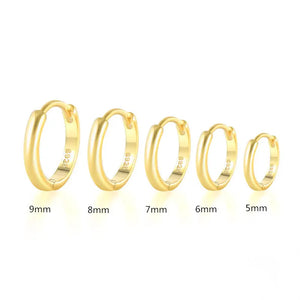
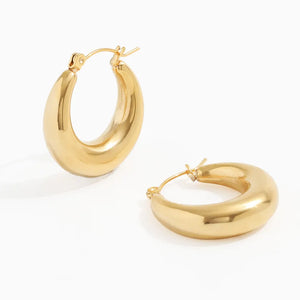

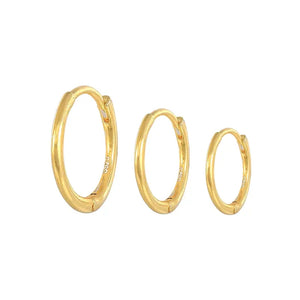
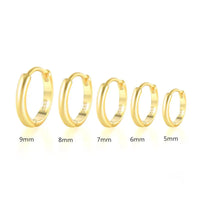
The piece they're describing → Boucles d'oreilles créoles dorées pour femme — Argent sterling 925, plaqué or 18 carats, minimalistes
Personalize Yours


