


Quick answer: Elevate your hand above your heart for 5 minutes to reduce swelling, then coat the finger and ring in a generous layer of liquid dish soap, hand lotion, or cooking oil. Gently rock the ring back and forth while pulling — never pull it straight off in one motion. If that doesn't work, the dental floss compression method pushes swelling out ahead of the ring as you unwind it. If your finger turns blue, goes numb, or the pain is severe, stop and get help — a fire station or ER can cut the ring off safely in minutes, and a jeweler can usually repair or resize the cut band afterward.
TL;DR
- Elevate the hand first — most stuck rings are stuck because of swelling, not because the ring shrank
- Lubricate heavily with dish soap, lotion, or oil, then rock (don't pull) the ring off
- The dental floss wrap method physically compresses swelling ahead of the ring
- Cold water and ice can reduce swelling in under 10 minutes if lubrication alone isn't enough
- Blue, numb, or severely painful fingers need a fire station or ER — they cut rings off for free, safely, in minutes
- A cut ring almost always gets soldered back together or resized by a jeweler for far less than a new ring costs
Tired of rings that get stuck in the first place?
Shop the Adjustable Minimalist RingYour ring is stuck and your finger is starting to throb — that's the moment most people panic and start yanking, which is exactly the wrong move. A stuck ring is almost always a swelling problem, not a sizing problem: heat, salt, exercise, altitude, and even the time of day can make a finger swell enough to trap a ring that slides on and off easily most days. This guide walks through the methods that actually work, in the order to try them, plus how to tell when it's time to stop DIY-ing and get real help.
Why Rings Get Stuck in the First Place
Fingers change size throughout the day and from day to day, usually by more than people expect. Heat and humidity cause blood vessels to dilate and fluid to pool in your hands. High-sodium meals pull extra water into your tissue. Exercise, hormonal shifts, air travel, and even sleeping with your hand below heart level overnight can each add enough swelling to trap a ring that was comfortably loose the day before.
Weight change and injury matter too, but they're less common causes than people assume. If a ring has fit fine for months and suddenly won't budge, swelling — not a size change — is the far more likely explanation, and that means the fix is usually about reducing swelling, not forcing the ring.
Step One: Elevate Before You Do Anything Else
Before reaching for soap or floss, raise your hand above your heart and hold it there for 5 minutes. Gravity alone pulls pooled fluid out of your fingers, and this step often loosens a stuck ring enough that the next step works on the first try. Gently flex your fingers open and closed while your hand is elevated to help fluid drain further.
Skip this step and every method below works harder than it needs to, because you're fighting active swelling the whole time instead of reducing it first.
Step Two: The Lubrication and Rock Method
This is the method that resolves most stuck rings, and it works because it does two things at once: it reduces friction and it lets you work the ring past your knuckle in small movements instead of one big pull.
- Coat the finger and ring generously with liquid dish soap, hand lotion, hair conditioner, or cooking oil. Dish soap tends to work best because it's slippery and rinses off cleanly afterward.
- Rock the ring side to side in small twisting motions rather than pulling it straight off. This walks the ring over your knuckle in stages instead of forcing it past the widest point all at once.
- Pull steadily, not sharply, once it starts moving. A sharp yank on a ring that's still tight can bruise or cut the skin under it.
- Reapply lubricant if it dries out partway through — don't keep forcing a dry ring.
If the ring moves even slightly with this method, keep going. If it hasn't budged at all after two or three minutes of steady effort, move to the next method rather than continuing to force it.
Step Three: The Dental Floss Compression Method
When lubrication alone isn't enough, dental floss solves a different problem: it physically compresses the swelling ahead of the ring instead of just reducing friction.
- Slip one end of a length of dental floss or thin string under the ring, threading it toward your hand (not your fingertip).
- Wrap the long end snugly around your finger, working upward past the knuckle in tight, touching coils. This compresses the swollen tissue and temporarily shrinks the finger's diameter.
- Grab the short end that's sticking out from under the ring and slowly unwind it, starting from the ring side. As it unwinds, it pushes the ring forward over the compressed, narrower knuckle.
- Keep unwinding in one continuous motion rather than stopping partway, which can let swelling rush back in before the ring clears the knuckle.
This method takes practice to get the wrap tension right — too loose and it won't compress anything, too tight and it cuts off circulation uncomfortably. Wrap snugly, not painfully.
Cold Water and Ice: The Backup Method
Cold constricts blood vessels and can measurably shrink a swollen finger within 5–10 minutes. Run the hand under cold water or hold an ice pack against the finger (never ice directly on skin) before attempting lubrication again. This works especially well when swelling is heat- or exercise-related rather than from an injury, since there's no inflammation to aggravate.
Combine this with elevation for the fastest result: cold water while your hand is raised above your heart tackles swelling from two directions at once.
When to Stop and Get Professional Help
Get help immediately — don't keep trying home methods — if any of these apply:
- The finger is turning blue, purple, or noticeably pale compared to your other fingers
- You've lost feeling or the finger feels numb or tingly
- The pain is severe or getting worse rather than staying steady
- You've been trying for more than 15–20 minutes with no progress at all
- The ring was already tight before an injury swelled the finger further (a fall, a jam, a sting)
A fire station will cut a stuck ring off for free in most areas — this is a routine call for them, not an emergency imposition, and firefighters carry specialized ring cutters designed to remove metal safely without injuring the finger. An emergency room can do the same and should always be the choice if the swelling is severe or accompanied by numbness, since that combination can signal reduced blood flow that needs medical attention, not just ring removal.
What Happens After a Ring Gets Cut Off
This is the part almost no other guide on this topic covers, and it's the question everyone asks right after the ring comes off: a cut ring is not a ruined ring. A jeweler can solder a cut band back into a closed, wearable ring for most solid metals — sterling silver, gold, and platinum all resolder cleanly. If the ring no longer fits well after healing (or fit was the original problem), most jewelers will resize it at the same visit rather than just closing the cut, since the band is already open.
Typical cost for soldering a cut band closed runs $40–$90, and combining that with a resize typically adds $20–$40 more — see our guide on how much ring resizing costs by metal for full pricing. Rings with pavé or channel-set stones along the band are the exception — cutting through a stone-set section can damage settings, so a jeweler should assess those before any cutting happens, if there's time to get one involved.
Preventing a Stuck Ring Next Time
If a ring gets stuck more than once, that's useful information: it means the ring fits at the tight edge of your range rather than comfortably, and normal daily swelling is enough to trap it. Two fixes address this directly. First, get the band professionally sized a half-size looser if it's only ever "just barely" comfortable — see our ring resizing cost guide for what that runs by metal. Second, an adjustable, open-band ring sidesteps the problem structurally: it flexes with your finger's daily size changes instead of holding one fixed diameter, so the swelling that traps a closed band simply doesn't trap an adjustable one the same way.
Removing rings before situations that reliably cause swelling — flights, hot weather, salty meals, workouts, hand-swelling medications — also prevents most stuck-ring emergencies before they start. If your ring's real problem turns out to be shape rather than fit or swelling — it's visibly out of round instead of just tight — see our guide on how to fix a bent ring for what you can safely reshape yourself.
Frequently Asked Questions
Why does Windex help get a stuck ring off?
Windex and similar glass cleaners work the same way soap does: they're slippery and reduce friction between the ring and your skin. There's nothing special about the ammonia — any slick, soapy, or oily liquid works the same way. Dish soap is just as effective and gentler on skin.
How do hospitals remove a stuck ring?
Hospitals and fire departments use a small ring cutter — a rotating blade designed to slice through metal without touching skin — to cut the band, then bend it open enough to slide off. It's fast, painless, and free or low-cost at most fire stations and many ERs.
How do you remove a tight ring from a swollen finger?
Elevate the hand above your heart for 5 minutes first, then apply a generous coat of dish soap, lotion, or oil and rock the ring gently rather than pulling it straight off. If that doesn't work, the dental floss compression method or a few minutes of cold water can reduce swelling enough for the ring to slide free.
What happens if you can't get your ring off?
If home methods fail and the finger is showing signs of restricted circulation — blue or pale color, numbness, or worsening pain — go to a fire station or ER rather than continuing to try. They cut the ring off safely in minutes, and a jeweler can typically repair or resize the cut band afterward for far less than the cost of a new ring.
Can a stuck ring cut off circulation?
Yes, if swelling continues to increase while the ring stays in place. This is why a numb, blue, or increasingly painful finger is a signal to seek help immediately rather than keep attempting home removal — restricted blood flow for an extended period is a genuine medical concern, not just discomfort.
Will cutting a ring off ruin it?
No. A jeweler can solder most solid metal bands — sterling silver, gold, and platinum — back into a closed ring, and often resize it in the same visit if fit was part of the original problem. Rings with stones set directly in the band are the main exception and need a jeweler's assessment before cutting if time allows.
Is it safe to use dental floss to remove a ring?
Yes, when wrapped snugly rather than painfully tight. The technique compresses swollen tissue just ahead of the ring so it can slide over the compressed section, and it's a standard method recommended by hand-care professionals for exactly this situation.
How long can a ring safely stay stuck before it's an emergency?
There's no fixed time limit, but 15–20 minutes of unsuccessful home attempts without any progress — especially alongside numbness or color change — is the point to stop and get professional help rather than keep trying.
Why did my ring suddenly get stuck when it fit fine yesterday?
Day-to-day swelling from heat, salt intake, exercise, hormonal shifts, or even sleeping with your hand in a low position overnight is almost always the cause, not a change in your finger's actual size. This is also why the same ring can feel fine again within a day once the swelling resolves on its own.
Final Thoughts
A stuck ring feels like an emergency in the moment, but it almost never is one. Elevation, lubrication, and the dental floss method resolve the vast majority of cases within minutes, and even the rare case that needs a ring cutter ends with a repairable band, not a ruined one. The real fix for a ring that gets stuck repeatedly is addressing the fit itself — either sizing it looser or switching to a design built to flex with your finger's natural daily changes.
Want a ring that flexes instead of trapping your finger?
Shop the Adjustable Minimalist RingWritten by the AJLuxe team — specialists in personalized sterling silver and gold-plated jewelry. Last updated: July 2026. Sources: Jewelers of America, American Academy of Dermatology.
Toutes les marques, noms de marque et noms de produits tiers sont la propriété de leurs détenteurs respectifs. AJLuxe n’est affilié à aucune marque tierce citée dans cet article, ni approuvé ou sponsorisé par celle-ci. Les noms de marque sont utilisés uniquement à des fins de comparaison factuelle, et les descriptions de matériaux reflètent les spécifications produit publiées par chaque marque au moment de la rédaction.
You Might Also Like
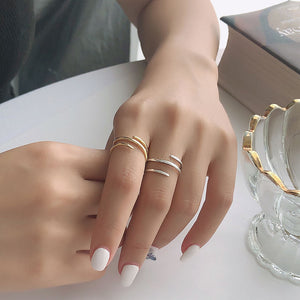

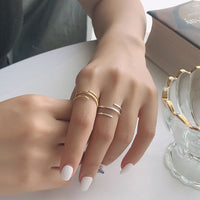
The piece they're describing → Bague minimaliste ajustable pour femmes — Argent sterling 925, Plaqué or ou rhodium
Personalize Yours


