


- Dopamine dressing means dressing in bright, saturated colors on purpose, because color has a real (if modest) effect on mood and perception — not just a TikTok buzzword.
- Jewelry is the lowest-effort entry point: a colorful gemstone pendant changes an entire neutral outfit without touching the closet.
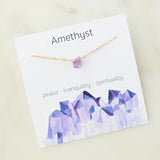
- Different colors carry different emotional associations — yellow/citrine for energy, purple/amethyst for calm, blue/aquamarine for clarity, red/garnet for confidence — and AJLuxe's gemstone necklace line covers all four in 925 sterling silver or 18K gold plating.
- This is a genuinely softer, more wellness-adjacent trend than something like Y2K or mob-wife maximalism — it's about how a color makes you feel, not a specific look to copy.
- The crystals-for-X cluster on this site already covers the "gemstone = mood/energy" idea in depth; dopamine dressing is really that same idea applied to what you put on in the morning.
"Dopamine dressing" has been showing up in fashion coverage for a few years now, usually illustrated with a bright yellow coat or a fuchsia bag. Less has been said about the easiest, cheapest way to actually practice it: jewelry. A colorful gemstone necklace does the same color-psychology work as a statement coat, works over literally anything in your closet, and costs a fraction as much. This guide covers what dopamine dressing actually means, what the color-mood research does and doesn't support, which colors do which emotional work, and how to build a small "wearable color therapy" rotation using real, in-stock gemstone pieces.
What Is Dopamine Dressing, Actually?
Dopamine dressing is choosing clothing and accessories in bright, saturated, "happy" colors as a deliberate mood lever, instead of defaulting to black, navy, gray, or beige because they feel safe or slimming. The term borrows from dopamine, the neurotransmitter linked to reward and pleasure, on the idea that certain colors trigger a small version of that same lift — the same reason a sunny yellow raincoat can make a gray commute feel less gray.
It isn't a specific silhouette or era-coded aesthetic the way mob-wife or Y2K are. There's no single "dopamine dressing item" — it's a color philosophy that gets applied to whatever you already wear. That's exactly why jewelry fits it so naturally: a single citrine pendant or amethyst drop turns a plain white t-shirt and jeans into a dopamine-dressing outfit without buying anything else.
The trend also has a slightly different flavor than most fashion microtrends. Searches for "dopamine dressing" surface as much wellness and psychology coverage as fashion-editorial content — outlets like Harper's Bazaar and The Everygirl cover it as a styling idea, while wellness sites frame it as a mood-management tool. Both readings point to the same practical takeaway: color is doing real emotional work, whether you're approaching it as a stylist or a therapist.
Does the Color You Wear Actually Affect Your Mood?
This is the honest question underneath the whole trend, and it deserves an honest answer rather than a marketing one. Color psychology is a real, if imprecise, field of behavioral research — studies going back decades (most famously a widely cited 2006 analysis in the journal Management Decision) have found that color is one of the single biggest factors in fast, subconscious judgments people make about products, spaces, and even other people, well before slower, more rational thinking kicks in. What the research does not support is anything mystical or universal — "red always means X," "blue always means Y" claims don't hold up cross-culturally or individually.
What does hold up reasonably well: color has documented links to arousal and mood state — warm, saturated colors (red, orange, yellow) tend to read as energizing, while cooler, muted tones (blue, soft green) tend to read as calming — and personal association matters as much as the color wheel itself. If a specific green reminds you of a happy summer, it will do more for your mood than any color-theory chart says it "should." The honest version of dopamine dressing isn't "wear yellow because science says so" — it's "notice which colors make you feel more like yourself, and wear more of them on purpose."
For jewelry specifically, this is a genuinely useful frame, because a single gemstone color is a small, low-commitment way to test the idea. You don't have to buy a yellow coat to see whether a bright color changes how a day feels — a citrine pendant is a five-minute experiment.
The Dopamine Color Palette — What Colors Actually Count
Fashion coverage of dopamine dressing tends to name-check the same handful of colors, and jewelry has a genuine gemstone match for each one:
- Yellow / gold — energy and optimism. The color most consistently tied to "dopamine dressing" coverage. In gemstone form: citrine, sometimes called the "sunshine stone."
- Pink / fuchsia — playfulness. Reads as lighter and less serious than red. In gemstone form: pink tourmaline or CZ pink pieces.
- Cobalt / bright blue — clarity and calm alertness. Blue is unusual in color psychology for reading as both calming and energizing depending on saturation. In gemstone form: aquamarine or blue sapphire.
- Red — confidence and boldness. The most arousing color in most color-psychology models — read as assertive rather than "happy" exactly. In gemstone form: garnet or ruby.
- Purple — calm with a little drama. Sits between the "calming" blues and the "bold" reds. In gemstone form: amethyst.
- Green — balance and renewal. The color most associated with feeling grounded rather than stimulated. In gemstone form: peridot or emerald.
The point isn't to memorize this like a color-wheel test. It's a starting menu — pick the emotional note you're missing on a given day, and reach for the matching stone instead of the usual plain silver chain.
How to Start Dopamine Dressing With Jewelry
The lowest-effort way into this trend is treating jewelry as your color lever instead of your clothes:
- Start with one piece, not a wardrobe overhaul. A single colorful gemstone pendant does the job — dopamine dressing was never about matching head to toe.
- Wear it over neutrals on purpose. A citrine or aquamarine pendant reads loudest against black, white, gray, or denim — exactly the "safe" colors dopamine dressing pushes back against.
- Match the stone to the day, not a fixed rule. Reach for warm tones (citrine, garnet) on low-energy mornings and cooler tones (aquamarine, amethyst) when the day already feels like a lot.
- Build a small color rotation, not one "signature" piece. Two or three gemstone pendants in different colors give you an actual choice each morning, which is closer to how the trend is meant to work than owning just one.
- Keep the base metal hypoallergenic. Since the whole point is wearing color daily, look for 925 sterling silver or 18K gold plating over sterling silver rather than costume-grade metal that reacts with skin over repeated wear.

From Crystals for Energy to Color for Joy — the Same Idea, Different Angle
If dopamine dressing's "colorful gemstone as a mood tool" idea sounds familiar, it should — it's the same underlying concept behind the crystals-for-X content already on this site, just approached from a fashion-editorial angle instead of a metaphysical one. Where our crystals for energy guide frames citrine and carnelian as energizing stones to carry or wear, dopamine dressing frames the exact same colorful gemstone as a styling choice with a documented psychological basis. Same stone, same color, two different (and compatible) reasons to wear it.
The overlap runs deeper with confidence specifically: our crystals for confidence guide covers garnet and red stones as a boldness pick for exactly the reason color psychology backs up above — red reads as assertive, not just decorative. And if a specific gemstone color resonates with you because of your birth month rather than your mood, the full birthstone jewelry guide covers all 12 birthstones, several of which (citrine, amethyst, aquamarine, garnet, peridot) are the exact same dopamine-dressing colors covered here.

Is Dopamine Dressing Just a Trend, or Does It Actually Work?
Worth being straightforward about this one: dopamine dressing sits closer to a genuine wellness practice than a fashion "look" with a shelf life. It doesn't have a defined silhouette to age out of the way Y2K chokers or coquette bows eventually will — it's a color-choice habit, not a specific product category. That also means it's a lower-pressure trend to try: there's no wrong way to do it, no specific piece you're missing out on, and no real risk of it reading as dated in a year. If a bright gemstone pendant genuinely makes a gray Tuesday feel a little better, that's the entire point — the "trend" label is really just fashion media catching up to something stylists and colorists have said for years.
Related reading: The 10 Rarest Gemstones in the World (2026).
Frequently Asked Questions
What is dopamine dressing?
Dopamine dressing is choosing bright, saturated colors in your clothing and accessories specifically to boost your mood, rather than defaulting to "safe" neutrals like black, gray, or beige. In jewelry, it usually means a colorful gemstone piece — citrine, amethyst, aquamarine, garnet — worn over an otherwise neutral outfit.
Does the color you wear affect your mood?
To a meaningful degree, yes — color psychology research links color to fast, subconscious impressions and to arousal/calm states, though the effect is more modest and more personal than viral claims suggest. Warm, saturated colors (yellow, orange, red) tend to read as energizing, while cooler tones (blue, soft purple) tend to read as calming, but individual association matters as much as any general color-theory rule.
What colors are considered "dopamine" colors?
Fashion and wellness coverage of dopamine dressing consistently names bright yellow, hot pink or fuchsia, cobalt blue, red, and sometimes orange or grass green — saturated, high-visibility colors rather than muted or pastel tones. In gemstone terms, the closest matches are citrine (yellow), pink tourmaline (pink), aquamarine or sapphire (blue), and garnet or ruby (red).
How do I start dopamine dressing with jewelry?
Start with one colorful gemstone pendant worn over a neutral outfit — a citrine or aquamarine necklace over a plain white tee or black sweater is the simplest version. There's no need to buy a new wardrobe; jewelry is the lowest-effort way to add a dopamine-dressing color to an outfit you already own.
What's the difference between dopamine dressing and wearing crystals for their meaning?
They're closely related but come from different traditions. Dopamine dressing is a color-psychology and fashion-editorial idea — the color itself is doing the work. Crystal meanings (covered in our crystals for energy and crystals for confidence guides) attach specific properties to specific stones beyond just their color. Many people find both frameworks point to the same gemstone for the same reason — citrine for energy, garnet for confidence — which is why the two ideas pair naturally.
Is dopamine dressing just a passing trend?
Less than most fashion microtrends, since it isn't tied to a specific silhouette or era-coded look that can go out of style. It's closer to a color-choice habit than a product category, which is also why it's a low-risk one to try — there's no specific piece to "miss" and nothing about a colorful gemstone pendant reads as dated the way a hyper-specific trend item eventually can.
Final Thoughts
Dopamine dressing is a rare fashion idea that holds up when you look past the trend label — color really does play a measurable, if modest, role in mood and first impressions, and jewelry is the smallest possible way to test that for yourself. You don't need a new wardrobe, a specific silhouette, or a viral moment to justify it: a single citrine, amethyst, aquamarine, or garnet pendant worn over whatever you were already going to wear is the entire practice. Treat it less like a trend to keep up with and more like a permanent, low-effort option to add color back into a mostly-neutral closet.
Shop AJLuxe's wearable color therapy
Shop the Citrine Pendant NecklaceShop This Guide
Build a full mood-color rotation with the amethyst pendant necklace for calm days and the aquamarine pendant necklace for clarity, or browse the full AJLuxe collection for more colorful gemstone pieces.
AJLuxe Team. Last updated: July 2026. Sources: Verywell Mind, color psychology research (Singh, "Impact of color on marketing," Management Decision, 2006).
Toutes les marques, noms de marque et noms de produits tiers sont la propriété de leurs détenteurs respectifs. AJLuxe n’est affilié à aucune marque tierce citée dans cet article, ni approuvé ou sponsorisé par celle-ci. Les noms de marque sont utilisés uniquement à des fins de comparaison factuelle, et les descriptions de matériaux reflètent les spécifications produit publiées par chaque marque au moment de la rédaction.
You Might Also Like
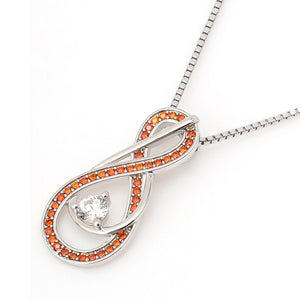


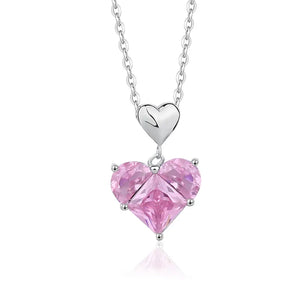
The piece they're describing → Collier pendentif en pierre pour femme – Plaqué or 18 carats, pendentifs en pierres précieuses naturelles
Personalize Yours


