


Cubic zirconia vs zirconium: if you've bounced between these two terms while shopping for jewelry and come away more confused than when you started, you're not alone. The names look like they should mean the same thing, and plenty of product listings don't help by using them loosely.
They don't mean the same thing. This guide breaks down what zirconium actually is, what cubic zirconia actually is, why their names overlap in the first place, and which one shows up in the jewelry you're probably looking at right now.

What is zirconium?
Zirconium is a chemical element on the periodic table, symbol Zr, atomic number 40. In its natural state, it's a silvery-grey metal, similar in behavior to titanium.
It's strong, corrosion-resistant, and highly heat-resistant, which is why industry uses it in nuclear reactors, aerospace parts, and surgical instruments. Zirconium metal on its own has nothing to do with sparkly gemstones — it's a structural material first, and a jewelry material second.
In jewelry, zirconium usually gets processed into "black zirconium." Manufacturers heat the metal until a hard, dark oxide layer forms on its surface, then polish that layer to a shiny or matte black finish. That oxide layer is part of the metal itself, not a coating sitting on top — which is why black zirconium rings resist scratches and don't wear through the way plated metals do.
What is cubic zirconia?
Cubic zirconia (CZ) is a completely different material: it's the cubic crystalline form of zirconium dioxide, written as ZrO2. It's grown in a lab, not mined, and it's cut and polished to look like a diamond.
Manufacturers make CZ by melting powdered zirconium oxide at extremely high heat, then slowly cooling it so crystals form. A small amount of yttrium oxide gets added during the process to stabilize the crystal structure, so the finished stone holds its shape and clarity.
The result is a clear, hard, brilliant stone with a Mohs hardness around 8 to 8.5 — not as hard as a diamond, but hard enough for everyday jewelry. CZ has been mass-produced since the 1970s and remains the most common diamond look-alike on the market.
Why do cubic zirconia and zirconium sound so similar?
The confusion isn't random — it's built into the chemistry. Cubic zirconia's full name comes directly from zirconium: it's the cubic crystal form of zirconium's oxide. Strip away "cubic" and "dioxide" and you're left with the same root word, which is exactly why the two terms get mixed up constantly.
The Zircon Industry Association, a technical body that tracks terminology across the zircon and zirconia supply chain, draws a clear line: zirconium is "the chemical element Zr in the Periodic Table," while zirconia is the element's oxide compound, "zirconium oxide (ZrO2)" — a related but separate material made from it. Cubic zirconia is simply the gem-grade crystalline version of that same oxide.
Wikipedia's entry on the material makes the mix-up explicit, noting cubic zirconia is "sometimes erroneously called cubic zirconium" — confirming this isn't a rare slip. It's a common enough error that reference sources call it out directly.
Cubic zirconia vs zirconium: key differences
| Attribute | Zirconium (metal) | Cubic zirconia (gemstone) |
|---|---|---|
| Chemical form | Pure metallic element (Zr) | Zirconium dioxide crystal (ZrO2) |
| Origin | Mined, refined metal | Lab-grown crystal |
| Typical products | Men's rings, wedding bands, industrial parts | Stud earrings, rings, pendants — as the stone, not the band |
| Appearance | Silvery-grey metal, or black when oxidized | Clear and brilliant, like a diamond |
| Hardness (Mohs) | Roughly 5 (metal); oxidized surface is harder | About 8 to 8.5 |
| Price tier | Mid-range, comparable to titanium | Budget-friendly diamond alternative |
Put simply: one is a metal you shape into a ring band, and the other is a stone you set into a piece of jewelry. They can even appear in the same piece — a cubic zirconia stone set into a band made from a completely different metal, like sterling silver.

Is zirconium jewelry the same as cubic zirconia jewelry?
No, and this is where most of the real-world confusion happens. "Zirconium jewelry" almost always means a ring or band made from oxidized zirconium metal — popular in men's wedding bands because of its scratch resistance and dark, modern look.
"Cubic zirconia jewelry" means a piece that features a CZ stone — usually clear, set in a prong or bezel setting, styled to look like a diamond. The stone can sit in a sterling silver, gold-plated, or even a titanium setting. It has nothing to do with the zirconium metal used for men's bands.
These are two separate product categories that happen to share a name root. If a listing says "zirconium ring," expect a solid metal band. If it says "cubic zirconia earrings" or "CZ ring," expect a diamond-look stone set into some other metal.
Is zirconium hypoallergenic?
Yes. Zirconium is a pure element with no nickel content, and its oxidized surface layer forms through heat alone, without introducing chemical irritants. That combination makes it one of the more reliable hypoallergenic options for people with metal sensitivities, alongside titanium.
Cubic zirconia is hypoallergenic for a different reason — it's a chemically inert crystal, not a metal, so it doesn't oxidize or release ions that trigger skin reactions. We cover that side of the equation in full in our cubic zirconia hypoallergenic guide, including why the metal setting around a CZ stone usually matters more than the stone itself.
Which one is in AJLuxe's cubic zirconia stud earrings?
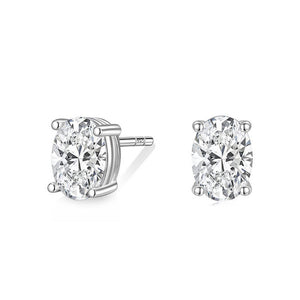
AJLuxe's sterling silver cubic zirconia stud earrings use the gemstone, not the metal. Each pair features a 6mm clear brilliant-cut cubic zirconia stone held in a 4-prong setting, on a genuine 925 sterling silver post with your choice of rhodium or 18K gold plating.
Zirconium metal doesn't appear anywhere in this piece. The "zirconia" in the name refers entirely to the lab-grown ZrO2 stone doing the sparkling — the sterling silver, rhodium, and gold plating are what's actually touching your skin.
Is cubic zirconia a "real" stone?
Cubic zirconia is a real, physical crystal — it's lab-created rather than mined. That makes it a genuine gemstone material, not a fake or a coating, even though it's grown to imitate a diamond's look.
We go deeper on what "real" means for CZ, including how it compares to glass, moissanite, and mined stones, in our guide on whether cubic zirconia is real.
Wondering how cubic zirconia compares to another popular diamond alternative? See our cubic zirconia vs. white sapphire guide for a full breakdown of hardness, price, and sparkle.
Frequently asked questions
Is cubic zirconia the same as zirconium?
No. Cubic zirconia is zirconium dioxide, a lab-grown crystal used as a gemstone. Zirconium is a metallic chemical element, sometimes used on its own to make jewelry like men's rings. They share a name root but are chemically and physically different materials.
What is the difference between zirconium and cubic zirconia?
Zirconium is a metal you can shape into a solid ring band. Cubic zirconia is a crystal compound cut and set as a gemstone. One is a structural metal used in industry and jewelry bands; the other is a diamond look-alike stone.
Why do zirconium and cubic zirconia have such similar names?
Cubic zirconia's name comes directly from zirconium — it's the cubic crystal form of zirconium's oxide compound. The shared root word is why the two terms get confused so often, even though the finished materials serve completely different purposes.
Is a zirconium ring the same as a cubic zirconia ring?
No. A zirconium ring is typically a solid metal band, often oxidized to a black finish. A cubic zirconia ring features a clear CZ stone set into a band made of some other metal, like sterling silver or gold.
Is zirconium hypoallergenic?
Yes. Zirconium contains no nickel and its oxidized surface forms through heat rather than added chemicals, making it a reliable choice for people with metal sensitivities.
Is cubic zirconia hypoallergenic?
Yes, the stone itself is chemically inert and rarely causes reactions. Most reactions blamed on CZ jewelry actually come from the metal setting, not the stone — see our full breakdown in the cubic zirconia hypoallergenic guide linked above.
Which is harder, zirconium or cubic zirconia?
Cubic zirconia measures around 8 to 8.5 on the Mohs hardness scale, which is harder than raw zirconium metal. However, the oxidized surface layer on black zirconium jewelry is notably scratch-resistant in its own right, since the hardened layer is part of the metal itself.
Does AJLuxe use zirconium metal in its jewelry?
No. AJLuxe's cubic zirconia stud earrings use a lab-grown CZ gemstone set in genuine 925 sterling silver with rhodium or 18K gold plating. Zirconium metal isn't part of the piece at all.
Is cubic zirconia a fake or synthetic diamond?
Cubic zirconia is a synthetic gemstone made to resemble a diamond, but it's a genuine, physical crystal rather than a fake or imitation material like glass. It's chemically distinct from a diamond, which is pure carbon, while CZ is zirconium dioxide.
Final thoughts
Cubic zirconia and zirconium sound like they should be the same thing, but they're not — one's a metal, the other's a lab-grown gemstone, and the only real connection is the word they share. Once you know that zirconium dioxide is where cubic zirconia gets its name, the rest of the confusion clears up fast.
If you're shopping for the gemstone version — the clear, diamond-look stone rather than a metal ring band — AJLuxe's sterling silver cubic zirconia stud earrings use a 6mm brilliant-cut CZ stone set in genuine 925 sterling silver, with rhodium or 18K gold plating to choose from.
Written by the AJLuxe team — specialists in personalized sterling silver jewelry. Last updated: July 2026.
Toutes les marques, noms de marque et noms de produits tiers sont la propriété de leurs détenteurs respectifs. AJLuxe n’est affilié à aucune marque tierce citée dans cet article, ni approuvé ou sponsorisé par celle-ci. Les noms de marque sont utilisés uniquement à des fins de comparaison factuelle, et les descriptions de matériaux reflètent les spécifications produit publiées par chaque marque au moment de la rédaction.
You Might Also Like
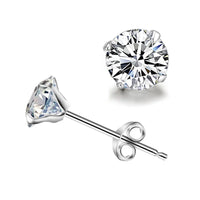
The piece they're describing → Puces d'oreilles en oxyde de zirconium pour femme — Argent sterling 925, oxyde de zirconium, hypoallergéniques
Personalize Yours


