


Cubic zirconia stud earrings are one of the most searched, most misunderstood pieces of jewelry on the market. Shoppers want the diamond look without the diamond price, but they also arrive with a stack of half-answered questions: Is CZ real or fake? Will it turn my ears green? Is it safe for sensitive skin? How long will a pair actually last? Most product pages answer none of this, and most blog posts answer only one question at a time.
This guide is different. It's the complete picture — what cubic zirconia is, how it compares to zirconium and diamond, whether it's hypoallergenic, why the "green earring" myth persists, how long a pair should realistically last, and how to style CZ studs once you own them. Each section below summarizes the core answer and links to a full deep-dive if you want more detail on any one topic. By the end, you'll know exactly what you're buying and why the metal setting matters as much as the stone itself.

What Is Cubic Zirconia?
Cubic zirconia is a real, physical crystal — the cubic crystalline form of zirconium dioxide (ZrO2), grown in a lab rather than mined from the ground. It isn't glass, plastic, or a "fake gem" in any deceptive sense. Manufacturers add a small amount of yttrium oxide during growth to stabilize the crystal structure, then cut and polish the rough material into faceted stones using the same equipment used for diamonds.
The confusion around CZ almost always comes down to mixing up two separate questions: "Is this a real substance?" and "Is this a real diamond?" It's the former, not the latter. The Gemological Institute of America classifies cubic zirconia as a diamond simulant — a stone engineered to resemble a diamond visually without sharing its composition. Diamonds are crystallized carbon; CZ is crystallized zirconium dioxide. They're chemically unrelated, and no reputable seller claims otherwise.
CZ is also meaningfully different from the glass and plastic "rhinestones" it sometimes gets lumped in with. Glass rates a soft 5-6 on the Mohs hardness scale and scratches easily; cubic zirconia rates 8 to 8.5, closer to sapphire than to glass, and throws noticeably more sparkle thanks to a higher refractive index. Commercial CZ production for jewelry began in 1976 using a process called skull melting, and it's remained the industry standard ever since.
For the full breakdown — how CZ is made, how to tell genuine CZ from cheap glass, and whether it's "worth buying" — see our complete guide on whether cubic zirconia is real.
Cubic Zirconia vs Zirconium — Don't Confuse Them
If you've bounced between "cubic zirconia" and "zirconium" while shopping, you're not alone — the names look like they should mean the same thing, and plenty of listings use them loosely. They're not the same material at all.
Zirconium is a metallic chemical element (symbol Zr), silvery-grey in its natural state, used in jewelry mostly as "black zirconium" — a metal heated until a hard, dark oxide layer forms on its surface, then polished for men's rings and wedding bands. Cubic zirconia, by contrast, is zirconium's oxide compound (ZrO2) grown into a clear crystal and cut as a gemstone. One is a metal you shape into a solid band; the other is a stone you set into a piece of jewelry.
The name overlap is real, not a marketing trick: cubic zirconia's name comes directly from zirconium, since it's the cubic crystal form of zirconium's oxide. Even Wikipedia's entry on the material notes it's "sometimes erroneously called cubic zirconium" — confirming this is a common, understandable mix-up rather than a rare slip. Both materials happen to be hypoallergenic in their own right (zirconium has no nickel content; CZ is chemically inert), but that's where the similarities end.
AJLuxe's sterling silver cubic zirconia stud earrings use the gemstone, not the metal — zirconium doesn't appear anywhere in the piece. For the full side-by-side comparison, including a detailed differences table, read cubic zirconia vs zirconium.
Is Cubic Zirconia Hypoallergenic?
Yes — clear cubic zirconia is one of the safest stones you can wear against your skin. It's made from zirconium dioxide, which is chemically inert: it doesn't oxidize, doesn't leach ions, and doesn't bind to skin proteins, which are the mechanics behind every metal allergy. Compare that to nickel, which oxidizes with sweat and releases the ions that trigger the immune reaction responsible for most jewelry-related contact dermatitis. The American Academy of Dermatology estimates more than 18% of people in North America are allergic to nickel — and that's a metal problem, not a stone problem.
Here's the part most guides skip: a pair of CZ earrings has two separate materials touching your skin, the stone and the setting, and they carry entirely different risk profiles. The stone is inert. The setting is where the real risk lives, because settings are metal alloys, and cheap alloys can contain nickel. A $5 pair with a nickel-alloy post will irritate sensitive ears; a pair set in genuine 925 sterling silver won't — even though the CZ stone in both is identical.
There's one real exception worth knowing: colored CZ (yellow, brown, champagne tones) gets its color from a doping process that can introduce trace nickel into the stone itself. Standard clear CZ skips this risk entirely. Rhodium plating also adds a protective barrier over sterling silver, but it wears down over 6 to 18 months of regular wear — which is why the base metal underneath matters more long-term than the plating on top.
For the complete breakdown — including a patch-test method to figure out whether you're reacting to a stone or a metal, and a full table of safe-vs-risky settings — see is cubic zirconia hypoallergenic.
Does Cubic Zirconia Turn Green?
No — and this is one of the most persistent myths in costume jewelry. Cubic zirconia is chemically stable and doesn't react with air, water, sweat, or skin oils, so there's no chemical pathway for the stone itself to turn green. When green shows up, it's always coming from the metal, not the stone.
The actual cause is copper. Many jewelry alloys — including sterling silver — contain copper for strength, since pure silver is too soft to hold its shape. When copper meets sweat, oxygen, and moisture over time, it forms copper carbonate (verdigris), the same greenish-blue coating seen on old pennies and the Statue of Liberty. Genuine 925 sterling silver is 92.5% silver and 7.5% copper, so the copper is technically present — but the percentage is small, and quality pieces add a rhodium or 18K gold plating layer on top that physically blocks that copper from ever touching skin or sweat. That's a functional protection, not a decorative choice.
Worth knowing: diamonds are just as chemically inert as CZ, and diamond rings can leave the same green marks for the exact same reason — copper in the band reacting with sweat. The stone is never the source of green discoloration; the setting always is. And if the discoloration is accompanied by redness or itching rather than just a stain, that's a separate signal pointing to a nickel allergy, not a copper reaction — the two are easy to conflate but chemically unrelated.
For the full explanation — including how tarnish, oxidation, and patina differ, and what to do if you notice green on a current pair — see does cubic zirconia turn green.

How Long Do CZ Earrings Last & How to Care for Them
The stone itself lasts indefinitely. Cubic zirconia sits at 8 to 8.5 on the Mohs hardness scale — harder than emerald, aquamarine, and quartz — and it's chemically stable, so it won't degrade, discolor, or cloud up on its own. Barring a hard direct impact, the stone you buy today looks structurally the same decades later.
What actually has a lifespan is the plating. Rhodium or 18K gold plating over the sterling silver base typically lasts 6 months to 2 years, with most pieces landing in the 12-to-18-month range under regular wear. Daily wear (including sleeping or showering in them) wears plating down fastest — 6 to 12 months; occasional, special-occasion-only wear can stretch plating life past 2 years. Once plating thins, the silver underneath starts to show through or shift to a duller, warmer tone. That's a re-plating job, not a sign you need a new pair.
Apparent "cloudiness" is almost always residue — lotion, soap, hairspray, and skin oils sitting on the stone's facets — rather than the stone aging. A simple weekly clean (mild soap, warm water, soft brush, thorough drying) restores most of the sparkle. Skip ultrasonic cleaners on glued settings and harsh chemicals on plated pieces. The one functional issue worth checking every few months is prong looseness: if a stone wiggles when you gently press it, get it tightened before you lose it — that's a five-minute fix if caught early.
For the full wear-pattern breakdown, cleaning steps, and how to tell "needs cleaning" from "needs replacing," see how long do CZ earrings last.
How to Style CZ Stud Earrings
CZ studs work with almost any outfit because they read as clean, versatile sparkle rather than a statement piece — but styling them well comes down to one rule most people skip: match metal tone first. Rhodium-plated CZ studs (bright, cool white) pair with silver, white gold, and platinum. 18K gold-plated CZ studs (warm yellow) pair with yellow and rose gold. Mixing tones isn't wrong, but it draws the eye to the mismatch instead of the sparkle.
From there, a few reliable combinations cover most situations. For everyday wear, let the CZ studs be your only sparkle — skip a second sparkly piece so the look reads as intentional, not cluttered. For office settings, keep the stud size to 4-6mm and pair with at most one simple pendant necklace. For a curated multi-piercing ear, place the CZ stud closest to your face and add smaller, plainer studs outward, varying size rather than style. For necklace pairing, match length to occasion: choker (14-16") for turtlenecks and date night, princess (17-19") as the safest everyday choice, matinee (20-24") for layered or busier tops. CZ studs also pair well with hoops or huggies, as long as the hoop stays smaller than or equal to the stud's visual weight, and they work well for bridal looks since they photograph like diamonds without the insurance concerns of wearing real ones all day.
For the full 7-idea breakdown with exact combinations for every occasion, see how to style CZ stud earrings.
Why Choose Sterling Silver CZ Studs
Everything above points to the same conclusion: the stone is rarely the problem, and the setting decides almost everything about how a pair of CZ studs performs — whether they're safe for sensitive ears, whether they'll ever show a green tint, and how long they'll actually look good. That's why the metal underneath the stone deserves as much attention as the CZ itself when you're shopping.
AJLuxe's sterling silver cubic zirconia stud earrings are built around that principle rather than around it being an afterthought. Each pair uses genuine 925 sterling silver (nickel-free, unlike many "silver-tone" alloys that are a nickel base with a thin silver wash), your choice of rhodium or 18K gold plating as a protective barrier, a 6mm clear brilliant-cut CZ stone, and a 4-prong setting that holds the stone mechanically instead of relying on glue — the same setting style this guide's care and durability sections identify as the more durable, longer-lasting construction.
That combination is deliberate: a genuine 925 stamp (not a plated base-metal alloy) for the hypoallergenic side of the equation, a real protective plating layer for the green-staining side, and a secure prong setting for the longevity side. It's the same pair referenced throughout every section above, because it's built to answer all of these questions at once rather than trading one off against another.
| Material | Made of | Mohs hardness | Hypoallergenic? | Care level | Price tier |
|---|---|---|---|---|---|
| Cubic zirconia | Zirconium dioxide (ZrO2), lab-grown | 8 - 8.5 | Yes (stone itself; setting varies) | Low — clean weekly, avoid chlorine | Budget |
| Zirconium (metal) | Metallic element (Zr), oxidized for jewelry | ~5 (metal); oxidized surface harder | Yes, no nickel content | Very low — scratch-resistant oxide layer | Mid-range |
| Glass / crystal | Silicon dioxide (SiO2), often with lead oxide | 5 - 6 | Varies by alloy setting | High — scratches and dulls easily | Lowest |
| Moissanite | Silicon carbide (SiC), lab-grown | 9.25 | Yes, chemically inert | Low | Mid-range |
| Diamond | Crystallized carbon | 10 | Yes, chemically inert | Low | High |
This is a high-level snapshot pulling together the numbers covered in each spoke guide above. If any one comparison matters most to your decision, the dedicated guides linked throughout this page go deeper on that specific question.
Choosing a metal setting for your studs? Our titanium vs stainless steel earrings comparison breaks down which hypoallergenic metal fits your ears best. Prefer your birth month over a plain stone? Our birthstone stud earrings guide covers all 12 months, real prices, and which ones are actually hypoallergenic.
Frequently Asked Questions
Is cubic zirconia real?
Yes. Cubic zirconia is a genuine, lab-created crystal made from zirconium dioxide. It's a real substance with its own defined chemical formula and physical properties — it's just not a diamond.
Is cubic zirconia the same as zirconium?
No. Cubic zirconia is zirconium dioxide, a lab-grown crystal used as a gemstone. Zirconium is a metallic chemical element, sometimes used on its own to make jewelry like men's rings. They share a name root but are chemically and physically different materials.
Is cubic zirconia hypoallergenic?
Yes. Cubic zirconia is made from zirconium dioxide, a lab-grown crystal that's chemically inert and doesn't react with skin. It contains no nickel and doesn't oxidize, which are the two things needed to trigger a skin allergy. Most reactions blamed on CZ jewelry actually come from the metal setting, not the stone.
Does cubic zirconia turn green?
No. Cubic zirconia is chemically inert zirconium dioxide and cannot turn green on its own. Any green tint comes from copper in the metal setting reacting with sweat and moisture to form copper carbonate — a cosmetic stain that washes off with soap and water.
How long do CZ earrings last?
The stone itself lasts indefinitely with basic care, since it's chemically stable and resists everyday scratching. The plating is the real limiting factor and typically needs refreshing every 6 to 18 months with regular wear, though occasional-wear pieces can go 2 years or longer.
Is sterling silver cubic zirconia hypoallergenic?
Yes. Genuine 925 sterling silver (92.5% silver, 7.5% copper) contains no nickel, and clear CZ is chemically inert, making the combination one of the lowest-risk options for sensitive ears — as long as the piece is stamped 925 and not just "silver-tone."
Can I wear CZ stud earrings every day?
Yes. CZ studs are durable enough for daily wear, and a simple stud in the 4-6mm range works with almost any outfit. Just remove them before showering or swimming to protect the plating and setting over time.
Do CZ stud earrings look cheap?
Not if the setting is right. A well-cut CZ stone in a genuine 925 sterling silver setting with a secure 4-prong mount looks like a diamond stud at a glance — the giveaway for cheap CZ jewelry is usually a flimsy metal base or a poorly cut stone, not the CZ itself.
What's the difference between hypoallergenic and nickel-free?
"Hypoallergenic" is an unregulated marketing term meaning a product is less likely to cause reactions. "Nickel-free" is a specific, verifiable claim about one ingredient — look for nickel-free backed by a real material standard like a 925 stamp.
Which metal setting should I choose if I have sensitive ears?
925 sterling silver, 316L surgical steel, titanium, and 18K gold are the safest options to pair with CZ stones. Genuine 925 sterling silver with rhodium or 18K gold plating and a 4-prong setting checks every box for low allergy risk, resistance to green staining, and durability.
Final Thoughts
Cubic zirconia earns a better reputation than it usually gets. It's a genuine lab-grown crystal, not a fake or a trick — hard enough for daily wear, chemically inert enough to be one of the safer stones for sensitive skin, and stable enough that it will never be the reason your earrings turn green or lose their sparkle. Nearly every complaint people have about CZ jewelry — allergic reactions, green staining, dulling plating — traces back to the metal setting, not the stone. Once you know that, shopping for CZ studs becomes a much simpler question: is this specific setting built well?
AJLuxe's sterling silver cubic zirconia stud earrings are built to answer yes on every count covered in this guide — genuine 925 sterling silver, a choice of rhodium or 18K gold plating, a secure 4-prong setting, and a 6mm clear brilliant-cut CZ stone. If you've read through the six guides linked above, you already know more about CZ than most people shopping for it. The last step is simple: pick your metal tone and try the pair for yourself.
Written by the AJLuxe team — specialists in personalized sterling silver jewelry. Last updated: July 2026.
Toutes les marques, noms de marque et noms de produits tiers sont la propriété de leurs détenteurs respectifs. AJLuxe n’est affilié à aucune marque tierce citée dans cet article, ni approuvé ou sponsorisé par celle-ci. Les noms de marque sont utilisés uniquement à des fins de comparaison factuelle, et les descriptions de matériaux reflètent les spécifications produit publiées par chaque marque au moment de la rédaction.
You Might Also Like
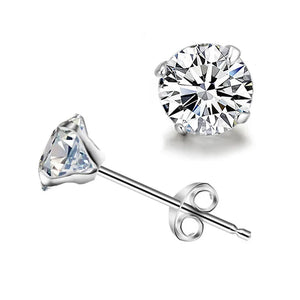
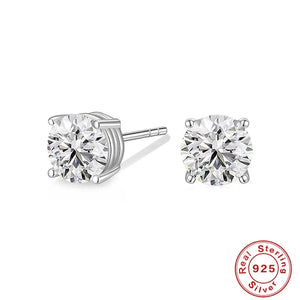
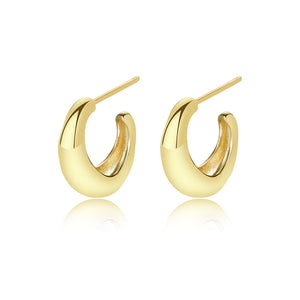
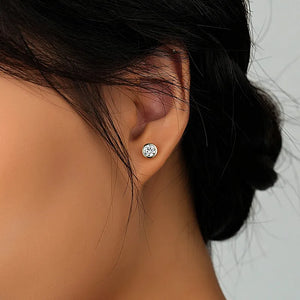
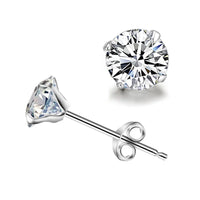
The piece they're describing → Puces d'oreilles en oxyde de zirconium pour femme — Argent sterling 925, oxyde de zirconium, hypoallergéniques
Personalize Yours


