


If you've ever wondered what a cocktail ring actually means, the short answer is: nothing but style. Unlike an engagement ring or a promise ring, a cocktail ring carries zero relationship symbolism — it's simply a large, decorative ring meant to draw the eye, usually featuring an oversized stone or a bold geometric design. The cocktail ring meaning people search for today traces back almost a century, to an era when wearing one was a small act of rebellion. This guide covers where cocktail rings came from, what wearing one signals now, exactly how a cocktail ring differs from a statement ring, and the practical details competitors skip — which hand, which finger, and which occasions actually call for one.
What Is a Cocktail Ring?
A cocktail ring is defined by scale, not sentiment. It's typically a large ring — often 1.5 to 3 times the size of a standard fashion ring — built around a prominent center stone (real, lab-created, or simulated) or an oversized decorative motif. Cocktail rings are almost always worn on top of the finger where they'll be seen, rather than tucked against the hand like a wedding band.
The defining features of a true cocktail ring:
- Size: Noticeably larger than everyday rings — this is non-negotiable
- Focal point: One dominant stone, cluster, or sculptural element (not a plain band)
- Purpose: Purely decorative — no engagement, wedding, or promise significance
- Placement: Meant to be the star of the outfit, not paired with a matching set
Because they're built for visibility, cocktail rings are also called "dinner rings" in some vintage jewelry circles — a callback to the formal dinners and parties where they were first popularized.
The History of Cocktail Rings: From Prohibition to Red Carpet
The cocktail ring's origin is genuinely tied to Prohibition (1920–1933). As alcohol went underground into speakeasies, women attending these illegal "cocktail parties" began wearing large, flashy rings as a visual signal of wealth, independence, and a willingness to break convention. The ring itself had nothing to do with the drink — it was a fashion statement for a newly visible, newly independent generation of women who were also, not coincidentally, gaining the right to vote in this same era.
By the 1940s and 1950s, cocktail rings had moved from speakeasies to formal "cocktail hour" social events — the pre-dinner gatherings common in postwar American social life — cementing the "cocktail ring" name. Hollywood accelerated the trend: red-carpet appearances through the 1950s–1970s regularly featured actresses in oversized rings, and the style has resurfaced in every subsequent decade, from Art Deco geometric designs to today's maximalist, colorful revival.
According to jewelry industry buying guides, oversized statement pieces like cocktail rings remain one of the most consistently repeated trend cycles in fine and fashion jewelry, precisely because they were never tied to a single era's silhouette — they're tied to an attitude (Jewelers of America, buying guide).
What Does Wearing a Cocktail Ring Mean Today?
Modern cocktail ring meaning has shifted from "look how daring I am at a Prohibition party" to something broader: confidence, individuality, and a rejection of the idea that jewelry has to explain itself. Because a cocktail ring carries no relationship symbolism, it's one of the few major jewelry categories a woman can buy entirely for herself — no proposal, no anniversary, no gift-giver required. If you want a statement ring with built-in symbolism rather than pure style, see our guide to snake ring meaning.
Common associations people attach to wearing a cocktail ring today:
- Self-expression: A deliberate style choice, not a milestone marker
- Confidence: Oversized jewelry draws attention, so wearing one signals comfort being noticed
- Celebration: Many women buy a cocktail ring to mark a personal achievement — a promotion, a birthday, a divorce, a graduation — rather than receiving one as a gift
- Independence: Rooted in its 1920s origin as jewelry bought and worn by women for their own enjoyment
Cocktail Ring vs Statement Ring: What's the Difference?
This is the single most-searched confusion around cocktail rings, and the honest answer is: every cocktail ring is a statement ring, but not every statement ring is a cocktail ring. "Statement ring" is the broader umbrella term for any ring designed to be noticed; "cocktail ring" is a specific style within that category, defined by its scale and single-focal-point design.
| Feature | Cocktail Ring | Statement Ring | Everyday Ring |
|---|---|---|---|
| Size | Large, oversized — often covers most of the finger | Noticeable, but ranges from medium to large | Standard, proportionate band |
| Focal point | One dominant stone or sculptural centerpiece | Can be a stone, texture, color, or unusual shape | Minimal or no focal point |
| Historical origin | 1920s Prohibition speakeasy culture | No single origin — general fashion category | N/A — functional/classic design |
| Best occasions | Evening events, parties, self-gifting moments | Versatile — day or night | Daily wear, layering, work |
| Symbolism | Confidence, celebration, independence | Personal style | None required |
| Typical placement | Right hand, index or middle finger | Any finger, either hand | Any finger |
How to Wear a Cocktail Ring: Which Hand, Which Finger
There's no legal rule here — but there is a strong style convention, and it's worth knowing before you buy. Because the left hand's ring finger is culturally reserved for engagement and wedding rings in most Western dress codes, cocktail rings are traditionally worn on the right hand to avoid visual confusion with marital status.
Within the right hand, the best fingers for a cocktail ring are:
- Index finger: The most popular choice — it's the most visible finger when your hand is at rest or gesturing, and it can comfortably support a larger setting
- Middle finger: A close second — central placement draws the eye and works well with an oversized or asymmetric design
- Ring finger (right hand): Common and completely acceptable — this only signals "engaged" on the left hand
- Thumb: A more modern, editorial choice for wide-band or sculptural cocktail rings
That said, style rules have relaxed considerably. Left-hand cocktail rings are increasingly common, especially stacked alongside other rings or worn by women who are already married and want to layer a statement piece in with their existing rings. If you're stacking, keep the cocktail ring as the clear visual anchor and let everything else stay thin and quiet.

When to Wear a Cocktail Ring: Occasions Guide
| Occasion | Works? | Styling note |
|---|---|---|
| Cocktail party / evening event | Ideal | The category's namesake occasion — go as bold as you like |
| Wedding guest (not the bride) | Yes | Pairs well with a cocktail dress; avoid outshining the bridal party |
| Date night | Yes | Wear alone, minimal other jewelry |
| Work / office | Depends on dress code | Choose a smaller-scale cocktail ring for corporate settings |
| Everyday / casual | Increasingly common | Pair with simple outfits — let the ring be the only "loud" element |
| Formal black-tie | Ideal | Classic red-carpet pairing — go for maximum sparkle |
How to Style a Cocktail Ring
The golden rule of cocktail ring styling is: let it be the loudest thing in the room. A few practical guidelines:
- Keep other jewelry minimal. Skip additional statement rings on the same hand, and choose simple studs or a delicate pendant elsewhere
- Match metals, not stones. If your cocktail ring is 18K gold plated, keep other pieces in the same gold tone rather than mixing silver and gold on the same hand
- Consider nail color. A neutral or matching manicure lets the ring do the talking; a competing bold nail color can visually fight with the setting
- Stack with intention. If you do stack, use one or two slim bands on adjacent fingers — never another large piece on the same finger

Choosing the Right Cocktail Ring: Size, Metal & Stone
A few practical buying considerations that most cocktail ring guides skip entirely:
- Sizing: Because cocktail rings sit higher and heavier on the finger than a standard band, many people size up slightly (a quarter to half size) for comfort — especially over knuckles. Adjustable-band cocktail rings solve this without a trip to a jeweler.
- Metal: 18K gold plated over 925 sterling silver gives you the warm, formal look associated with vintage cocktail rings at a fraction of solid gold's price and weight — and it won't irritate sensitive skin the way base-metal costume rings can.
- Stone: Cubic zirconia and lab-created stones deliver the same oversized sparkle as the vintage rings that inspired the style, without the four- and five-figure price tag of natural gemstones this large.
- Real vs. costume: A cocktail ring doesn't need to use precious stones to be "real" jewelry — the category was built on decorative impact, not gemstone rarity, so a well-made CZ or crystal cocktail ring is completely true to the original spirit of the style.
Frequently Asked Questions
What is the meaning of a cocktail ring?
A cocktail ring is a large, decorative ring worn for style rather than relationship symbolism. It originated in 1920s Prohibition-era speakeasy culture and today represents confidence, self-expression, and personal celebration rather than engagement or marriage.
What is a cocktail ring and how is it defined?
It's defined by scale and focal point: an oversized ring, usually built around one dominant stone or design element, meant to be noticed rather than blended in with everyday jewelry.
When and where did cocktail rings originate in history?
Cocktail rings emerged in the United States during Prohibition (1920–1933), when women wore large, flashy rings to speakeasy cocktail parties as a symbol of independence and rebellion against the era's restrictions.
Why are cocktail rings associated with the Prohibition era?
Because that's literally where the trend started — attending an illegal cocktail party required a certain daring, and an oversized ring was a visible way to signal that boldness without saying a word.
What hand do you traditionally wear a cocktail ring on?
The right hand, traditionally — this avoids the visual confusion of appearing to wear an engagement or wedding ring, which convention reserves for the left hand's ring finger.
Which finger is best to wear a cocktail ring on?
The index or middle finger of the right hand is most common, since both are highly visible and can comfortably support a larger setting. The right ring finger and thumb are also popular, more modern choices.
Is it okay to wear a cocktail ring on the left hand today?
Yes. Style conventions have relaxed significantly, and many women now wear cocktail rings on either hand, including stacked alongside an existing engagement or wedding ring.
What is the difference between a cocktail ring and a statement ring?
A statement ring is any ring designed to be noticed; a cocktail ring is a specific, larger subtype of statement ring built around one dominant stone or design. All cocktail rings are statement rings, but not all statement rings are cocktail rings.
Are all cocktail rings considered statement rings?
Yes — by definition, a cocktail ring is meant to be seen, which makes it a statement ring. The reverse isn't true, since many statement rings are smaller or more understated than a true cocktail ring.
What occasions are cocktail rings appropriate for?
Evening events, parties, date nights, weddings (as a guest), and black-tie occasions are classic fits. Smaller-scale cocktail rings also work for everyday wear and even some office settings, depending on dress code.
Should cocktail rings be worn for everyday use?
They can be — it's increasingly common — but choose a more compact design for daily wear and save the largest, most dramatic pieces for evenings and special occasions.
How do cocktail rings differ from engagement rings in purpose and meaning?
An engagement ring symbolizes a marriage proposal and is worn on the left ring finger as a permanent daily piece. A cocktail ring carries no relationship meaning at all and is chosen purely for personal style, often worn only for specific occasions.
Are cocktail rings typically larger than other rings, and how should they be sized?
Yes, size is the defining feature. Because they sit higher on the finger, many wearers size up a quarter to half size for comfort, and adjustable-band styles are a popular solution.
What does wearing a cocktail ring symbolize about the wearer in modern times?
Today it typically reads as confidence, individuality, and comfort being noticed — plus, for many women, it marks a personal milestone or achievement bought for themselves rather than received as a gift.
Can a cocktail ring be used to propose, and how does that differ from an engagement ring?
No — a cocktail ring is not designed or intended for proposals. Engagement rings carry a specific, universally recognized meaning tied to marriage commitment, while cocktail rings are explicitly meant to be free of that symbolism.
Final Thoughts
A cocktail ring is one of the few pieces of jewelry that asks nothing of you — no relationship status, no milestone required, no explanation needed. It exists purely to be noticed, worn on the hand and finger of your choosing, for the occasion of your choosing. Whether you're buying one to mark a personal win or simply because you love the way a bold stone catches the light, the "rules" are really just style conventions you're free to break.
If you're ready to add one to your jewelry box, AJLuxe's 18K Gold Plated Statement Ring delivers the oversized, tarnish-resistant sparkle a true cocktail ring calls for, in genuine 18K gold plating, priced well below the vintage pieces that started the trend.
Shop This Guide
Shop the 18K Gold Plated Statement RingWritten by the AJLuxe team, personalized jewelry designers specializing in hypoallergenic 925 sterling silver and 18K gold plated pieces. Historical detail on Prohibition-era cocktail party jewelry referenced via Jewelers of America. Last updated: July 2026.
Toutes les marques, noms de marque et noms de produits tiers sont la propriété de leurs détenteurs respectifs. AJLuxe n’est affilié à aucune marque tierce citée dans cet article, ni approuvé ou sponsorisé par celle-ci. Les noms de marque sont utilisés uniquement à des fins de comparaison factuelle, et les descriptions de matériaux reflètent les spécifications produit publiées par chaque marque au moment de la rédaction.
You Might Also Like
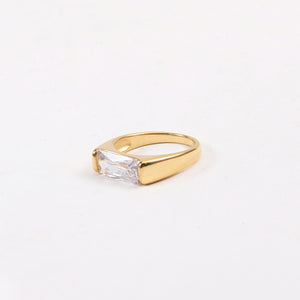
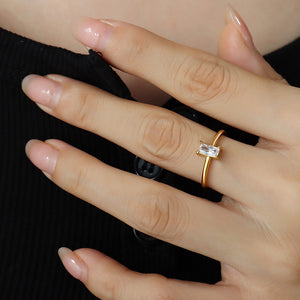

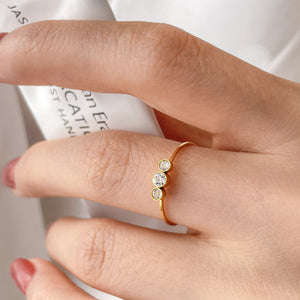
The piece they're describing → Bague en plaqué or 18 carats pour femme — Bague audacieuse en zircone cubique, résistante au ternissement
Personalize Yours


