


- Elastic (stretch) cord is the easiest option for no-clasp bracelets with smooth, round beads.
- Nylon-coated beading wire (Tiger Tail/Beadalon-style) is strongest for heavy gemstone, crystal, or pearl beads and finishes with crimps, not knots.
- Nylon thread (C-Lon, Nymo) is the standard for seed bead weaving; braided thread (Fireline, PowerPro) is stronger and better for pieces that get daily wear.
- Silk thread is the traditional choice for hand-knotted pearls, but it is weaker than nylon around abrasive stone beads.
- Waxed cotton and leather cord suit larger-hole beads (wood, lava stone, ceramic) and casual, boho-style designs.
- Match cord thickness to your bead holes first — a cord that is too thick will not pass through, and one that is too thin will not support the bead's weight.
Walk into any bead shop and the wall of stringing materials looks identical until you actually try to use the wrong one — elastic cord that snaps under the weight of chunky gemstone beads, or thread that is too thick to pass through a seed bead twice. The right cord depends almost entirely on what you are stringing and how the finished bracelet needs to close. Below are the seven cords real bead crafters reach for most, what each one is actually good at, and how to pick between them.
1. Elastic Cord (Stretch Cord)
Elastic cord is a stretchy polyurethane or latex-core cord that lets you skip a clasp entirely by tying or gluing the ends together after stringing. It is the material behind almost every stretch bead bracelet you have ever pulled over your hand. It comes in thicknesses from about 0.5mm to 1mm, and thicker cord holds up better under repeated stretching. It works best with round beads that have smooth, unchipped holes — sharp-edged stone or crystal beads will saw through elastic cord over months of wear, so it is better suited to glass, wood, or polished gemstone rounds than to raw or faceted stones. It is the fastest cord for beginners and for kids' jewelry because there is no clasp to attach.

2. Beading Wire (Nylon-Coated Wire)
Beading wire is a flexible multi-strand steel wire coated in nylon that holds its shape, resists stretching, and finishes with crimp beads and a clasp instead of a knot. It is sold by strand count — 7, 19, or 49 strands — and more strands generally means a more flexible, kink-resistant wire, with 49-strand wire feeling almost like thread. Diameters typically run from about .012 to .024 inches; thicker wire suits heavier beads like large gemstone nuggets, while thinner wire suits smaller crystals and pearls. Beading wire is the strongest choice here for heavy beads and is what most commercial gemstone bracelets are strung on, but it requires a crimping tool and cannot be knotted between beads the way thread or silk can.
3. Nylon Beading Thread (C-Lon, Nymo, Silamide)
Nylon beading thread is a thin, strong thread built for seed bead weaving, and it is the standard choice for peyote stitch, brick stitch, and other off-loom beadwork bracelets. It comes in graded thicknesses (commonly sizes D and B) and a wide range of colors so the thread can disappear inside colored seed beads. Many crafters run it through beeswax or thread conditioner first to reduce tangling and add a bit of stiffness for easier needle threading. It does not stretch, which keeps woven patterns tight and even, but it is not as abrasion-resistant as braided thread when a bracelet gets pulled through multiple passes of tiny 11/0 or 15/0 seed beads over time.
4. Braided Beading Thread (Fireline, PowerPro)
Braided beading thread is a fused, gel-spun polyethylene line — originally developed as fishing line — that resists fraying and breaking, making it the strongest option for beadwork that needs to survive daily wear, like wide cuffs and dense woven bands. It is smooth enough to pass through the same seed bead three or four times without shredding, which nylon thread struggles with, and it has very low stretch so patterns stay crisp. It costs a bit more than standard nylon thread and typically comes in just a couple of colors (smoke and crystal), so it works best when the thread will be fully hidden inside the beadwork rather than visible as an accent.
5. Silk Thread
Silk thread is a soft, slightly stretchy natural fiber thread traditionally used to hand-knot pearls and gemstone beads, tying a small knot between each bead to stop them from rubbing against one another. It is usually sold pre-strung on a card with an attached needle, in graded sizes from about 00 to 16 depending on the bead hole size. Hand-knotting between beads also adds drape and means that if the strand ever breaks, only one bead is lost rather than the whole bracelet scattering. Silk is more delicate than nylon or braided thread and can fray faster against sharp-holed stone beads, so it suits finer, special-occasion pearl or gemstone pieces more than everyday stacked bracelets.
6. Waxed Cotton or Linen Cord
Waxed cotton and linen cord are thicker, wax-coated natural-fiber cords used for macrame-style and knotted bead bracelets where the cord itself is part of the visible design, not just a hidden stringing material. They typically run from about 0.5mm to 2mm thick, and the wax coating helps knots grip and hold their shape without slipping loose. This makes them a natural match for larger-hole beads like wood, ceramic, or lava stone rather than fine seed beads, which the cord is usually too thick to pass through. The look leans casual and boho, and the cord color itself (natural, black, brown) becomes part of the finished bracelet's style.
7. Leather Cord
Leather cord is a durable round or flat cord best suited to chunky, rustic bracelets strung with large-hole beads such as wood, lava rock, or metal spacers. It comes in genuine and faux versions, with 1mm to 3mm round cord the most common width for beaded designs, and it is usually finished with crimp end caps and a clasp rather than tied off. Like waxed cotton, it is too thick for seed beads or fine gemstone chips, but it holds up well to daily wear and gives a bracelet a more masculine or bohemian look than thread or wire would.
Cord Comparison at a Glance
| Cord Type | Best For | Bead Hole Size | Knots Well? |
|---|---|---|---|
| Elastic cord | No-clasp stretch bracelets | Medium-large, smooth | Ties, doesn't knot between beads |
| Beading wire | Heavy gemstone/crystal strands | Medium-large | No — crimps only |
| Nylon thread | Seed bead weaving | Small (seed beads) | Yes |
| Braided thread (Fireline) | Durable everyday beadwork | Small (seed beads) | Yes |
| Silk thread | Hand-knotted pearls | Small-medium | Yes, beautifully |
| Waxed cotton/linen | Macrame, boho designs | Large | Yes, grips well |
| Leather cord | Rustic, chunky bracelets | Large | Limited — usually crimped |
Which Cord Should You Choose for Your Bead Bracelet?
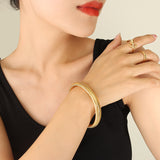
If you are just getting started, elastic cord with 6-8mm round beads is the easiest and fastest project — no clasp, no crimping tool, tie it off and wear it. Move to nylon-coated beading wire once you are working with heavier gemstone or crystal beads that would wear through elastic over time, and reach for braided thread like Fireline if you are weaving seed beads into a cuff or wide band that needs to survive daily wear. Silk is worth the extra care only for hand-knotted pearl or fine gemstone pieces where the drape matters. And if stringing is not for you but you still want that stretch-fit, stackable look, AJLuxe's Gold Elastic Bangle Bracelet ($39.99) delivers it already finished — 18K gold-plated 925 sterling silver, hypoallergenic, and ready to stack straight out of the box.

Frequently Asked Questions
What is the best string for seed bead bracelets?
Nylon beading thread (like C-Lon or Nymo) or braided thread (like Fireline) are the best strings for seed bead bracelets, since both are thin enough to pass through 11/0 or 15/0 seed beads multiple times without stretching. Braided thread costs a little more but resists fraying better on pieces that will see daily wear.
What is the best wire for beaded bracelets?
Nylon-coated multi-strand beading wire (often sold under names like Beadalon or Tiger Tail) is the best wire for beaded bracelets, especially with heavier gemstone, crystal, or pearl beads. Higher strand-count wire (19 or 49 strands) is more flexible and kink-resistant than lower-strand wire, and it finishes with crimp beads rather than knots.
Is it better to string beads with string or wire?
It depends on the beads: wire holds its shape better and supports heavier gemstone or crystal beads, while string (thread) is more flexible, can be knotted between beads, and is required for fine seed bead weaving that wire cannot pass through repeatedly. Choose wire for heavier, structured pieces and thread for lightweight or woven designs.
What kind of string is used for beads?
Common strings used for beads include nylon beading thread, silk thread, braided thread like Fireline, elastic (stretch) cord, and waxed cotton or leather cord, with the right one depending on the bead's hole size, weight, and whether the piece needs a clasp. Fine seed beads generally need thread, while larger-hole beads work with thicker cotton, leather, or elastic cord.
Can you use fishing line for bead bracelets?
Yes — braided fishing lines like Fireline and PowerPro are widely used for bead bracelets because their gel-spun polyethylene construction resists fraying and has very low stretch. They are especially popular for seed bead weaving projects that need to hold up to daily wear.
What size beading wire is best for bracelets?
A mid-range diameter of about .015 to .019 inches on a 19- or 49-strand wire works for most bracelet beads, balancing strength with enough flexibility to drape naturally. Use a thicker diameter for larger, heavier stone beads and a thinner one for delicate crystals or pearls.
Related reading: Best Cord for Beaded Bracelets: A Complete Guide by Bead Type (2026).
Toutes les marques, noms de marque et noms de produits tiers sont la propriété de leurs détenteurs respectifs. AJLuxe n’est affilié à aucune marque tierce citée dans cet article, ni approuvé ou sponsorisé par celle-ci. Les noms de marque sont utilisés uniquement à des fins de comparaison factuelle, et les descriptions de matériaux reflètent les spécifications produit publiées par chaque marque au moment de la rédaction.
You Might Also Like

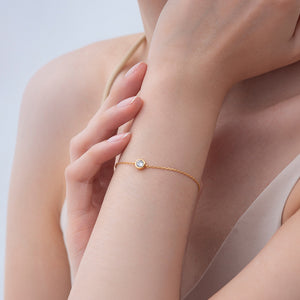
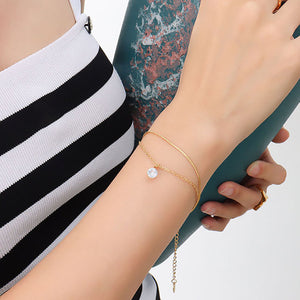
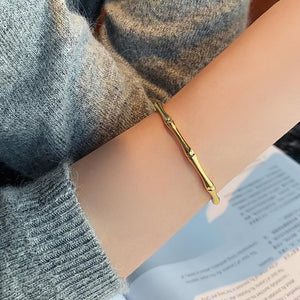
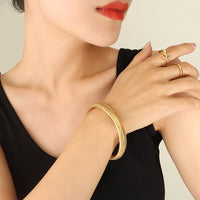
The piece they're describing → Bracelet jonc élastique doré pour femme — Plaqué or 18 carats, extensible, empilable
Personalize Yours


