


Quick Summary
- Ring finger meaning traces back to the "vena amoris," an ancient (and medically false) belief that a vein ran straight from the fourth finger to the heart.
- In Western countries, the left ring finger holds wedding and engagement rings. In Germany, Russia, India, and several Orthodox and Catholic countries, it's the right hand instead.
- Every finger carries its own symbolism: thumb (confidence), index (leadership), middle (balance), ring (love and commitment), pinky (communication).
- Widows and widowers commonly move a wedding ring to the right hand or a necklace chain — there's no fixed rule, just personal choice.
- Many LGBTQ+ couples historically wore rings on the right hand as a quiet marker of identity; most now choose freely based on preference.
- There's no medical or superstitious downside to wearing a ring on any finger you like — tradition is a guide, not a rule.
Ring finger meaning comes down to one enduring story: for more than 2,000 years, people believed a vein ran directly from the fourth finger to the heart. That belief shaped which finger holds an engagement ring, a wedding band, or a promise ring today. But the full picture is more interesting — and more useful — than one Roman myth. This guide covers what each finger symbolizes, how hand and finger choice shifts by country and community, and the practical questions people search for most: which hand for a promise ring, what widows do with a wedding band, and whether it's ever "wrong" to wear a ring where you want.
A Brief History of the Ring Finger
The idea that the fourth finger connects to the heart is ancient. Egyptian and Greek physicians believed a delicate vein — the vena amoris, Latin for "vein of love" — ran from that finger straight to the heart. Romans adopted the belief and passed it into Western wedding custom, and medieval European jewelers cemented it further by carving hearts and clasped hands into ring finger bands as a visual reminder of the connection.
The ring itself predates the finger tradition by thousands of years. Ancient Egyptians exchanged rings made of braided reeds and hemp as early as 4,800 years ago, worn as a circle with no beginning and no end — a symbol of eternity that still shapes wedding ring design today. Romans later introduced iron and then gold bands, partly as a public display of a marriage contract rather than a purely romantic gesture.
Modern anatomy disproves the vena amoris. Every finger has roughly the same blood supply, and no single vein runs uninterrupted to the heart. The Gemological Institute of America has documented how ring traditions evolved from pure symbolism into the diamond and gemstone customs seen today — you can read more on the science and history of gem-set jewelry in GIA's Gems & Gemology research journal. The custom stuck anyway, because the story was romantic and the symbolism was useful: one finger, one clear signal to the world. Diamond engagement rings themselves are a far more recent addition — they only became a mainstream expectation in the West after a famous 1947 De Beers marketing campaign, not from any ancient tradition at all.
Left Hand vs. Right Hand: What It Signals
In the United States, United Kingdom, Canada, Australia, and most of Western Europe, the left ring finger holds the engagement ring and wedding band. It's the hand people glance at first to check relationship status — which is exactly why the custom persisted.
Several countries flip the tradition. Germany, Austria, Russia, Poland, Norway, and India place wedding and engagement rings on the right hand. Some couples in these regions wear the engagement ring on the left hand before the wedding, then move both rings to the right hand once married. Greece and several Central and South American Catholic countries also favor the right hand.
There's also a symbolic split between the hands themselves that shows up in folklore and, more loosely, in modern styling advice. The right hand is often described as the "active" or "physical" hand — the one used for gestures, handshakes, and everyday tasks. The left hand is described as the "receptive" or "character" hand, tied to identity and emotional life. That framing is part of why the left hand felt like the natural home for a symbol of love and commitment in cultures that adopted it, even though it's more folklore than fact.
Neither side is "more correct." Left-hand and right-hand traditions both descend from the same vena amoris myth — cultures just applied it to different hands over time. If you're marrying into a family or community with a different hand tradition than the one you grew up with, there's no obligation to pick a side; plenty of intercultural couples simply choose whichever hand feels most natural to both partners.
Finger-by-Finger Ring Meaning
Every finger has picked up its own symbolism over centuries of folklore, astrology, and modern reinterpretation. None of it is a rule — it's a lens for choosing where a ring feels right.

Thumb: Confidence and Independence
A thumb ring reads as bold and self-assured. Historically tied to wealth and status (thick, sturdy thumb rings were once a sign of archers and warriors, who used them to protect the thumb while drawing a bowstring), today it's mostly a style statement. Thumb rings run wider than standard sizing — measure separately, since the thumb is usually one to two sizes larger than the ring finger, and its shape is rounder, so a band that fits well on the ring finger may feel tight or spin loosely on the thumb.
Index Finger: Leadership and Ambition
The index finger is linked to Jupiter in classical astrology — the planet of authority and growth. A ring here suggests confidence, leadership, or personal ambition. Historically, signet rings (used to stamp wax seals on official documents) were worn on the index finger for easy use, which is part of why men's signet rings still favor this placement. It's also a common spot for a birthstone ring worn for personal meaning rather than relationship status, since it avoids any confusion with a wedding or engagement ring.
Middle Finger: Balance and Individuality
The middle finger sits at the literal center of the hand, associated with Saturn and personal balance. Because it's the longest finger, it comfortably carries larger or more elaborate statement rings without looking out of proportion. It's a popular default for people who want a bold ring but don't want it read as a symbol of commitment — since it sits right next to the ring finger without being it.
Ring Finger: Love, Commitment, and Creativity
This is the finger tied to the vena amoris and, by extension, romantic commitment. Ancient tradition also linked it to Apollo and to creative expression — gemstones like moonstone, sapphire, and amethyst were historically favored here for their association with beauty and devotion. It remains the default placement for engagement rings, wedding bands, and promise rings in most Western countries. Because it carries the most social meaning of any finger, it's also the one people are most cautious about — many intentionally avoid wearing any ring here unless they want it read as a relationship signal.
Pinky Finger: Communication and Independence
The smallest finger is associated with Mercury, the messenger, and with eloquence and quick thinking. A pinky ring has also carried class signals historically — in some 20th-century professional and social circles, a pinky ring signaled family status or a completed apprenticeship, and in certain fraternal and academic traditions it still marks a milestone like a graduation or membership. Sizing runs small and often requires a dedicated band rather than resizing a standard ring down, since going more than a couple of sizes smaller can distort a ring's proportions and setting.
Because every finger measures differently, a size taken on one is not transferable to another — measure the specific finger the ring will live on. Men's sizes in particular run across a wider range than most size charts show; our men's ring size chart covers US 6 to 16 with the millimetre equivalents.
Ring Placement at a Glance
| Finger | Common Symbolism | Typical Ring Types | Sizing Note |
|---|---|---|---|
| Thumb | Confidence, independence | Wide bands, statement rings | Runs 1–2 sizes larger |
| Index | Leadership, ambition | Signet rings, stackables | Close to true hand size |
| Middle | Balance, individuality | Statement rings, larger stones | Slightly larger than ring finger |
| Ring finger | Love, commitment, creativity | Engagement, wedding, promise rings | Standard measured size |
| Pinky | Communication, independence | Slim bands, signet-style | Runs smallest; often needs custom sizing |
Cultural Variations Around the World
Ring placement is one of the clearest examples of a "universal" custom that isn't actually universal. Western practice (left hand) dominates media and marketing, but a large share of the world does it differently.
- Germany, Austria, Russia, Norway, Poland: Right hand for both engagement and wedding rings.
- India: Right hand is traditional, though Western-style left-hand engagement rings have become more common in urban areas.
- Jewish tradition: The wedding ring is placed on the bride's right index finger during the ceremony itself, then commonly moved to the left ring finger afterward.
- Sinhalese and Tamil customs: Grooms often wear the ring on the right hand while brides wear it on the left.
- Many Muslim-majority countries: Wedding rings aren't part of traditional ceremonies at all, though engagement rings have become more common through Western influence.
- Greece and parts of Central/South America: Right hand for wedding rings, often influenced by Orthodox or Catholic tradition.
These differences matter beyond trivia — they shape real decisions for couples planning a wedding across cultures, gift-buyers choosing jewelry for someone from a different background, and travelers who notice ring placement customs are different from what they expected. When in doubt, the safest approach for a gift is to ask directly rather than assume a hand based on where you'd wear a ring yourself.
Do Birthstones Matter by Finger?
Birthstone symbolism is tied to a wearer's birth month, not to a specific finger — there's no traditional rule pairing, say, sapphire with the index finger or garnet with the pinky. That said, plenty of people build a personal system anyway: wearing a birthstone ring on the middle or index finger to keep it visually distinct from an engagement or wedding ring on the ring finger, or stacking a birthstone band next to a wedding band as a way to combine both kinds of meaning on one hand.
If you're picking a birthstone piece as a gift, finger placement is really a sizing question more than a symbolic one — ask which finger the recipient actually wants to wear it on, then size for that finger specifically, since a ring fitted for the ring finger often won't fit the same on the index or middle finger.
What Widows and Widowers Do With a Wedding Ring
This is one of the most searched — and least discussed — questions about ring finger meaning. There's no official rule, but a few patterns are common:
- Move it to the right hand. Many widows and widowers shift the ring from the left ring finger to the right, keeping the ring close while signaling the change in status.
- Wear it on a chain. Turning the ring into a necklace keeps it near the heart without it being read as an active wedding band.
- Keep wearing it as-is. Plenty of people continue wearing the ring on the original finger indefinitely, especially in the months after a loss — there's no timeline you're required to follow.
- Repurpose or pass it down. Some eventually reset the stone into a new piece or give the ring to a child as an heirloom.
None of these choices is more "correct" than another. The etiquette that exists is really just common practice, not a hard rule — the right answer is whatever brings comfort.

LGBTQ+ Engagement and Wedding Ring Conventions
Before nationwide marriage equality, many LGBTQ+ couples in the U.S. wore engagement and wedding rings on the right hand rather than the left. It served two purposes: a private signal of commitment to each other, and a way to differentiate their relationship within a legal system that didn't yet recognize it.
Since same-sex marriage became legally recognized nationwide in 2015, more couples have shifted to the traditional left hand, following the same conventions as opposite-sex couples. Others intentionally keep the right-hand placement as a nod to that history. There's no single rule within the LGBTQ+ community today — placement is a personal choice shaped by history, culture, and individual preference, not a fixed requirement.
Promise Rings, Engagement Rings, and Which Finger Each Uses
A promise ring most often goes on the left ring finger — the same finger used later for an engagement ring — because that placement is the clearest signal of "we're serious." Some couples deliberately choose the right ring finger instead, to avoid it being mistaken for an engagement ring, then move it to the left hand only once an actual engagement happens.
Other common promise ring placements include the middle finger or a chain necklace, especially for people who want the sentiment without the marriage association. For a deeper breakdown of styles, timing, and etiquette, see our complete promise ring guide, and if you're weighing a promise ring against a full engagement ring, our promise ring vs. engagement ring comparison breaks down the practical differences.
If you're shopping for a versatile band that works whether you land on left, right, or middle finger, an adjustable style like the minimalist adjustable ring in sterling silver sidesteps the sizing guesswork entirely — one ring, several fingers, no resizing fees. See our full guide to adjustable rings for how they actually fit. It's also a practical choice for a first promise ring, since it doesn't lock a couple into a permanent size before a relationship's next step is settled.
Buying a Ring as a Gift: What Finger Placement Means for You
If you're shopping for someone else, finger meaning turns into a practical sizing and intent question fast. A few guidelines:
- Confirm intent before you confirm size. A ring finger gift on the left hand reads as a serious relationship signal almost everywhere in the West — make sure that's the message you mean to send before you buy.
- For non-romantic gifts, choose a different finger on purpose. A ring gifted to a friend, sibling, or parent is usually safer sized for the middle, index, or pinky finger, sidestepping any accidental "proposal" reading.
- When size is uncertain, buy adjustable. Guessing a fixed ring size for someone else is one of the most common gift-giving mistakes in fine jewelry. An adjustable band, like the minimalist adjustable sterling silver ring, removes that risk entirely and still looks intentional rather than like a placeholder.
- Ask, when you can. For anything beyond a casual gift, a quick, low-key question about ring size and preferred finger beats guessing — most people would rather answer a direct question than receive a ring that doesn't fit.
Ring Sizing Basics for Different Fingers
Because finger placement is so tied to personal choice now, sizing has become the more practical question for most shoppers. A few basics make it easier to get right the first time:
- Measure the specific finger you plan to wear the ring on. Ring sizes are not interchangeable across fingers — a size 7 on the ring finger might be a size 8.5 on the middle finger and a size 5 on the pinky.
- Measure at the end of the day. Fingers are typically at their largest in the evening or after warm weather, so an afternoon measurement gives a more realistic everyday fit than a first-thing-in-the-morning one.
- Account for knuckle width separately from finger width. A ring needs to pass over the knuckle but still sit securely below it — if the knuckle is noticeably wider than the base of the finger, a slightly looser fit with a safety measure like a ring guard adjuster may work better than sizing tight.
- Choose adjustable styles for fingers you're unsure about. An adjustable band removes the guesswork entirely for thumb, index, or midi placements where sizing charts are less standardized.
Mood Rings and Novelty Ring Traditions
Mood rings don't carry the same symbolic weight as a wedding or promise ring, but they're part of the same finger-placement conversation — people search for where to wear them almost as often as what they mean. A mood ring uses thermochromic liquid crystals that shift color with skin temperature, not actual emotion, so the "mood" reading is really a temperature reading. Because they're playful rather than symbolic, mood rings are typically worn on the index, middle, or pinky finger — fingers not already reserved for a commitment ring.
The same logic applies to birthstone rings worn for personal meaning rather than relationship status: many people place a birthstone ring on the middle or index finger specifically to avoid the "engaged" read that comes with the ring finger.
Stacking Rings and Modern Ring-Wearing Rules
Ring stacking — wearing multiple rings on one finger or across several fingers — has become one of the most common modern styling choices, and it loosens up a lot of the old one-ring, one-finger thinking. A few practical guidelines:
- Mix metals sparingly. One or two metal tones across a stack looks intentional; four starts to look cluttered.
- Balance proportions. Pair a thin band with a statement piece rather than stacking multiple large rings on the same finger.
- Leave the ring finger simple if you're engaged or married. Many people keep stacking to the index, middle, and pinky, so the wedding set stays visually distinct.
- Adjustable bands make experimentation easy. A flexible, resizable option like the minimalist adjustable sterling silver ring is a low-commitment way to test a new finger placement before buying a fixed-size piece.
For a broader look at stacking multiple thin bands together, see our midi ring style and stacking guide, and for men specifically navigating ring placement and sizing, our men's rings guide covers finger placement, proportion, and sizing in more detail.
Celebrity Ring Trends Shaping Modern Placement
Public figures have quietly rewritten a lot of the old finger rules over the past decade. Statement rings on the index and middle fingers have become common red-carpet styling choices, worn independent of relationship status and often layered across several fingers at once rather than isolated to one hand. Mismatched stacking — different metals, different stone sizes, asymmetric placement across both hands — has moved from runway styling into everyday wear largely because it was normalized on camera first.
The practical takeaway isn't to copy a specific look, but to notice the pattern: ring placement has shifted from a strict signal system to a style choice for a large share of wearers, especially outside the specific context of engagement and wedding rings. Traditional meaning still applies when people want it to — it's just no longer the only lens available.
Why Rings Sometimes Feel Tight: Ring Finger Swelling Explained
Ring finger swelling is a common, mostly benign search — and worth addressing since it changes how people wear rings day to day. Fingers swell for a handful of ordinary reasons: heat, high salt intake, exercise, air travel, hormonal shifts, or simply time of day (hands often swell slightly by evening). None of these require removing a ring permanently, just occasionally.
Persistent or one-sided swelling that doesn't resolve, especially with pain, redness, or numbness, is worth mentioning to a doctor — it can occasionally signal a circulation or joint issue rather than everyday water retention. Pregnancy is another common and completely normal cause of temporary ring finger swelling, which is why many people size up or switch to an adjustable band during that time rather than resizing a sentimental ring permanently.
For everyday swelling, sizing up slightly or choosing an adjustable band avoids the discomfort (and the emergency ring-cutting) that comes with a ring that's become too snug. It's also worth keeping a ring-removal plan in mind for hot weather, flights, or workouts — soap and water, a specialized ring-removal lubricant, or simply taking rings off before activities known to cause swelling can prevent the problem before it starts.
Frequently Asked Questions
Final Thoughts: Choosing What's Right for You
Ring finger meaning is a layered mix of history, folklore, and evolving culture — not a fixed rulebook. The vena amoris myth gave the West its wedding-ring tradition, other cultures built their own conventions around the same idea, and modern wearers are increasingly choosing rings based on personal style rather than strict symbolism. Whether you're picking a spot for a promise ring, figuring out what to do with an heirloom after a loss, or just want a stack that looks right on your hand, the placement that feels most like you is the one that matters.
If you're building a ring collection that moves easily between fingers and occasions, the minimalist adjustable ring in sterling silver is designed for exactly that kind of flexibility — one band, several ways to wear it, no resizing required. Browse the full ring collection for more everyday and stacking styles.
Written by the AJLuxe team — specialists in personalized sterling silver jewelry. Last updated: July 2026.
All third-party trademarks, brand names and product names are the property of their respective owners. AJLuxe is not affiliated with, endorsed by, sponsored by, or otherwise connected to any third-party brand referenced in this article. Brand names are used solely for accurate comparative reference, and material descriptions reflect each brand's own published product specifications at the time of writing.
You Might Also Like

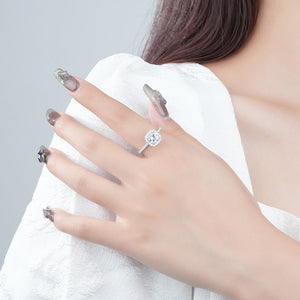
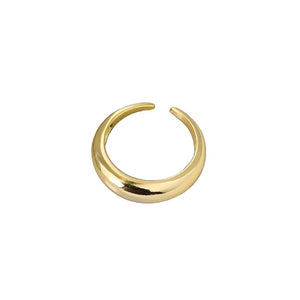
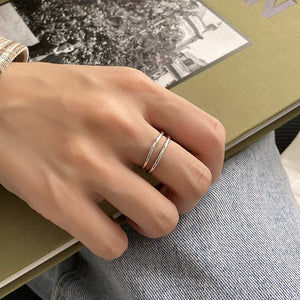
The piece they're describing → Dainty Stacking Rings for Women — 18K Gold Plated, Thin Band Set, Minimalist
Personalize Yours


