


Most bangle guides jump straight to styling tips. But if you've ever ordered a bangle online and discovered it won't slide past your knuckles, you know that fit comes first. Style comes after.
This guide covers both — in the right order. How to measure for the correct size, how to actually get a bangle on (especially a snug one), which styles flatter different wrist shapes, how to match metal to your skin tone, and how to stack and wear bangles for every occasion.
Bangle vs. Cuff — What's the Difference?
A bangle is a rigid ring bracelet that slides over the hand and sits on the wrist. It's a closed circle with no clasp or opening. A cuff is an open-ended, C-shaped bracelet that can be squeezed slightly open and closed to fit — it doesn't require sliding over the hand.
If you have wide knuckles and struggle with bangles, an open cuff is often the easier alternative. This guide is primarily about solid bangles — the ones you slide on — but many tips apply to both styles.

How to Measure Your Wrist for a Bangle
Here's the critical point most people miss: you measure your hand, not your wrist. A bangle has to pass over your knuckles before it reaches your wrist. If you size it to your wrist circumference, it may not fit over your hand at all.
The Tape Measure Method
Close your hand as if you're about to slide on a bracelet — thumb tucked in, fingers together. Wrap a soft measuring tape around the widest part of your hand (across your knuckles). Record the measurement in inches or millimetres. That's your bangle size.
The Ruler Method
If you don't have a soft tape measure, use string or a strip of paper. Wrap it around your hand (closed, thumb tucked) and mark where the ends meet. Lay it flat against a ruler and read the length. That's your hand circumference.
Use this table to find the right bangle inner diameter:
| Hand Circumference | Recommended Inner Diameter | Bangle Size Label |
|---|---|---|
| Under 6.5 in / 165mm | 2.0 in / 50–52mm | XS / Small |
| 6.5–7 in / 165–178mm | 2.1–2.2 in / 53–56mm | Small / Medium |
| 7–7.5 in / 178–190mm | 2.3–2.4 in / 58–61mm | Medium / Large |
| Over 7.5 in / 190mm+ | 2.5 in+ / 64mm+ | Large / XL |
When in doubt, size up. A slightly loose bangle can be worn with a stopper bead or rubber ring. A too-small bangle is painful to wear and difficult to remove.
How to Put a Bangle On (Without Forcing It)
This is the question every competitor skips. If your bangle is snug — or if it's your first time — getting it over your knuckles can feel daunting. Two methods work consistently.
The Lotion Method
Apply a small amount of hand lotion or soap to your knuckles and the area just below them. Hold the bangle with your dominant hand. Tuck your thumb firmly against your palm, bring all four fingers together, and slide the bangle over your knuckles with a twisting motion. The lotion reduces friction enough to make the difference. Wipe off any excess lotion from the bangle afterward.
The Plastic Bag Method
Slip a thin plastic bag (a produce bag or sandwich bag) over your hand. The smooth plastic creates almost zero friction, so even snug bangles slide on easily. Once the bangle is in place on your wrist, pull the bag out from underneath. This method works especially well for bangles with any texture or engraving that would catch on skin.
What to Do If It Still Won't Fit
If you've tried both methods and the bangle still won't pass over your knuckles, the inner diameter is too small for your hand — not your wrist. Check your measurement against the sizing table above and size up. Alternatively, consider a hinged bangle (which opens to fit any hand size) or an open cuff. Both offer the same look without the sliding-on challenge.
How Should a Bangle Fit? Snug vs. Loose Explained
A properly fitted bangle should slide over your knuckles with mild resistance and sit on your wrist comfortably — able to move up and down the forearm a few centimetres, but not loose enough to slide over your hand again without intention.
Too tight: You can feel it pressing into your wrist or it leaves a red mark. It will be uncomfortable over hours and difficult to remove.
Too loose: It slides off your hand easily or constantly falls over your knuckles when your hand tilts down. You'll lose it or it'll hit your fingers when you type or gesture.
Just right: It moves freely on your wrist, you barely notice it's there, but you'd have to make a deliberate effort to remove it.
Choosing a Bangle Style for Your Wrist Shape
Bangle shape matters more than most guides admit. The wrong shape on the wrong wrist can look awkward; the right one disappears into the elegance of the look.
Narrow or slender wrists: Rounded bangles with some width (8–12mm) create visual presence without overwhelming the wrist. Thin stacked bangles work beautifully — 3 or more in a cluster add substance. Avoid very wide bangles that cover more than 30% of the forearm, which can look costume-heavy on a finer wrist.
Average wrists: The most versatile — virtually any bangle style works. Experiment with D-shaped (flat on the inside, rounded on the outside) for a contemporary look, or classic round for timeless styling.
Broad or wide wrists: Sleeker, thinner bangles tend to look most elegant. Oval or D-shaped inner profiles follow the natural wrist contour better than perfectly round bangles, which can feel uncomfortable against a flatter wrist. Wider flat bangles work well as statement pieces — they embrace rather than fight the wrist shape.
Matching Bangle Metal to Your Skin Tone
The right metal colour amplifies your complexion. The wrong one can make even a beautiful piece look dull.
| Skin Undertone | How to Identify | Best Metals | Why |
|---|---|---|---|
| Warm | Golden, peachy, olive. Veins appear greenish. | Yellow gold, rose gold, brass | Warm metals echo and enhance your natural warmth |
| Cool | Pink, rosy, bluish. Veins appear blue or purple. | White gold, silver, platinum | Cool metals contrast beautifully and brighten the look |
| Neutral | Neither clearly warm nor cool. Veins are blue-green. | Any metal works — experiment freely | Neutral undertones are the most versatile — metal mixing is especially easy |
If you're unsure of your undertone, hold a piece of white paper next to your inner wrist. If your skin looks more yellow/golden against the white, you're warm. If it looks pinker, you're cool. If you can't tell, you're neutral.
How to Wear Bangles for Every Occasion
Casual and Everyday Wear
For casual wear, thin gold bangles are the easiest choice — stack 3–5 together for a relaxed arm party look that suits jeans, jumpers, and everything in between. Mix matte and polished finishes in the same metal family for texture without too much contrast. One rule: keep the number of bangles proportional to how dressy the occasion is. Three thin bangles with a T-shirt is exactly right. Twelve might be the look for a concert, not a coffee shop.
The Office
A single wider bangle or 2–3 thin matching bangles reads as intentional and polished without being distracting. If you work in a quiet environment, consider whether a stack of bangles will jingle as you type — some people find that distracting; others love it. For client-facing or formal office settings, one statement bangle on its own is often the strongest choice.
Evening and Events
Evening is where you can push the stack further. 5–7 bangles in complementary metals — mixed gold and silver, or all gold with varying widths — create a statement look that catches the light. For black tie, a single wide diamond-set or engraved bangle reads as intentional luxury. Match the metal to your other jewelry (earrings, necklace) for a cohesive look.
Weddings and Cultural Occasions
Bangles carry deep cultural significance in many traditions. In South Asian weddings (Indian, Pakistani, Bangladeshi), bangles — particularly choora in Punjabi tradition — are central to the bridal ceremony, worn in stacks of red and white or gold as a symbol of luck and marital status. In West African and many Southeast Asian traditions, gold bangles signal prosperity and family heritage. If you're attending a cultural occasion as a guest, gold bangles are typically a respectful and celebratory choice.

The Art of Stacking
Sleeve-Length Stacking Rules
The visibility of your bangles is determined by your sleeves as much as the bangles themselves. Short sleeves and sleeveless tops give full visibility — this is where a fuller stack looks best. Three-quarter sleeves show just a peek of bangles as you move, which can be elegant with a smaller stack of 2–3. Long sleeves present a challenge: roll them back slightly to let the bangles show, or accept that they'll be heard more than seen. A single wider bangle works best under long sleeves where stacking would create too much bulk under the fabric.
Mixing Metals and Textures
The old rule was: never mix metals. Ignore it. The current approach is to mix intentionally. Pair yellow gold and silver bangles in a 2:1 ratio — two of one, one of the other — so one metal reads as dominant and the other as an accent. Mix finishes (polished and hammered, smooth and engraved) within the same metal family for texture without colour clash. Avoid 50/50 equal splits of two metals — that tends to look indecisive rather than curated.
Wearing Bangles with a Watch
Bangles worn with a watch go on the same wrist, above the watch toward the elbow. Don't put them below the watch — that positions bangles at the knuckles and looks awkward. Two to three thin bangles above a watch is a classic combination. Avoid heavy bangles or stacks of more than four with a watch — the combined weight on one wrist becomes uncomfortable over a full day, and the pieces start to scratch each other.
Match the metal of your bangles to your watch case if possible. Gold bangles with a gold-case watch, silver bangles with a steel-case watch. Mixed metals can work, but one metal should clearly dominate the pairing.
Bangle Types at a Glance
| Bangle Type | Best For | Stackable? | Notes |
|---|---|---|---|
| Solid round bangle | Everyday, casual, stacking | Yes — best stackable type | Classic choice; requires hand measurement |
| Hinged bangle | Wide hands, easier daily wear | Limited — hinge can catch | Opens to fit; no measuring needed |
| Open cuff | Statement pieces, quick on/off | Not ideal — ends can catch | Adjustable; suits any hand size |
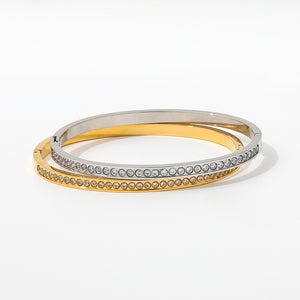
| Diamond / gemstone bangle | Evening, special occasions, gifting | Yes (with care) | Avoid stacking against rough metal — scratches |
| Charm bangle | Personalised wear, meaningful gifting | Yes — pair with thin plain bangles | Charms can tangle if stacked with other charm pieces |
| Wide statement bangle | Formal, solo statement look | Wear solo or with 1–2 thin bangles | Best on medium to broad wrists |
Explore our charm bracelets collection — sterling silver bracelets you can personalise with charms that tell your story.
Frequently Asked Questions
Which wrist should I wear a bangle on?
There's no firm rule. Most people wear bangles on their non-dominant wrist — if you're right-handed, the left wrist — simply because it's more comfortable and less likely to interfere with writing or daily tasks. In some spiritual traditions (Feng Shui, Ayurveda), the left wrist is considered the "receiving" side, making it the preferred choice for protective or intention-setting jewelry. For style purposes, wearing bangles on both wrists simultaneously is entirely acceptable — just make sure the pieces on each wrist are coordinated.
How do I put on a bangle if it won't go over my hand?
Use the lotion method or the plastic bag method. For lotion: apply a small amount of hand cream to your knuckles, tuck your thumb into your palm, bring your fingers together, and slide the bangle over with a gentle twisting motion. For the plastic bag method: slide a thin plastic bag over your hand before fitting the bangle — the smooth surface eliminates friction entirely. If neither method works, the bangle's inner diameter is too small for your hand. Size up, or switch to a hinged bangle or open cuff.
Should a bangle be tight or loose?
A bangle should feel comfortable and mobile — it should slide up and down your wrist a few centimetres freely, but not be loose enough to slide over your hand when your wrist tilts. Too tight means it leaves a red mark or restricts circulation. Too loose means it'll slide off accidentally. If in doubt between two sizes, choose the larger one. A slightly loose bangle can be managed; a too-tight one is painful and can damage the piece when you try to remove it.
How many bangles should I wear at once?
For a relaxed everyday look, 3–5 thin bangles on one wrist is the classic stacking range. For a bolder evening look, 5–7 creates a statement stack. Wearing a single wide or embellished bangle as a solo statement is equally valid — it reads as intentional and confident. There's no maximum, but beyond 8–10 bangles, comfort and noise become practical considerations. Whatever number you choose, odd numbers often look more organic than even numbers in a stack.
Can I wear a bangle with a watch?
Yes. Position bangles above the watch toward the elbow — not below it. Two to three thin bangles above a watch is the classic combination. Match bangle metal to watch case metal where possible (gold bangles with a gold watch, silver bangles with a steel watch). Keep the total stack on the watch wrist to 3 bangles maximum, as more than that creates weight and scratching risk over a full day of wear.
What bangle size do I need?
Measure your hand circumference with your thumb tucked in and fingers together — across your knuckles. That measurement determines your bangle's inner diameter, not your wrist measurement. For a hand circumference under 6.5 inches, choose a 50–52mm inner diameter. For 6.5–7 inches, 53–56mm. For 7–7.5 inches, 58–61mm. For over 7.5 inches, 64mm or more. When unsure, size up — a slightly larger bangle is always more comfortable than a slightly smaller one.
What do bangles symbolize?
The meaning of bangles varies significantly by culture and personal intent. In South Asian traditions, gold bangles symbolize prosperity, marital status, and good fortune. In West African traditions, they often represent family heritage and abundance. More broadly, bangles are associated with femininity, strength, and personal identity. In spiritual practice, wearing bangles on the left wrist is linked to protection and receiving positive energy. At a personal level, many people wear bangles as intention pieces — each one representing something they're holding or moving toward.
Are bangles in style in 2026?
Yes — and they've been consistently in style since the 1980s arm-party trend returned in the 2010s. In 2026, the dominant bangle trends are: thin gold stacks (3–5 plain yellow gold bangles), mixed-metal combinations (gold and silver together, intentionally paired), single wide statement cuffs, and bangles worn alongside a watch. Bangles are one of the few jewelry categories that trend upward across both minimalist and maximalist aesthetics simultaneously, making them a reliable investment.
For the complete bracelet reference — every type, meaning, sizing, and stacking guide: The Complete Bracelet Guide: Every Type, Style, Meaning & How to Wear Them.
Written by Vaishakhi Ajmera — founder and jewelry specialist at AJLuxe. Last updated: May 2026.
You Might Also Like

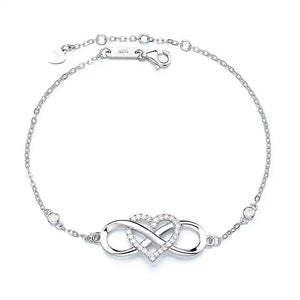
The piece they're describing → Heart Chain Bracelet for Women — 18K Gold Plated, Infinite Heart Link, Gift-Ready
Personalize Yours

