


Hoop earrings are the most universally worn earring style — but picking the wrong size can make even the best pair feel off. Too small and they disappear. Too large and they overwhelm your face. Too heavy and they pull on your piercing all day.
Our earrings at AJLuxe use sterling silver posts throughout — hypoallergenic and comfortable for all-day wear, even for sensitive ears.
This guide covers every hoop size from 6mm to 70mm+, with a complete size chart, a five-factor guide to choosing your size, and piercing-specific recommendations you won't find anywhere else. Whether you're buying your first pair of hoops or building out a curated earring stack, here's exactly what to know.
How Are Hoop Earrings Measured?
Hoop earring size refers to the inner diameter — the distance across the inside of the ring, not the outside. This is the measurement that determines how large the hoop appears on your ear and how far below your lobe it hangs.
Most hoop earrings are listed in millimeters (mm). Occasionally you'll see inches, especially on U.S. retailers. The conversion is simple: 25mm = roughly 1 inch.
To measure a hoop you already own: lay it flat and measure straight across the inside opening with a ruler. If you measure from the outer edge to outer edge, subtract the wire thickness (usually 1–2mm on each side) to get the inner diameter.
Hoop Earring Size Chart: mm to Inches
Here's the complete size reference from micro huggies to oversized statement hoops. The "best for" column assumes a standard lobe piercing — see the piercing section below for cartilage-specific guidance.
| Size (mm) | Approx. Inches | About the Size of… | Best For |
|---|---|---|---|
| 6–8mm | ~0.25–0.32" | Pencil eraser | Cartilage, tragus, daith piercings; second/third lobe stacking |
| 10–12mm | ~0.4–0.5" | Dime | Huggie for first lobe; helix/cartilage; compact everyday stacking |
| 14–16mm | ~0.55–0.63" | Penny | Small hoop — everyday, work, minimalist styling; most face shapes |
| 18–20mm | ~0.7–0.8" | Nickel | Most versatile everyday size; flatters all face shapes; best beginner hoop |
| 22–25mm | ~0.87–1" | Quarter | Medium hoop — visible movement, office-to-evening, oval/heart/oblong faces |
| 30–35mm | ~1.2–1.4" | Half dollar | Medium-large — weekend, casual chic, taller frames, longer necks |
| 40–45mm | ~1.6–1.8" | Golf ball radius | Large hoop — bold casual, festivals, creative styling; avoid with short necks |
| 50mm (2") | ~2" | Lipstick cap | Statement hoop — events, evening, fashion styling; keep rest of jewelry minimal |
| 60–70mm+ | ~2.4–2.8"+ | Compact mirror | Oversized/fashion — runway-inspired, editorial, special occasions |
The sweet spot for most people: If you're not sure where to start, 16–20mm is the single most universally flattering hoop size. It's noticeable, has movement, doesn't pull on the lobe, and works from work to weekend without adjustment.
Hoop Earring Sizes by Category
huggie earringss (6–12mm)
Huggies are hoops with a very small diameter that sit snugly against the earlobe or cartilage — hence the name. The 6–10mm range is the standard for second and third lobe piercings where you want a neat, compact look. They're also the go-to for cartilage, helix, tragus, and daith piercings, where larger hoops would catch on hair or cause the piercing to migrate.
A 10–12mm huggie on your first (primary) lobe piercing is a great minimalist look — it reads as modern and intentional rather than just small.
Small Hoops (14–20mm)
Small hoops are the everyday workhorses. At 14–16mm, they sit right at the lobe with a small gap of movement below it. At 18–20mm, they drop just below the lobe and catch the light more visibly. This range flatters all face shapes and is appropriate for professional settings, school, and daily wear. If you own one pair of hoops, they should be in this range.
Medium Hoops (22–35mm)
Medium hoops create a clear visual statement without being overwhelming. A 25mm hoop is about the size of a quarter — it falls noticeably below the ear and moves when you turn your head. At that same 25mm size, shape is also worth considering: our waterdrop hoop earrings guide compares the tapered teardrop silhouette to a standard round hoop. A 30–35mm hoop approaches the jawline on most people. This range is ideal for evenings out, weekend styling, and anyone who wants their earrings to be noticed. Oval and heart-shaped faces look particularly flattering in this range.
Large Hoops (40–55mm)
Large hoops reach toward or below the jawline. They're a commitment: they make a statement, they catch attention, and they work best when the rest of your look is intentionally simple. A long neck and minimal necklace are ideal companions. This range is popular for casual weekend looks, music festivals, and fashion-forward styling.
Statement Hoops (60mm+)
Oversized hoops are for moments when you want the earring to be the entire outfit. They're runway-inspired, editorial, and genuinely striking. If you're petite or have a short neck, very large hoops can overwhelm your proportions — try a medium-large first and work up. When they work, though, they're transformative.
What Size Hoop Earring Should You Get? (5-Factor Guide)
1. Face Shape
Face shape is the most-cited factor — but the rules aren't rigid. Use them as a starting point, not a law.
- Round face: Avoid large round hoops (they add width). Go for small huggies or elongated styles. 14–18mm thin hoops work beautifully. Drop earrings and angular shapes elongate the face.
- Oval face: The most versatile shape. Any hoop size works — from 10mm huggies to 50mm statement rings. Lucky you.
- Square face: Soften angular jawlines with medium to large circular hoops (25–40mm). The curve counters the sharp jaw angles.
- Heart face: Wider foreheads and narrow chins balance beautifully with medium hoops (20–30mm) that add width at the jaw level.
- Oblong/long face: Wider hoops (30–45mm) add visual width and balance vertical length. Avoid long, skinny drops.
2. Neck Length
This factor is almost never mentioned — but it matters. A longer neck can carry larger hoops without the earring competing with your collar or neckline. If you have a shorter neck, hoops above 30mm can visually "crowd" the space between your ear and shoulder. Stick to small and medium sizes, or choose a flat, thin-gauge hoop rather than a chunky tube.
3. Hair Length and Style
Short hair and pixie cuts expose more ear and let smaller hoops take center stage — 14–20mm are often perfect here. Medium and long hair can hide smaller hoops when it's down; if you wear your hair down often, consider going slightly larger (20–30mm) so the earring stays visible. Updos and high buns are the exception — they expose everything, so any size works.
4. The Occasion
Match the context: 10–20mm for work and everyday errands, 20–30mm for casual social outings, 30–45mm for evenings and events, 50mm+ for statements and special occasions. When in doubt, size down by one tier — you can always go bigger, but walking into a meeting with 50mm hoops when you wanted "professional with personality" is a one-way trip.
5. Your Piercing Placement
See the full piercing guide below — this is one of the most overlooked factors, especially for anyone with multiple piercings.
Hoop Earrings for Every Piercing Type
The right hoop size changes dramatically depending on which piercing you're wearing it in. Using the wrong size in a cartilage piercing can cause migration, irritation, or even a pulled-out piercing.
| Piercing Type | Recommended Hoop Size | Notes |
|---|---|---|
| First lobe (standard) | 10–30mm | Full size range works; choose by face shape and occasion |
| Second lobe | 8–14mm | Keep smaller than first lobe for a curated stacked look |
| Third/fourth lobe | 6–10mm | Micro huggies keep the stack neat; go smallest at top |
| Helix / cartilage | 8–12mm | Must sit snugly; anything larger than 12mm risks migration |
| Tragus | 6–8mm | Very small anatomy — use the smallest huggie that opens fully |
| Daith | 8–10mm | Slightly more room than tragus; snug huggie or segment ring |
The stacked lobe rule: When building an earring stack across multiple lobe piercings, size down as you go up the ear. A 20mm hoop in the first lobe, a 12mm huggie in the second, and a 8mm huggie in the third creates a graduated look that reads intentional rather than chaotic. Check out our complete guide on types of earrings for the full earring back and stacking breakdown.
Choosing Your Metal: Sterling Silver vs. Gold Plated Hoops
Hoop size and metal choice work together. Here's how to match them:
Skin tone and undertone: Gold hoops (yellow gold) complement warm undertones — skin with yellow, peachy, or olive tones. Rose gold is a warm-neutral bridge that works across undertones. Silver and white gold hoops complement cool undertones — skin with pink, red, or bluish veins. If you can't tell, look at the inside of your wrist in natural light: blue/purple veins = cool; green veins = warm; both = neutral.
Sensitive ears: For anyone who experiences redness or irritation from earrings, the hoop material matters more than the size. Choose 925 sterling silver or 14k solid gold hoops — both have minimal free nickel. Gold plated hoops over a 925 sterling silver base are also a safe option. Avoid gold plated over brass for daily wear in sensitive ears. If sensitivity is an ongoing issue, read our complete guide to earrings for sensitive ears.
Size and visual weight: Large hoops in a thin-gauge wire look different from large hoops in a thick tube. A 40mm thin hoop reads delicate and bohemian. A 40mm chunky tube hoop reads bold and sculptural. Both are 40mm — but they send very different signals. Choose gauge based on the overall look you want, not just the diameter.
Are Hoop Earrings Still in Style in 2026?
Yes — emphatically. Hoops are one of the most stable jewelry trends across decades, not a trend that peaks and fades. According to the Jewelers of America, hoop earrings are consistently among the top-three best-selling earring styles globally year after year.
In 2026 specifically, the strongest directions are:
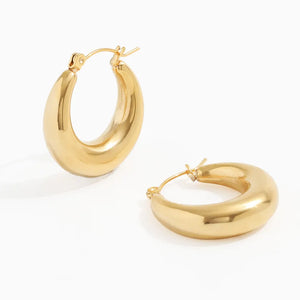
- Chunky medium hoops (20–30mm with a wide tube): The tubular, substantial look — gold-filled or solid vermeil construction — is everywhere this year. It's a direct response to the ultra-delicate trend of the early 2020s.
- Textured surfaces: Hammered, brushed, twisted, and corrugated gold hoops over classic polished. Adds visual interest without increasing size.
- Asymmetric stacking: Wearing a larger hoop in the first lobe and a smaller hoop or stud in a second or third piercing — or styling differently on each ear — is the dominant earring approach on social media this year.
- Classic thin gold hoops (14–20mm): The permanent baseline. They don't go in or out of style. They're jewelry's equivalent of a white T-shirt.
How to Care for Hoop Earrings by Size
Small hoops (under 20mm): Store in a small dish or earring stand upright. Clean with a soft cloth after wearing — the small diameter makes them easy to wipe down quickly. Keep away from perfume and hairspray.
Medium hoops (20–40mm): Lay flat in a jewelry drawer or soft pouch to prevent bending. These sizes are most prone to getting caught in hair — especially long or curly hair. Take them off before pulling anything over your head.
Large hoops (40mm+): Store flat. Large hoops can warp under their own weight if stored upright over time, especially if they're lightweight or hollow. Never sleep in large hoops — the weight and movement during sleep can stress the post or clasp.
For gold plated hoops specifically: pat dry immediately after any contact with water. Moisture is the primary cause of plating wear, not friction. Store in an airtight zip bag between uses if you're not wearing them daily.
Frequently Asked Questions
How do I know what size hoop earrings to get?
Start with your face shape and piercing placement. For lobe piercings, 14–20mm suits most faces daily. 25–35mm adds presence without being overwhelming. 40mm+ is for bold styling and special occasions. For cartilage piercings, stick to 8–12mm huggies. If you're unsure, 16–18mm is the single most versatile starting point — it works on nearly every face shape, occasion, and personal style.
Should I get 8mm or 10mm hoop earrings?
10mm is the better default. An 8mm hoop sits right at the earlobe and can look like a stud from a distance — it works best as a huggie for a second or third lobe piercing, or for cartilage. A 10mm hoop is still compact but has visible movement and clearly reads as a hoop. If you want a huggie for your first (lobe) piercing, choose 10–12mm.
How big is a 25mm hoop earring?
A 25mm hoop is just under 1 inch in diameter — about the size of a U.S. quarter. It sits below the earlobe with a small amount of movement. Most people find 25mm to be a comfortable medium size: noticeable but not overpowering for everyday wear. It works well for oval and heart-shaped faces.
How big is a 2 inch hoop earring?
A 2 inch hoop is 50mm in diameter — a large, statement size. It falls well below the jaw on most people. A 2 inch hoop is best for evenings, events, or fashion-forward styling. It can overwhelm a petite frame or round face, so pair it with an intentionally minimal rest-of-look and a visible neck.
What size is 30mm in hoop earrings?
A 30mm hoop is approximately 1.2 inches in diameter — close to a half-dollar coin. It falls slightly below the earlobe and has noticeable movement. Most people consider 30mm a medium-large hoop: versatile enough for casual wear but with enough presence to elevate an outfit. It flatters oval, heart, and oblong face shapes particularly well.
What earrings do you use for cartilage piercings?
For cartilage piercings — helix, tragus, daith — huggie hoops in the 6–12mm range are the standard choice. The small diameter keeps the hoop snug against the cartilage without catching on hair or clothing. For helix piercings, 8–10mm works well. For tragus, go to 6–8mm to fit the tighter anatomy. Never put a hoop larger than 12mm in a cartilage piercing — the extra weight can cause migration over time.
Are hoop earrings still in style in 2026?
Absolutely. Hoop earrings are one of the most enduring jewelry styles and are strongly trending in 2026. Chunky medium hoops (20–30mm with a wider tube diameter) and textured gold finishes are particularly popular right now. Classic thin gold hoops remain the most-worn everyday jewelry item across all age groups — they never go out of style.
What hoop earring size is best for sensitive ears?
For sensitive ears, material matters more than size. Choose 925 sterling silver or 14k solid gold hoops to minimize nickel exposure. In terms of size, lighter hoops — small to medium, thin wire gauge — cause less irritation from prolonged wear because they exert less downward pull on the piercing channel. If sensitivity is an issue, read our guide to earrings for sensitive ears and our focused guide to hypoallergenic huggie earrings.
For the complete earring reference — types, sizing, curated ear, face shape guide, and sensitive skin — read The Complete Earring Guide.
Sensitive-ear shopping path
For sensitive ears, hoop size and metal both matter
Smaller hoops and huggies usually create less movement, less pull, and less irritation than oversized statement hoops.
- Shop huggie earrings — small hoop styles for daily wear
- Shop hypoallergenic jewelry — sensitive-skin friendly options
- Hypoallergenic metal guide — understand metal safety before choosing a size
Final Thoughts: Finding Your Hoop Size
The right hoop size isn't one size — it depends on where you're wearing it, what you're wearing it with, and what look you're after. The framework is simple: 14–20mm for everyday lobe wear, 8–12mm for any cartilage or second piercing, 25–35mm when you want presence, and 40mm+ when you want to make a statement.
Start with one great pair in the 16–20mm range if you're new to hoops. From there, build out with a huggie for any upper piercings and a medium-large hoop for evenings. Three pairs covers almost every occasion in the calendar.
Browse our sterling silver and gold hoop earrings — all made with hypoallergenic 925 sterling silver bases, available in the most-flattering everyday sizes.
Written by Vaishakhi Ajmera — founder and jewelry specialist at AJLuxe. Last updated: May 2026.
All third-party trademarks, brand names and product names are the property of their respective owners. AJLuxe is not affiliated with, endorsed by, sponsored by, or otherwise connected to any third-party brand referenced in this article. Brand names are used solely for accurate comparative reference, and material descriptions reflect each brand's own published product specifications at the time of writing.
You Might Also Like
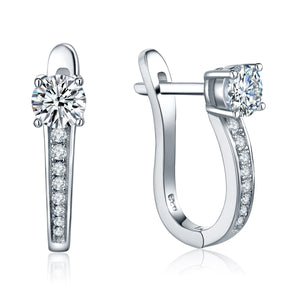
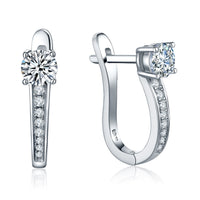
The piece they're describing → Moissanite Hoop Earrings for Women — 925 Sterling Silver, Brilliant Cut, Hypoallergenic (ES)
Personalize Yours


