


Freshwater pearl necklaces have quietly become the most popular category in pearl jewelry. They're real pearls — not imitation, not shell, not resin — grown inside living mussels in freshwater lakes and rivers. If you're trying to decide whether a freshwater pearl necklace is right for you, or you want to buy one as a gift and actually know what you're getting, this guide has everything you need.
What Are Freshwater Pearls?
Freshwater pearls are cultured pearls grown inside freshwater mussels, primarily in China's Zhejiang and Jiangxi provinces. A technician inserts a small piece of mantle tissue (sometimes a tiny bead nucleus) into the mussel. The mussel responds by coating the irritant in nacre — the same lustrous material that lines its shell — layer by layer, over 2–7 years.
The result is a genuine organic gemstone. Freshwater pearls are not simulated. They're not glass or plastic. They're real pearls in the same category as Akoya, South Sea, and Tahitian pearls — just grown in a different environment.
According to the Jewelers of America, cultured pearls now represent over 98% of all pearls sold worldwide. Freshwater varieties dominate that market because of their combination of quality, availability, and accessible price.

Freshwater vs. Saltwater Pearl Necklaces: The Real Differences
The most common question buyers ask is whether freshwater pearls are "as good" as saltwater pearls. The answer depends on what you're comparing — and what you value. Here's the full picture:
| Factor | Freshwater Pearls | Akoya (Saltwater) | South Sea (Saltwater) |
|---|---|---|---|
| Origin | Freshwater mussels, China | Saltwater oysters, Japan/China | Saltwater oysters, Australia/Philippines |
| Nacre thickness | Very thick — pearl is mostly or entirely nacre | Thin to medium (0.35–0.7mm) | Very thick (2mm+) |
| Luster | Soft, satiny glow | Bright, mirror-like | Deep, creamy luminescence |
| Shape | Round to baroque — natural variation | Very round | Round to drop |
| Color range | White, pink, peach, lavender, metallic | White with rose or silver overtone | White, gold, silver |
| Size range | 3–12mm (Edison up to 16mm) | 6–9mm typical | 9–18mm |
| Price (7–8mm strand) | $50–$300 | $200–$800 | $500–$5,000+ |
| Durability | Excellent — thick nacre resists chipping | Good — thinner nacre requires more care | Excellent |
The key insight here: freshwater pearls actually have thicker nacre than Akoya pearls. Thicker nacre means better durability and a longer lifespan. The tradeoff is that freshwater luster has a softer, more satiny quality versus the bright mirror-like shine of Akoya. Neither is objectively better — they're just different aesthetics.

How to Evaluate Freshwater Pearl Necklace Quality
There's no single accepted industry grading standard for pearls — unlike diamonds, where GIA standards are universal. Most sellers use an A–AAAA scale, but that grading isn't regulated, so "AAA" means different things at different retailers. Instead, evaluate pearls on these five objective factors:
1. Luster: This is the most important factor. High-luster pearls reflect light sharply and cleanly — you should be able to see a clear reflection of light or your surroundings in the surface. Dull or chalky-looking pearls have low luster and will never look better than the day you buy them.
2. Nacre thickness: For freshwater pearls, nacre thickness is almost always excellent because the pearl forms primarily from nacre rather than a bead nucleus. Avoid any listing that describes pearls as "coated" — that signals a thin layer over a large bead core.
3. Surface quality: All natural pearls have some surface characteristics — small dimples, ridges, or slight irregular areas. These are normal and do not indicate poor quality. What you're looking for is freedom from large pits, cracks, or flat spots. Minor surface characteristics are expected on genuine pearls.
4. Shape: Round pearls are rarer and more expensive. Near-round, oval, drop, and baroque shapes are equally genuine — many buyers prefer baroque for its organic, modern look. For a classic strand necklace, rounder is generally more desirable.
5. Matching: For a strand necklace, the pearls should be well-matched in size, shape, color, and luster. Poorly matched strands look unbalanced. A well-matched freshwater strand shows consistent visual quality from one end to the other.
Freshwater Pearl Necklace Size Guide
Pearl size is measured in millimeters (diameter). The right size depends on your style, the occasion, and the look you want. Here's a practical guide:
| Pearl Size | Visual Effect | Best For | Price Range (pendant) |
|---|---|---|---|
| 5–6mm | Delicate, understated | Everyday wear, teen/young adult gifts | $20–$60 |
| 7–8mm | Classic, versatile | Work wear, casual elegance, most gifting | $40–$120 |
| 9–10mm | Bold, statement-making | Formal events, milestone gifts | $80–$250 |
| 11mm+ | Dramatic, luxury feel | Special occasions, collector pieces | $150–$500+ |
For a first pearl necklace or a versatile everyday piece, 7–8mm is the sweet spot. It's prominent enough to read clearly against most necklines without feeling heavy or formal.
Freshwater Pearl Necklace Shapes: From Classic Round to Baroque
Pearl shape is one of the most overlooked buying decisions — and one of the most visible differences in how a necklace actually looks. Freshwater pearls occur in a wider range of natural shapes than any other pearl type:
| Shape | Description | Best For | Relative Price |
|---|---|---|---|
| Round | Perfectly or near-perfectly spherical | Classic strands, formal wear, traditional gifting | Higher — rarer to achieve in freshwater |
| Near-Round | Slightly off-round; practically indistinguishable in wear | All-purpose, most strand necklaces | Moderate — excellent value |
| Drop | Pear-shaped, tapered at one end | Pendants, earrings, elegant accent pieces | Moderate |
| Oval / Button | Flattened on one or both sides | Earrings, pendant designs, stud settings | Lower |
| Baroque | Irregular, free-form shape — each one unique | Modern, organic, statement necklaces | Lower for standard baroque; premium for large pieces |
| Edison | Extra-large (11–16mm), near-round with metallic luster | Statement pieces, luxury gifting | Higher — approaches South Sea pearl territory |
Why a 925 Sterling Silver Setting Matters
The metal your freshwater pearl necklace is set in matters more than most buyers realize. 925 sterling silver (92.5% pure silver) is hypoallergenic for most people — cheap base metals like zinc, copper, or nickel can cause contact dermatitis on the neck. A sterling silver chain also lasts years without corroding through, and holds intrinsic value as a precious metal. Look for the 925 hallmark stamped on the piece. The American Academy of Dermatology (aad.org) recommends nickel-free, sterling silver jewelry for anyone with sensitive skin.
At AJLuxe, our Freshwater Pearl Necklace features a genuine natural freshwater pearl pendant on a 14K gold-plated chain at $28.99 — making it one of the most accessible genuine pearl necklaces available. Browse our full necklaces collection for more styles.
Freshwater Pearl Necklace Lengths Explained
Length changes the entire look and formality of a pearl necklace. Classic pearl jewelry has specific named lengths — each with a different tradition and use case:
| Length | Name | Where It Falls | Best Necklines |
|---|---|---|---|
| 14–16" | Choker / Princess | Base of neck to collarbone | V-neck, scoop, boat neck |
| 17–19" | Princess | Just below collarbone | Most necklines — the most versatile |
| 20–24" | Matinee | Top of chest | High neck, button-up, crew neck |
| 28–36" | Opera | Breastbone to stomach | Formal gowns, open necklines |
| 36"+ | Rope | Below stomach | Can be doubled, modern styling |
An 18-inch chain — a standard princess length — is the most universally flattering. It sits just below the collarbone and works with almost every neckline. If you're unsure what length to buy, 18 inches is the right choice for most people.
How to Care for a Freshwater Pearl Necklace
Freshwater pearls are organic gemstones. They require care that most other gemstones don't. Follow these rules and your pearl necklace will last for decades:
Put pearls on last: Perfume, hairspray, lotions, and makeup all contain chemicals that degrade nacre over time. Apply everything else first, then put on your pearl necklace.
Wipe after wearing: A soft cloth wipe after each wear removes sweat and body oils that slowly dull the surface. It takes five seconds and makes a significant difference over years of wear.
Store separately: Pearls are softer than most gemstones (Mohs hardness of 2.5–4.5). Store them in a soft pouch or lined box away from other jewelry that can scratch them. Don't leave them in an airtight container for long periods — pearls need a small amount of humidity to stay hydrated.
Avoid water: Freshwater is fine in small amounts, but chlorinated pools and hot tubs will damage both the pearl's nacre and any plating on the setting. Take your pearl necklace off before swimming.
Restring strands periodically: If you have a full-strand freshwater pearl necklace (as opposed to a pendant), have it professionally restrung every 1–3 years depending on how often you wear it. Thread stretches and weakens over time.
If you're shopping for bridal pearl jewelry, our pearl necklace for wedding guide covers the best strand styles for brides, bridesmaid gift sets, and mother-of-the-bride options — including which lengths pair with different necklines and dress styles.
Frequently Asked Questions
Are freshwater pearl necklaces real pearls?
Yes — freshwater pearl necklaces contain genuine cultured pearls grown inside freshwater mussels. They're not imitation, glass, shell, or plastic. They're organic gemstones created through the same biological process as any other pearl. The GIA (Gemological Institute of America) classifies cultured freshwater pearls as genuine pearls — distinct from simulants like glass or shell beads coated with pearl-like finish.
What's the difference between freshwater and Akoya pearl necklaces?
Freshwater pearls grow in freshwater mussels, while Akoya pearls grow in saltwater oysters primarily in Japan. Akoya pearls have brighter, mirror-like luster and are more consistently round, but they have thinner nacre and cost 30–50% more. Freshwater pearls have thicker nacre (making them more durable), more color variety, and a softer satiny luster. For everyday wear and gifting, freshwater pearls offer better value. For a traditional, very bright white pearl look, Akoya has an edge.
How much should a freshwater pearl necklace cost?
A freshwater pearl pendant on a quality metal chain costs $25–$120 for genuine pearls. A full-strand freshwater pearl necklace (7–8mm, 18 inches) costs $80–$400 depending on luster quality and whether it's from a specialty pearl dealer. Prices above $500 for basic freshwater strands are generally not justified. Prices below $20 for a "freshwater pearl necklace" usually indicate imitation or extremely low-quality pearls. Always buy from a seller who explicitly states the pearls are genuine cultured freshwater pearls.
Can I wear a freshwater pearl necklace every day?
Yes, with some care. Freshwater pearls' thick nacre makes them more durable than many people expect. The main risks for daily wear are exposure to perfume, sweat, and cosmetics — all of which degrade nacre over time. If you wipe the pearl after each wear and put it on after applying beauty products, daily wear is completely fine. Many people wear freshwater pearl pendant necklaces as their everyday fine jewelry piece for years.
How do I tell if a freshwater pearl necklace is real?
The most reliable test is the tooth test: rub the pearl gently against the edge of your tooth. Real pearls feel slightly gritty or sandy due to the layered nacre structure. Imitation pearls feel perfectly smooth, like glass. Real pearls also show slight surface imperfections and have a depth to their luster — you can see light reflected "inside" the pearl, not just off the surface. Perfectly uniform pearls with zero surface variation are almost always imitation.
What does freshwater mean on a pearl necklace label?
"Freshwater" describes the environment where the pearls were cultivated — freshwater lakes and rivers, as opposed to saltwater ocean environments where Akoya, South Sea, and Tahitian pearls grow. Freshwater doesn't indicate lower quality — it describes origin. In fact, freshwater pearls often have superior nacre thickness compared to Akoya pearls because most freshwater pearls are solid nacre rather than nacre over a bead core.
Do freshwater pearl necklaces tarnish?
Pearls themselves don't tarnish — that's a metal phenomenon. What affects freshwater pearl necklaces is surface dulling from chemical exposure (perfume, chlorine, acids), which degrades the nacre over time. The chain or setting may tarnish if it's sterling silver — this is normal and reversible with silver polishing cloth. A 925 sterling silver chain won't corrode through, but it may darken over time. Gold-plated settings maintain their appearance longer but may show wear at high-contact points after 2–3 years of daily wear.
Are freshwater pearls hypoallergenic?
The pearl itself is naturally hypoallergenic — it's made of nacre (calcium carbonate and conchiolin), which doesn't cause allergic reactions. What causes reactions is the metal setting. Make sure your freshwater pearl necklace uses a 925 sterling silver or genuine gold chain rather than base metals like nickel or low-quality alloys. The American Academy of Dermatology identifies nickel as the most common cause of contact dermatitis from jewelry.
Final Thoughts
A freshwater pearl necklace offers something genuinely rare in modern jewelry: real beauty, real material quality, and real longevity at a price that doesn't require a special occasion to justify. The key is knowing what to look for — genuine nacre, quality metal settings, and the right size and length for how you'll actually wear it.
For more guidance on choosing the best pearl necklace for your needs, read our complete pearl necklace guide. Or explore our necklaces collection — including our genuine Freshwater Pearl Necklace at $28.99, gift-ready and shipped with care.
Also see: Akoya vs Freshwater Pearls — The Full Comparison
Written by Vaishakhi Ajmera — founder of AJLuxe, specialists in personalized sterling silver jewelry. Last updated: May 2026.
All third-party trademarks, brand names and product names are the property of their respective owners. AJLuxe is not affiliated with, endorsed by, sponsored by, or otherwise connected to any third-party brand referenced in this article. Brand names are used solely for accurate comparative reference, and material descriptions reflect each brand's own published product specifications at the time of writing.
You Might Also Like

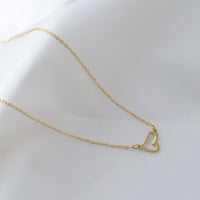
The piece they're describing → Dainty Heart Necklace for Women — 18K Gold Plated, Minimalist Gold Heart Pendant
Personalize Yours


