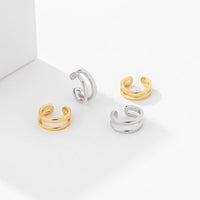
TL;DR: The key difference is piercing. A cartilage earring goes through a hole in your helix. An ear cuff clips onto the outside of your helix — no hole needed. Both look similar from a distance, ...
TL;DR: The key difference is piercing. A cartilage earring goes through a hole in your helix. An ear cuff clips onto the outside of your helix — no hole needed. Both look similar from a distance, but the commitment, pain, and healing process are completely different.
From across the room, an ear cuff and a cartilage earring look nearly identical. Both sit on the upper outer ear, both come in similar styles — hoops, studs, bars. The difference is under the surface: one requires a permanent hole, one doesn't. Here's everything you need to know to choose the right one for you. If you've decided a piercing is right for you, see our best cartilage earrings guide for specific style picks.
The Main Difference
A cartilage earring is any earring worn through a piercing in the cartilage of your ear — helix, tragus, anti-helix, conch, or other cartilage positions. The hole is permanent. The earring passes through the tissue.
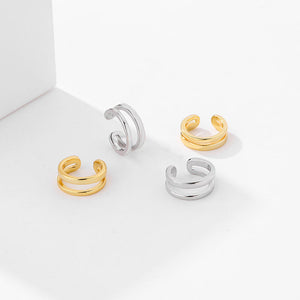
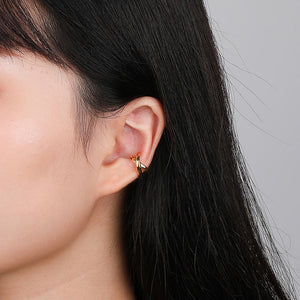
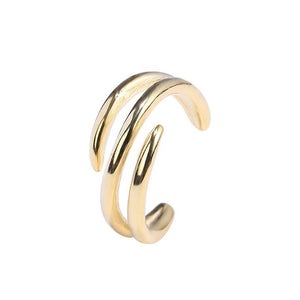
An ear cuff is an earring that wraps around the outer rim of the helix without going through any tissue. It grips the cartilage from the outside. No hole, no healing period, no permanence. Slide it on, slide it off.
Factor
Ear Cuff
Cartilage Earring
Piercing needed
No
Yes
Pain
None
Moderate during piercing + healing
Healing time
None
6–12 months
Commitment
Zero
Permanent hole
Removability
Instantly, anytime
After full healing only
Look from distance
Same as cartilage piercing
Same as ear cuff
Security
High (if fitted right)
Very high (through hole)
Infection risk
None
Moderate during healing
Cost to try
Cost of cuff only
Piercing fee + jewelry
Cartilage Piercing: What to Expect
Cartilage heals much slower than earlobe piercings. A helix piercing typically takes 6–12 months to fully heal, sometimes up to 18 months. During that time, you can't change the earring, you need to clean it twice daily with saline, and sleeping on it can cause irritation bumps.
According to the Association of Professional Piercers, cartilage piercings also have a higher rate of complications than lobe piercings — including hypertrophic scarring and infection — because cartilage has lower blood supply. This doesn't mean you shouldn't get one, but it's worth knowing before you commit.
Why Choose an Ear Cuff Instead
You get the same look — a delicate band of metal sitting on the outer helix — without any of the commitment, pain, or aftercare. The only thing a cartilage earring does that an ear cuff can't is go through the skin.
If you're not sure whether you want a helix piercing, an ear cuff is the obvious way to preview the look. Wear one for a few weeks. If you love how it looks, that's your signal. If you forget to put it on, that's also your signal.
When to Choose a Cartilage Earring
If you already have a helix piercing: skip the ear cuff and wear a proper cartilage earring — you'll get more precise placement, more style options (flatback studs, seamless rings, threadless ends), and better long-term security.
If you love how your ear cuff looks and wear it constantly: getting the piercing is a natural next step. You know exactly where you want it and you know you'll wear it.
Can You Wear Both at the Same Time?
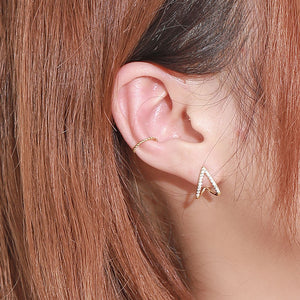
Yes. If you have a helix piercing, you can wear a cartilage earring in the hole AND an ear cuff on a different section of the same helix. Or wear the ear cuff on one ear and a cartilage earring on the other. Mixing is a strong 2026 trend.
Yes — from a distance, nearly identical. Both sit on the outer helix. The difference is only visible up close: a cartilage earring passes through skin, an ear cuff clips around the outside.
Is an ear cuff the same as a cartilage earring?
No. A cartilage earring requires a piercing. An ear cuff clips onto the outer rim without any hole. They look similar but work differently.
Which is more comfortable — ear cuff or cartilage piercing?
An ear cuff wins short-term — no pain, no healing. A fully healed cartilage earring (after 6–12 months) wins long-term — it's permanently anchored without needing to grip from outside.
Can I wear an ear cuff if I have a cartilage piercing?
Yes — wear an ear cuff on a different section of the same helix, or on a different ear entirely. They work together.
How long does a cartilage piercing take to heal?
6–12 months, sometimes up to 18 months. Ear cuffs have zero healing time.
Which is more secure — an ear cuff or cartilage earring?
A healed cartilage earring is more secure (anchored through tissue). A double-band ear cuff is the most secure non-piercing option for daily wear.
The Bottom Line
If you want the look without the commitment: ear cuff. If you want permanent placement with more style options: cartilage earring. If you're undecided: try an ear cuff first. The look is the same. The decision can wait.
Browse our sterling silver ear cuff or explore our full ear cuff guide for everything about types, sizing, and styling. Already have cartilage piercings? See our types of ear cuffs guide to find styles that complement pierced ears.
Written by the AJLuxe team — specialists in 925 sterling silver and 18K gold-plated jewelry. Last updated: June 2026.
All third-party trademarks, brand names and product names are the property of their respective owners. AJLuxe is not affiliated with, endorsed by, sponsored by, or otherwise connected to any third-party brand referenced in this article. Brand names are used solely for accurate comparative reference, and material descriptions reflect each brand's own published product specifications at the time of writing.