


Quick Summary
- There are 9 main types of earrings: studs, hoops, drop/dangle, huggie, ear cuff, climber, threader, chandelier, and jacket earrings.
- Studs suit every face shape and occasion; hoops are the most versatile everyday style.
- Huggie and flat-back studs are the best options for sensitive ears or new piercings.
- Longer drop and chandelier earrings balance round or heart-shaped faces; small studs and huggies flatter longer faces, and nearly every style works on an oval face.
- Layering two or three earring types in one ear — for example, a stud plus a huggie plus a cuff — is the current curated-ear trend.
If you've ever stood in front of a jewelry display feeling genuinely confused about the difference between a huggie and a hoop, or a climber and a threader, you're not alone. There are more types of earrings than most people realize, and each one has its own silhouette, best use, and styling logic. This guide breaks down every major earring style — what it is, who it flatters, when to wear it, and how to pair it — so you can shop and style with total confidence.
The 9 Main Earring Types Explained
1. Stud Earrings
Studs are the foundation of any earring collection. A single stone, shape, or metal disc sits flush against the earlobe, held in place by a post and a butterfly (or push) back. Because they sit close to the ear with no movement, they're the most low-maintenance style you can own.
Best face shapes: All face shapes — studs are universally flattering because they don't add length or width to the face.
When to wear them: Every day. Meetings, job interviews, workouts, sleeping (if they're flat-back studs with no prongs), beach days. They're the easiest earring to forget you're wearing.
How to pair them: A classic pearl or cubic zirconia stud works with everything. Try a set of three mismatched studs in one ear for a more editorial look. If you're building a curated ear, studs belong in the lobe as the base layer.
2. Hoop Earrings
Hoops are a closed or nearly closed circle (or oval) of metal that passes through the earlobe. Sizes range from tiny huggie-adjacent hoops under 15mm to dramatic 60mm statement pieces. The classic hoop has a thin, round wire; thicker tube hoops add a more sculptural feel.
Best face shapes: Hoops add width, which makes them particularly good for long or oblong faces. Medium hoops (20–35mm) are the most universally flattering size.
When to wear them: Everyday casual, date night, office — hoops transition across almost every context. Smaller gold hoops have become a modern work staple.
How to pair them: Wear a single hoop for a clean look, or stack a small and a medium hoop in the same ear. Pair with simple studs in a second or third piercing above.
3. Drop Earrings
Drop earrings hang below the earlobe — typically between 1cm and 4cm — with a straight or slightly tapered silhouette. They move gently when you do, which gives them that elegant, dynamic quality. Think geometric shapes, single stones on a delicate chain, or a simple bar.
Best face shapes: Drops elongate the face, making them ideal for round, square, or heart-shaped faces. They draw the eye downward and add definition to the jawline.
When to wear them: Dinner out, weddings, celebrations, or any occasion where you want a polished finish without going full chandelier.
How to pair them: Because drops already provide visual interest, keep the rest of your jewelry minimal — a delicate chain necklace or nothing at all. Avoid large pendants that compete with the earring movement.
4. Dangle Earrings
Dangle earrings are often grouped with drops, but there's a practical distinction: dangles typically swing more freely and can extend longer (4cm and beyond). They're attached at the ear by a hook (French wire) or lever-back and have full range of motion.
Best face shapes: Like drops, dangles work best on round and square faces. Very long dangles can overwhelm petite frames, so proportion matters.
When to wear them: Formal events, evenings out, weddings. They're generally too active for workplaces where they might snag, or for sports.
How to pair them: Wear them as a solo statement — no stacking needed. Let your hair up so the movement is visible.
5. Huggie Earrings
Huggies are small, thick hoops that "hug" the earlobe closely, usually measuring 10–14mm. The hinge-and-click closure means there's no loose back to lose. Many people assume huggies are just small hoops, but the key difference is the chunky tube body — they have more visual weight per millimeter than a thin wire hoop.
Best face shapes: All face shapes, but especially oval and long faces where a large hoop would over-emphasize length.
When to wear them: Daily wear, gym, sleep (they're secure and low-profile). Huggies are also a top recommendation for healed cartilage piercings because they sit snugly.
How to pair them: Stack two or three huggies in progressively larger sizes up the ear for an effortlessly curated look. Mix metals for an intentional tonal shift. Read our full huggie earrings guide for sizing, gauge, and piercing-healing timelines.
6. Ear Cuffs
Ear cuffs don't require a piercing — they clip or wrap around the outer cartilage rim (helix). Modern ear cuffs range from simple open bands to ornate designs with trailing chains or pavé stones. They're the ultimate commitment-free way to wear cartilage jewelry.
Best face shapes: All. The cartilage placement means they add visual interest at the outer ear, which works well for most face shapes.
When to wear them: As part of a curated ear for evenings or editorial looks. Because they're not pierced, you can add or remove them mid-day without any fuss.
How to pair them: Pair a cuff on the outer helix with a stud in the lobe. The contrast in placement — lobe versus cartilage — is the whole point. If your cuff has a trailing chain that connects to a lobe piercing, that's the cuff-and-chain style that's been huge in editorial styling. For the stud-only version of this look — no cuff required — see our dedicated earring on a chain guide.
7. Climber Earrings
Climbers (sometimes called ear crawlers) curve upward along the earlobe and sometimes continue into the cartilage. They use a curved post so the piece literally climbs the ear from the piercing point. A single lobe piercing is all you need.
Best face shapes: Round and oval faces benefit most — climbers draw the eye vertically, lengthening the appearance of the face.
When to wear them: Date nights, parties, or any time you want a statement earring that still feels modern and minimal. They're less formal than chandelier earrings but more deliberate than a stud.
How to pair them: Climbers work best alone in the lobe — they're already doing a lot. Keep the other ear simple: a single stud or nothing. Pull your hair back so the crawl effect is visible.
8. Threader Earrings
Threaders are a thin chain that passes completely through the piercing hole, with a decorative element (a ball, a bar, a charm) sitting at the front. The chain hangs out both sides of the lobe, and you adjust length by pulling the chain. No back needed.
Best face shapes: All, though the ultra-delicate silhouette particularly suits oval and long faces where you want subtle length without bulk.
When to wear them: Minimal, understated occasions — they're the earring equivalent of a dainty chain necklace. Not ideal for high-activity days since they can pull through the piercing if caught.
How to pair them: Let them be the feature in a simple, monochromatic outfit. Because there's no back, they're not compatible with most curated-ear stacks, so wear them solo.
9. Chandelier Earrings
Chandeliers are multi-tiered drop earrings that fan out in a branching or cascading pattern. They're the most dramatic style on this list — think formal galas, weddings, and red-carpet moments.
Best face shapes: Round and square faces. The downward cascade draws the eye away from width and toward the neckline, adding drama and visual length.
When to wear them: Formal occasions only. Chandeliers pair with updos (so the full design is visible) and strapless or off-the-shoulder necklines.
How to pair them: Keep the necklace minimal or skip it entirely. A chandelier earring competes with any statement necklace and usually wins — so don't create the conflict.
Bonus: Jacket Earrings
Jacket earrings are a two-part system: a front piece (usually a stud) that slots into a decorative backing worn behind the earlobe. From the front you see the stud; from behind (and in profile) you see the jacket, which frames the lobe. They're a clever way to get the effect of a drop without the full commitment.
Best face shapes: Oval and round — the jacket adds subtle visual interest at the earlobe perimeter without extending below the jaw.
When to wear them: Work-to-dinner transitions. A simple diamond-look stud with an elegant jacket reads professional from the front and playful from the side.
Earring Types at a Glance
| Earring Type | Piercing Required | Movement | Best Occasion | Best Face Shape |
|---|---|---|---|---|
| Stud | Yes (lobe) | None | Everyday | All |
| Hoop | Yes (lobe) | Slight swing | Everyday / casual | Long, oblong |
| Drop | Yes (lobe) | Gentle | Smart casual / dinner | Round, square, heart |
| Dangle | Yes (lobe) | Full swing | Formal / evening | Round, square |
| Huggie | Yes (lobe or cartilage) | None | Everyday / gym | All |
| Ear Cuff | No | None | Curated ear / evening | All |
| Climber | Yes (lobe) | None | Date night / party | Round, oval |
| Threader | Yes (lobe) | Minimal | Minimal / understated | All |
| Chandelier | Yes (lobe) | Full swing | Formal / wedding | Round, square |
| Jacket | Yes (lobe) | None | Work-to-dinner | Oval, round |
Matching Earrings to Your Face Shape
Face shape is one of the most practical tools for narrowing down which earring type you'll reach for again and again. Here's a quick framework:
- Round face: Choose earrings with length and angles — drop, dangle, climber, rectangular hoops, or long chandeliers. Avoid large round hoops that mirror the face's curves.
- Oval face: The easiest face shape to style — almost every earring type works. Experiment freely.
- Square face: Soften the strong jaw with rounded hoops, dangles, or teardrop shapes. Avoid geometric squared earrings that emphasize the jaw.
- Heart face: Balance the wider forehead and narrower chin with chandelier or drop earrings that widen at the bottom. Avoid studs or top-heavy pieces that add volume to the upper face.
- Long or oblong face: Add width with large hoops, huggies, or ear cuffs that extend horizontally. Avoid long drops that add more visual length.
- Diamond face: Highlight cheekbones with studs, small hoops, or drops. Avoid wide statement earrings that over-emphasize the widest point of the face.
Earrings for Sensitive Ears
If your ears react to most earrings — redness, itching, swelling — you're likely sensitive to nickel, which is used in most cheap metal alloys. The solution isn't to stop wearing earrings; it's to choose the right materials.
According to the American Academy of Dermatology, nickel is the most common cause of contact dermatitis from jewelry. The safest earring materials are:
- Sterling silver (925): 92.5% pure silver with a small copper alloy. Nickel-free when properly made — but verify with the seller, because some manufacturers cut costs with nickel-containing alloys.
- 18K gold plated over 925 sterling silver: The gold layer protects the ear from any base metal contact, and 925 silver posts are inherently safer than brass or zinc. This is the most accessible hypoallergenic option.
- Solid 14K or 18K gold: The gold standard (literally) for sensitive ears, but the price point is significantly higher.
- Titanium and surgical steel: Excellent for new piercings; minimal reactivity.
For style, flat-back studs and huggies with a hinged closure are best for sensitive ears because they sit flush, don't pull on the piercing, and have fewer gaps where moisture and bacteria can collect.
How to Build a Curated Ear
A curated ear means styling multiple piercings intentionally — mixing earring types, sizes, and metals in one ear (or across both) for a collected, editorial look. You don't need six piercings to pull it off. Here's a simple starting framework:
- Lobe: One stud or huggie as the anchor.
- Second lobe (if you have it): A smaller stud or a thin hoop in a contrasting or matching metal.
- Helix or cartilage (or ear cuff if unpierced): A thin hoop, a cuff, or a stud with a bit more edge — this is where you add personality.
A few principles that make curated ears look intentional rather than accidental: stick to two metals maximum per ear; vary the earring type (not just the size); and leave intentional negative space — not every piercing needs to be filled at once.
Earring Size Guide
Sizing matters more than most people think. Here's how to read earring measurements:
- Studs are measured by stone/face diameter: 3mm is very subtle; 6–7mm is the most popular everyday size; 10mm+ is a statement piece.
- Hoops are measured by inner diameter: 10–14mm = huggie range; 20–25mm = small everyday hoop; 30–40mm = medium; 50mm+ = large statement hoop.
- Drop and dangle earrings are measured by total length including the post: 1–2cm = short drop; 3–5cm = medium; 6cm+ = chandelier territory.
A practical tip: hold the earring up to your earlobe in front of a mirror before buying. A hoop that looks tiny in a photo can be surprisingly large (or small) in person, and the proportions relative to your neck length and face size make all the difference.
Frequently Asked Questions
What are the most popular types of earrings?
Studs and hoops are consistently the two most popular earring types, and for good reason — they're universally flattering, low-maintenance, and work with nearly every outfit. Within those categories, the most purchased styles are small diamond-look or pearl studs and thin gold or silver hoops in the 20–30mm range. Huggie earrings have also grown enormously in popularity over the past few years as a secure, sleek alternative to traditional hoops.
Which type of earring is best for everyday wear?
Studs and huggies are the best for daily wear because they're secure, low-profile, and don't catch on clothing or hair. Flat-back studs are particularly good if you wear your hair down frequently or sleep in your earrings, since there's no protruding butterfly back to snag. A medium hoop (20–25mm) in sterling silver or gold-plated silver is another excellent everyday choice that adds visual interest without requiring any maintenance.
What earrings are best for sensitive ears?
Sterling silver (925), 18K gold-plated-over-sterling-silver, solid gold, and titanium are the safest materials for sensitive ears. The key is avoiding nickel, which is the most common irritant. Look for earrings explicitly labeled nickel-free or hypoallergenic, and be aware that "hypoallergenic" isn't a regulated term — ask specifically about the base metal. Flat-back studs are the most comfortable style for sensitive or newly pierced ears because they sit flush against the lobe.
What's the difference between drop earrings and dangle earrings?
The terms are often used interchangeably, but there's a practical distinction. Drop earrings typically hang 1–4cm below the lobe and have a more restrained, structured movement. Dangle earrings tend to be longer, are attached with a hook or lever-back that allows full range of motion, and swing more freely. In practice, drops tend to be more appropriate for professional or smart-casual settings, while dangles lean more formal or festive.
Do ear cuffs require a piercing?
No — most ear cuffs are designed to work without any piercing at all. They clip or wrap around the outer cartilage (helix) of the ear and stay in place by gentle tension. Some people find they need to adjust throughout the day, especially if the cuff is new. The exception is cuff styles that include a chain connected to a lobe stud — those do require a lobe piercing for the stud component.
What earrings suit a round face?
Long, angular earrings are the most flattering for round faces because they add visual length and counteract the face's natural width. The best choices are drop earrings, long dangles, rectangular or angular hoops, climber earrings, or chandelier styles. Avoid large round hoops that echo the circular face shape, and steer clear of very small studs that can make the face appear wider by contrast.
What's a huggie earring?
A huggie is a small, thick hoop earring that hugs the earlobe closely, usually measuring 10–14mm in diameter. The defining feature is the hinged click-closure that snaps shut, making it more secure than a standard open hoop. Huggies often have pavé stones or textured finishes along the wider tube body, giving them more visual presence than their small size would suggest. They're a top choice for second-lobe piercings or cartilage piercings.
Not sure how many lobe piercings you can fit, or how far apart they should be? Our earlobe piercing chart covers placement, spacing, and healing time for 1st through 4th+ lobe piercings.
How do I know what earring size to choose?
For studs, 6–7mm is the most versatile everyday size — visible and polished but not overwhelming. For hoops, 20–30mm works for most face shapes and lobe sizes. If you have a smaller frame or shorter neck, stay on the lower end of each range; if you're taller or have a broader face, you can scale up. The most reliable method is to hold a ruler up to your earlobe and visualize the diameter or length before buying online.
Can I mix different earring types in one ear?
Absolutely — that's exactly what the curated ear trend is about. The most visually cohesive approach is to vary the earring type (stud + hoop + cuff, for example) rather than wearing three versions of the same style. Stick to one or two metals, leave intentional gaps between pieces, and anchor the look with a stud or huggie in the lobe. There are no strict rules; the goal is to look collected, not chaotic.
What earrings are best for a wedding?
It depends on the neckline and overall look. For strapless or off-the-shoulder gowns, chandelier or long drop earrings make the most impact. For high-neck or embellished necklines, small studs or huggies let the dress do the work without competing. Pearl or crystal drop earrings are the most traditionally bridal choice and work across almost every dress style. If you're a guest rather than the bride, medium hoops or elegant drops are safe bets that photograph well without overshadowing the couple.
What is the 2/3 earring rule?
The 2/3 (or 3/2) earring rule is a curated-ear styling guideline, not a literal measurement — it means grouping your piercings into two visually distinct clusters rather than spacing them evenly, or mixing two statement pieces with three smaller, subtler ones. The goal is intentional visual hierarchy: leave breathing room between groupings instead of filling every available spot, so the ear reads as curated rather than cluttered.
What are the parts of an earring called?
The main parts are the post (the pin that passes through the piercing), the backing or clutch (the friction-fit disc, screw, or lever that holds a stud in place), the finding (the hardware connecting a drop or dangle to the post or hook), the ear wire or fish hook (the curved wire used on dangle earrings), the hinge (the small pivot mechanism on huggies and hoops), and the jump ring (the small metal loop linking a charm or drop to the main piece). Flat back and labret styles replace the traditional backing with a flat disc threaded onto the post itself.
What do earrings on the right ear mean?
Historically, a single earring in the right ear carried different meanings depending on era and culture — among 19th-century Cossack men it signaled a family's only son, and from the late 1960s through the 1990s it became an informal signal among some gay men in the West, sometimes called the "right ear rule." Today that association has largely faded, and which ear someone wears a single earring in is almost always a purely stylistic choice rather than a coded signal. Our full single earring meaning guide covers the modern interpretations in more depth.
Find Your Next Pair
If you're looking for a versatile earring to start or expand your collection, hoops are almost always the right answer. They transition from casual to dressed-up, suit most face shapes, and look equally good worn solo or as part of a curated ear. Our hoop earrings collection includes everything from dainty everyday hoops to bold statement styles, all made from 925 sterling silver or 18K gold plated over sterling silver — nickel-free, hypoallergenic, and built for real daily wear in the $20–$80 range. Whether you're adding your first pair or rounding out a collection, you'll find a size and style that fits.
All third-party trademarks, brand names and product names are the property of their respective owners. AJLuxe is not affiliated with, endorsed by, sponsored by, or otherwise connected to any third-party brand referenced in this article. Brand names are used solely for accurate comparative reference, and material descriptions reflect each brand's own published product specifications at the time of writing.
You Might Also Like
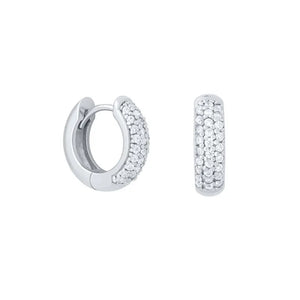
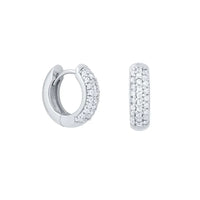
The piece they're describing → Diamond-Cut Huggie Hoop Earrings for Women — 925 Sterling Silver, Hypoallergenic
Personalize Yours


