


- A genuine Cartier Love bracelet is stamped with "Cartier," a "750" gold-purity mark (for 18K gold), and an engraved serial number on the inside of the band.
- The screws that "lock" the bracelet onto the wrist are fully functional and open only with Cartier's proprietary screwdriver, which comes with every authentic piece.
- Real Love bracelets are solid 18K gold and have noticeable heft — a bracelet that feels unusually light for its size is a strong warning sign.
- Price is one of the most reliable tells: genuine Love bracelets rarely sell for a fraction of retail, even secondhand. A "real" bracelet priced at a couple hundred dollars is almost never authentic.
- The only way to be certain on a high-value purchase is authentication — through a Cartier boutique's service desk or an independent certified appraiser.
The Cartier Love bracelet — designed by Aldo Cipullo in 1969 and sold as a pair of "handcuffs" meant to be locked onto a partner's wrist with a tiny screwdriver — is one of the most recognized and most counterfeited pieces of fine jewelry in the world. That combination of fame and a five-figure resale market makes it a prime target for convincing fakes, and it means a lot of people searching "cartier love bracelet real vs fake" are trying to solve a genuinely practical problem: authenticating a gift, evaluating a secondhand listing, or checking a bracelet they already own. This guide walks through exactly what to look for — the hallmark and serial number, the screw mechanism, the weight and material, and the red flags that show up most often in counterfeits and secondhand marketplace listings — plus how to get a bracelet professionally verified when the stakes are high enough to warrant it.
What a Genuine Cartier Love Bracelet Looks and Costs
A genuine Cartier Love bracelet is a solid 18K gold bangle (available in yellow, white, or rose gold) with a hinged opening secured by two visible screw heads, designed to be closed with a small screwdriver rather than a clasp. Cartier also produces diamond-paved versions and a small-model size, but the core design — a rounded rectangular bangle with functional screw detailing — has stayed consistent since 1969. Current retail pricing for the plain 18K gold Love bracelet typically runs in the low-to-mid four figures and climbs well beyond that for diamond-set versions; because Cartier adjusts pricing periodically, check cartier.com or a Cartier boutique directly for the current figure rather than relying on an older number you find online. That price point is exactly why the Love bracelet shows up so often in both counterfeit listings and confused secondhand sales — it's expensive enough to be worth faking, and recognizable enough that a convincing fake doesn't need to fool an expert, just a casual buyer.
The Hallmark and Serial Number: What to Check First
Every authentic Cartier Love bracelet is stamped on the inside of the band with the Cartier name, an "18K" or "750" purity mark (750 refers to 75% gold content, the standard for 18-karat gold), and an individually engraved serial number. On pieces sold in certain markets, you may also find an additional small assay or country hallmark alongside the Cartier stamp. The engraving should be crisp, evenly spaced, and consistent in font — Cartier's in-house engraving is precise because it's done with the same quality control as the rest of the piece. Shallow, uneven, or smudged stamping, a misspelled or oddly-fonted "Cartier," or the total absence of a serial number are all signs worth taking seriously. That said, a correct-looking stamp by itself doesn't guarantee authenticity — hallmarks can be copied — so treat this as one data point among several, not a pass/fail test on its own.
The Screw Mechanism and Screwdriver
The screw detailing is the Love bracelet's signature design element, and it's also one of the hardest details for counterfeiters to get exactly right. On a genuine piece, the screw heads are real, functional hardware — machined precisely enough to sit perfectly flush with the surface of the bracelet, with clean, evenly cut slots and no visible wobble or play. Every authentic Love bracelet is designed to be opened and closed with Cartier's proprietary screwdriver, which is included with the bracelet at purchase (and is itself sometimes offered separately for replacement). On counterfeits, the screws are frequently decorative rather than functional — carved or applied to look like screws but not actually removable — or they're real but poorly machined, sitting slightly proud of the surface, misaligned, or showing rough tool marks around the slot. If you have access to the bracelet in person, gently checking whether the screw heads look precisely seated and evenly finished (without forcing anything) is one of the more reliable visual tells.
Weight, Material, and Feel
Authentic Love bracelets are solid 18K gold, not plated, and that shows up immediately in hand as real heft — a small, dense bracelet that feels heavier than its size suggests. Counterfeits are frequently made from a lower-karat gold, gold-plated brass, or another lightweight base metal, which means they feel noticeably lighter than an authentic piece of the same dimensions. If you're evaluating a bracelet you can hold, comparing its weight against published specifications for the correct size (Cartier lists approximate weights by size on its own product pages) is a useful, if imperfect, sanity check. Color is a secondary tell: genuine yellow, white, and rose gold have a specific, consistent tone that plated or lower-karat pieces often miss slightly, especially after a few months of wear when plating starts to show brassy undertones at high-friction points like the screw heads and the inner curve of the bangle.
Common Counterfeit Tells
- Hinge and closure quality. A genuine Love bracelet's hinge opens smoothly with no grinding, and the two halves align perfectly when closed. A hinge that feels stiff, gritty, or slightly misaligned when shut is a common counterfeit tell.
- Decorative, non-functional screws. As above — screws that are purely cosmetic (they don't actually turn or remove) are one of the most common shortcuts counterfeiters take, since functional, precisely-machined hardware is expensive to replicate.
- Missing or generic box and papers. Authentic pieces come from Cartier with branded packaging, the screwdriver, and typically a certificate or guarantee card with a matching serial number. A bracelet sold "authentic" with no box, no papers, and no screwdriver isn't necessarily fake, but it removes an easy way to verify it and should lower your confidence.
- Inconsistent or blurry engraving. Compare the "Cartier" stamp, the purity mark, and the serial number against clear reference photos of authentic pieces — inconsistent letter spacing, wrong fonts, or engraving that looks stamped shallow and unevenly are red flags.
- Wrong proportions. The Love bracelet's rounded-rectangle silhouette and screw spacing are specific and consistent across genuine pieces. A silhouette that looks slightly flatter, rounder, or has screws spaced differently than reference photos is worth a second look.
Red Flags When Buying Secondhand or From Marketplaces
Most fake Love bracelets aren't sold as fakes — they're sold as genuine, on marketplaces, social media, or classifieds where a buyer has no way to physically inspect the piece before paying. A few practical red flags apply specifically to that situation:
- Price far below market. This is the single most reliable warning sign. Genuine Love bracelets hold their value well because they're solid gold and produced by a maison with tightly controlled distribution — even well-worn secondhand pieces typically sell for a meaningful percentage of current retail, not a small fraction of it. A "real Cartier Love bracelet" priced at a few hundred dollars should be treated as almost certainly not authentic.
- No serial number in photos, or a seller unwilling to show one. A legitimate seller of an authentic piece should have no issue photographing the inside stamp and serial number clearly. Reluctance to do so, or blurry/cropped photos that conveniently avoid that area, is a red flag.
- No screwdriver included. Because the screwdriver is part of the original purchase and the bracelet can't be worn without it, its absence on a "complete, authentic" listing is worth asking about directly.
- Seller pressure to skip verification. Any seller who discourages you from getting the piece authenticated before completing a private sale is a warning sign, regardless of how convincing the piece looks in photos.
- Listings that avoid the word "authentic" carefully. Some listings use language like "Cartier-style," "Love-inspired," or "in the style of" specifically to avoid legal exposure for selling a fake as genuine — read listing titles and descriptions closely, not just the headline price.
How to Get a Bracelet Professionally Verified
If you're about to spend real money — buying secondhand, evaluating an inherited piece, or confirming a gift — the only way to be fully confident is professional authentication, not a checklist. Cartier boutiques offer authentication and servicing for their own pieces; bringing a bracelet in, or contacting Cartier client service directly, is the most direct path for a definitive answer, and it also opens the door to professional cleaning, polishing, or resizing if the piece turns out to be genuine. Independent options exist too: a certified gemologist or jewelry appraiser (look for GIA-trained credentials) can assess the metal, hallmark, and construction quality even without brand affiliation, and reputable resale platforms that specialize in luxury jewelry typically run their own in-house authentication before listing a piece. None of the at-home checks in this guide are a substitute for one of these steps on anything above casual-inspection stakes — they're a way to catch an obvious fake early, not a final verdict.

If You're Not Trying to Buy the Real Thing
Everything above is for people trying to authenticate a genuine (or supposedly genuine) Cartier piece — and that's worth being clear-eyed about, because it's a different goal than simply liking the bangle-with-screw-detail aesthetic. If you're not planning to spend four figures on a solid-gold Love bracelet and just like the sleek, minimal bangle silhouette, there's an honest middle path: affordable bangles inspired by that same clean look, in 925 sterling silver with 18K gold plating, sold under their own name with no Cartier branding, hallmark, or claim of authenticity. AJLuxe's CZ Bangle Bracelet is one example — a channel-set bangle that gives a similar sleek-wrist look for under $40, with no attempt to pass as the real thing. That's a completely different purchase from anything discussed above, and it's worth choosing deliberately rather than by accident.
Frequently Asked Questions
How can I tell if a Cartier Love bracelet is real?
Check the inside of the band for a "Cartier" stamp, a "750" gold-purity mark, and an engraved serial number, then check that the screw heads are functional, flush, and precisely machined — genuine bracelets open only with Cartier's proprietary screwdriver. Weigh it in hand: solid 18K gold has real heft, and a bracelet that feels too light for its size is a warning sign. For anything you're paying real money for, get it authenticated at a Cartier boutique or by a certified independent appraiser rather than relying on visual checks alone.
What are common signs of a fake Cartier Love bracelet?
The most common tells are decorative (non-functional) screws instead of real, precisely machined hardware; shallow, uneven, or misspelled engraving on the inside stamp; a hinge that feels stiff or misaligned instead of opening smoothly; a bracelet that feels unusually light for a solid-gold piece; and a price far below what a genuine Love bracelet would sell for, even secondhand.
How do I know if my Cartier is real?
Start with the hallmark (Cartier stamp, 750 purity mark, serial number), the screw mechanism (functional, flush, and made for Cartier's own screwdriver), and the weight and gold color. These checks can catch an obvious fake, but they're not conclusive on their own — for full confidence, have the piece authenticated at a Cartier boutique or by a certified independent jewelry appraiser.
What are the most faked Cartier items?
The Love bracelet and the Juste un Clou nail bracelet are among the most counterfeited Cartier pieces, largely because their designs are simple, iconic, and recognizable even in low-quality photos, which makes them easy to replicate convincingly and easy to sell to buyers who don't know exactly what to check. Cartier's Trinity ring and Panthère pieces are also frequently counterfeited for similar reasons.
Does a real Cartier Love bracelet come with a screwdriver?
Yes. Because the bracelet is designed to be closed and opened only by removing its functional screws, every authentic Love bracelet is sold with Cartier's proprietary screwdriver included. A "complete, authentic" secondhand listing that doesn't include one is worth asking about directly before you buy.
How much does a real Cartier Love bracelet cost?
Pricing changes periodically and varies by gold color, size, and whether the bracelet is diamond-paved, so the most reliable number is whatever's currently listed on cartier.com or quoted by a Cartier boutique. As a general reference, the plain 18K gold Love bracelet has retailed in the low-to-mid four-figure range in recent years, with diamond-set versions costing significantly more.
Can Cartier verify if a bracelet is authentic?
Yes. Cartier boutiques offer authentication and servicing for their own jewelry, and bringing a bracelet in (or contacting Cartier client service) is the most direct way to get a definitive answer, along with access to professional cleaning or resizing if the piece is genuine.
Is it safe to buy a used Cartier Love bracelet online?
It can be, but treat it carefully. Favor sellers who show clear photos of the hallmark and serial number, include original box, papers, and the screwdriver, and price the piece in line with realistic secondhand value rather than a steep discount. Where possible, use a reseller that performs its own in-house authentication, or plan to have the piece independently verified after purchase.
What metal is a genuine Cartier Love bracelet made of?
Solid 18K gold — available in yellow, white, or rose gold — not gold plating over a base metal. That solid-gold construction is a major reason genuine pieces have noticeable weight and hold resale value, and it's one of the clearest points of difference from counterfeits, which are frequently plated rather than solid.
Final Thoughts
The Cartier Love bracelet earns its reputation the hard way — solid 18K gold, a design that's stayed recognizable for over five decades, and functional screw hardware that takes real precision to manufacture correctly. That's also exactly why it's worth being careful: the same fame that makes it desirable makes it one of the most convincingly faked pieces in fine jewelry, especially in secondhand and marketplace listings where you can't handle the piece before paying. The checklist in this guide — hallmark and serial number, functional and precisely machined screws, real gold weight, and a price that matches genuine secondhand value — will catch an obvious fake. For anything you're actually about to pay for, pair that checklist with real authentication through a Cartier boutique or a certified independent appraiser before you commit.
And if authenticity was never really the point — you just like the clean, screw-detail bangle look — there's no need to navigate any of this. Browse AJLuxe's bracelet collection for affordable, honestly-branded pieces that capture the aesthetic without pretending to be something they're not.
Like the Look, Not Shopping for Authentic?
The CZ Bangle Bracelet — a sleek, channel-set bangle in 925 sterling silver with 18K gold plating, sold under its own name for under $40.
Shop the CZ Bangle BraceletWritten by the AJLuxe Team. Last updated: August 2026. This guide is independent and not affiliated with, endorsed by, or sponsored by Cartier. For authentication of any specific piece, contact a Cartier boutique directly or a certified independent jewelry appraiser.
All third-party trademarks, brand names and product names are the property of their respective owners. AJLuxe is not affiliated with, endorsed by, sponsored by, or otherwise connected to any third-party brand referenced in this article. Brand names are used solely for accurate comparative reference, and material descriptions reflect each brand's own published product specifications at the time of writing.
You Might Also Like
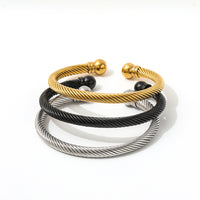
The piece they're describing → Cable Chain Cuff Bracelet — 18K Gold Plated, Open Cuff, Adjustable
Personalize Yours


