


- Garnet is January's one official birthstone — there is no second month-of-January stone the way June has three.
- Garnet ranks 6.5–7.5 on the Mohs hardness scale, softer than ruby (9) but tough enough for daily wear rings and earrings.
- Deep red pyrope and brownish-red almandine are the most common and affordable varieties; green demantoid and tsavorite are the rarest and priciest.
- January (garnet) and July (ruby) are both red gemstones but come from entirely different mineral families with very different price points.
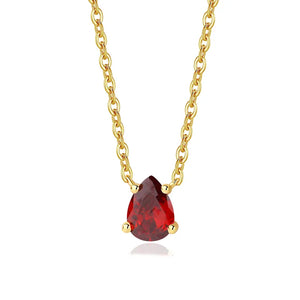
- AJLuxe carries January birthstone jewelry year-round — a Garnet Red Infinity Pendant ($59.99) and a Garnet Teardrop Pendant ($42.99), both 925 sterling silver with 18K gold plating.
If you were born in January, your birthstone has a longer résumé than most people realize. Garnet isn't a single gem — it's a family of closely related minerals that spans nearly every color in the spectrum, and that variety is exactly why it's stayed a birthstone favorite for centuries. Here's what the January birthstone actually is, why the “two birthstones” question keeps coming up, and how it stacks up against other months.
What Is January's Birthstone?
January's birthstone is garnet. It has held that position in modern birthstone lists (including the list adopted by the American National Retail Jewelers Association in 1912, still used today) without ever being swapped out or given an alternate, the way several other months have been.
Garnet is technically a group name for several closely related silicate minerals — pyrope, almandine, spessartite, grossular, andradite, and uvarovite — that share a similar crystal structure but differ in chemical composition and color. That's why you'll see garnet jewelry in deep wine red, burnt orange, vivid green, and dusty pink, all under the same birthstone name.
Where Does the January Birthstone Tradition Come From?
The garnet birthstone tradition comes from centuries of folklore associating the deep red stone with protection during travel and safe return home. Ancient traders and soldiers reportedly carried garnet as a protective talisman, and the name itself comes from the Latin “granatum,” a reference to the seeds of a pomegranate, which the most common garnet color closely resembles.
Are There Two Birthstones for January?
No, January has only one official birthstone: garnet. The confusion usually comes from garnet's own range of colors — because the same mineral group produces deep red, orange, and green stones, some shoppers assume there must be a second, separate January birthstone when in fact it's all still garnet. Compare that to June (pearl, alexandrite, moonstone) or December (turquoise, tanzanite, zircon), which genuinely do have multiple recognized birthstones.
What Colors Does the January Birthstone Come In?
Garnet comes in nearly every color except true blue, ranging from the classic deep red seen in most birthstone jewelry to rare greens, oranges, and pinks. The color depends on which garnet species you're looking at:
| Variety | Typical Color | Availability |
|---|---|---|
| Almandine | Deep red to reddish-brown | Most common — the classic January red |
| Pyrope | Vivid, saturated red | Common, often blended with almandine |
| Rhodolite | Pinkish-purple | Moderately available |
| Spessartite | Bright orange | Less common |
| Tsavorite | Vivid green | Rare, higher price point |
| Demantoid | Green, high brilliance | Rarest garnet variety |
How Durable Is Garnet for Everyday Jewelry?
Garnet rates 6.5 to 7.5 on the Mohs hardness scale, making it durable enough for rings, earrings, and pendants worn regularly, though softer than harder gems like ruby or sapphire. That hardness range means garnet can handle daily knocks reasonably well, but it's still smart to remove garnet rings before heavy manual work, workouts, or swimming — the same care guidance that applies to most colored gemstones in that hardness band.
January vs. July Birthstone: What's the Difference?
January's garnet and July's ruby are both associated with red jewelry, but they're different minerals entirely — garnet is a silicate, ruby is a variety of corundum — and that difference shows up in hardness, rarity, and price. Ruby ranks 9 on the Mohs scale (second only to diamond), which is a major reason fine ruby jewelry commands a much higher price than garnet of comparable size.
| Feature | Garnet (January) | Ruby (July) |
|---|---|---|
| Mineral family | Silicate (garnet group) | Corundum |
| Mohs hardness | 6.5–7.5 | 9 |
| Color range | Red, orange, green, pink (not blue) | Red only (pink-red to deep red) |
| Typical price tier | More affordable, wide range | Generally higher, especially fine quality |
What Are the Rarest Birthstone Months?
There's no single official ranking of “rarest birthstone months,” but gemologists most often point to alexandrite (an alternate June birthstone), tanzanite (an alternate December birthstone), and fine-quality demantoid garnet (January) as some of the hardest birthstone-family gems to source in top quality. Demantoid garnet in particular is prized by collectors for its rarity and unusually high brilliance compared to other garnet varieties, even though the more common red garnets that fill most January birthstone jewelry are widely available and affordable.
How to Choose January Birthstone Jewelry
Choosing garnet jewelry comes down to matching the color to your existing pieces and picking a setting that protects the stone during daily wear. Deep red almandine and pyrope pair naturally with warm-toned metals, while rarer green or orange garnets tend to work best as a standout centerpiece rather than an everyday stacking piece. If you're buying garnet-look jewelry as an affordable alternative for daily wear rather than an investment-grade natural stone, look for hypoallergenic settings — 925 sterling silver with 18K gold plating is a common combination that keeps sensitive skin comfortable while still giving that rich garnet-red color.
Gift Ideas for January Birthdays
The easiest January birthday gifts lean into garnet's deep red color story: a red-stone pendant for someone who wears jewelry daily, garnet-tone stud earrings for a first birthstone piece, or a stacking ring for someone who already collects birthstone jewelry. Personalized pieces — a birthstone charm alongside an initial or birth-month engraving — tend to read as more thoughtful than a stone alone.
AJLuxe carries January birthstone pieces directly: the January Birthstone Necklace in Garnet Red ($59.99) and the Garnet Teardrop Pendant ($42.99), both 925 sterling silver with 18K gold plating — see the full January birthstone collection. For a genuine investment-grade garnet gemstone specifically, a specialty gemstone jeweler is still the better source. If you're looking for affordable, hypoallergenic everyday jewelry in warm red or gold tones to complement a January birthday, AJLuxe's full jewelry collection is 925 sterling silver with 18K gold plating, priced $24.99–$79.99, and gift-ready out of the box.
For gemological detail beyond what's covered here, GIA's gemstone education resources are a genuine authority on garnet identification, color, and clarity: https://www.gia.edu.
Frequently Asked Questions
Are there two birthstones for January?
No, January has only one official birthstone: garnet. The idea of a second January birthstone usually comes from confusion over garnet's wide color range, not from an actual second recognized stone.
What is the real birthstone for January?
The real, officially recognized birthstone for January is garnet, most commonly seen in its deep red almandine and pyrope varieties. It has held this position since the modern birthstone list was standardized in 1912 and hasn't been changed or given an alternate since.
What is the 3 rarest birthstone months?
There's no single official ranking, but gem dealers most often cite alexandrite (alternate June birthstone), tanzanite (alternate December birthstone), and fine demantoid garnet (January) as among the hardest birthstone gems to find in high quality. The common red garnets most January jewelry uses are widely available and affordable, unlike these rarer varieties.
What's the difference between January and July birthstones?
January's birthstone, garnet, is a silicate mineral that comes in red, orange, green, and pink; July's birthstone, ruby, is a variety of corundum that only occurs in red and ranks much harder on the Mohs scale (9 versus garnet's 6.5–7.5). That hardness and rarity difference is also why ruby typically carries a higher price tag than garnet of similar size and clarity.
Is garnet a durable stone for daily jewelry?
Yes, garnet's 6.5–7.5 Mohs hardness makes it suitable for rings, earrings, and pendants worn regularly, though it's still softer than ruby or sapphire and should come off before heavy manual work or swimming.
What color is the January birthstone?
The most common January birthstone color is a deep wine red (almandine or pyrope garnet), but garnet also occurs naturally in orange, green, and pink depending on the variety.
You Might Also Like
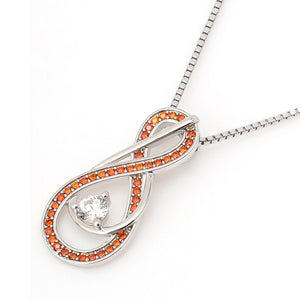
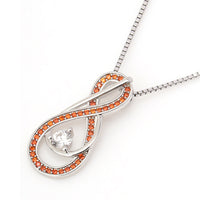
The piece they're describing → January Birthstone Necklace for Women — Garnet Red Infinity Pendant, 925 Sterling Silver (ES)
Personalize Yours

