


- Round polyurethane stretch cord (0.7mm to 1mm) is the standard choice for most beaded bracelets because it will not fray.
- Fiber or spandex-blend elastic beading thread grips its own knot without glue, which makes it better for seed beads and fine beadwork.
- The number one cause of a broken bracelet is a single overhand knot instead of a surgeon's knot sealed with glue.
- The two-finger rule: leave enough slack in the strung beads that two fingers slide underneath the elastic comfortably before you tie it off.
- Match cord thickness to bead weight — thin cord (0.5mm) for lightweight glass or seed beads, thicker cord (1mm or more) for heavier stone or metal beads.
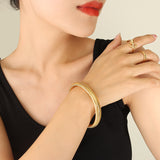
- If you would rather skip the stringing altogether, AJLuxe sells a ready-made stretch-fit bangle so you get the elastic comfort without the DIY.
Elastic cord looks simple until a bracelet snaps on the third wear, and almost every failure traces back to one of two things: the wrong cord for the bead weight, or a knot that was never built to hold. This guide walks through the actual cord types crafters use, how to size and knot a bracelet so it survives daily wear, and when it makes more sense to just buy a stretch bracelet already strung correctly.
What Is the Best Elastic for Bracelets?
The best elastic for bracelets is round polyurethane stretch cord in the 0.7mm to 1mm range, because it is the most durable, least likely to fray, and works with the widest range of bead hole sizes. It is the cord most commonly sold under names like clear stretch cord or stretch magic-style cord in craft stores, and it is the default choice for stacked beaded bracelets, gemstone chip bracelets, and layered stretch sets. The tradeoff is that it is smooth rather than textured, so the knot itself needs help (glue, not just tension) to stay tied — which is why cord choice and knotting technique have to be solved together, not separately.
What Is the Best Elastic to Make Bracelets?
The best elastic to make bracelets changes with what you are stringing, not just personal preference — matching cord diameter to bead weight matters more than brand. A cord too thin for heavy beads stretches out and eventually snaps under normal wear; a cord too thick will not fit through small bead holes at all. Use the table below as a starting point.
| Cord Type | Typical Diameter | Best For | Watch Out For |
|---|---|---|---|
| Round stretch cord (polyurethane) | 0.7mm to 1mm | Glass, gemstone chip, and stacked stretch bracelets | Knot slips without glue — never skip the glue step |
| Elastic beading thread (fiber/spandex blend) | 0.5mm to 0.8mm | Seed beads and fine beadwork | Frays faster with repeated stretching over time |
| Flat elastic cord | 3mm to 6mm wide | Woven or braided friendship-style bracelets | Bulkier profile, not compatible with small bead holes |
| Thick stretch/bungee-style cord | 1.5mm or more | Chunky stone beads, kids' bracelets | Less refined look; harder to hide the knot inside a bead |
Which Elastic Is Used for Bracelets?
The elastic used for bracelets is almost always one of two materials: clear polyurethane stretch cord or a fiber-wrapped spandex/rubber-core elastic thread. Polyurethane cord is a solid, single-material strand — durable and UV-resistant compared to older rubber cords, but slick, so it needs a glued knot. Fiber-wrapped elastic thread has a stretchy core wrapped in a textured fiber sheath, which grips a plain knot better but wears down faster with repeated stretching since the outer fiber can fray. Neither material is inherently latex-based, which is worth knowing if you are also choosing a hypoallergenic metal for the beads or clasp themselves — cord material and metal sensitivity are two separate questions, and it is easy to solve one while ignoring the other.
How to Make an Elastic Bracelet That Won't Break?
The way to make an elastic bracelet that will not break is to tie a surgeon's knot (a double or triple overhand knot) instead of a single knot, seal it with a drop of jewelry glue, and let the glue cure fully before trimming the tails inside a bead. Here is the sequence that actually holds up:

- Measure with slack, not snug. String your beads around your wrist and leave the two-finger gap described below before you even think about tying off.
- Tie a surgeon's knot. Cross the ends and loop through two or three times (not once) before pulling tight — a single overhand knot is the single most common reason stretch bracelets fail within days.
- Glue the knot. A small dot of jewelry-grade glue on the knot itself keeps it from working loose as the cord flexes and stretches over months of wear.
- Let it cure before trimming. Pulling or trimming a glued knot too early is a common way crafters undo the one step that was supposed to fix everything.
- Hide the knot inside a bead. Thread the tied-off knot back into the nearest bead hole so it is protected from snagging and abrasion.
- Keep it out of heat and direct sun. Elastic cord degrades faster with prolonged heat exposure, so avoid leaving stretch bracelets on a sunny windowsill or in a hot car.
What Is the Two-Finger Rule for Bracelets?
The two-finger rule for bracelets means leaving enough slack in your strung beads that two fingers can slide comfortably underneath the elastic while it rests on your wrist, before you tie it off. This gives the bracelet enough give to stretch over your hand without cutting into your skin, while still sitting snugly rather than sliding around once it is on. Too tight (no finger gap) restricts circulation and stresses the elastic every time you put it on; too loose (more than two fingers) means the bracelet will spin and the beads will sag.
Which Elastic Should You Choose — or Skip DIY Entirely?
If you are stringing your own bracelet, start with round polyurethane stretch cord at 0.7mm to 1mm for most beads, step up to a thicker cord for heavy stone beads, and always finish with a glued surgeon's knot rather than a single tied knot. If stringing your own isn't the point and you just want a stretch-fit bracelet that is already sized and knotted correctly, AJLuxe's Gold Elastic Bangle Bracelet ($39.99) is an 18K gold-plated, 925 sterling silver stretch bangle built to stack, with the elastic fit already sorted out for you — no cord, no glue, no guessing on the two-finger rule. It is also hypoallergenic, which solves the metal-sensitivity half of the equation that cord choice alone never addresses.

If you're choosing between a bead-stringing project and a finished piece, our stretch bracelets for women guide covers how a ready-made stretch bracelet is built and how long the elastic typically lasts.
Frequently Asked Questions
What is the best elastic to make bracelets?
The best elastic to make bracelets depends on the beads: round polyurethane stretch cord (0.7mm to 1mm) works for most glass and gemstone chip beads, while a thinner fiber-based elastic beading thread suits seed beads and fine beadwork better since it grips its own knot.
How to make an elastic bracelet that won't break?
Tie a surgeon's knot (double or triple overhand knot) instead of a single knot, seal it with a drop of jewelry glue, let it cure fully, then trim the tails and tuck the knot inside a bead hole for protection.
Which elastic is used for bracelets?
Bracelets typically use either clear polyurethane stretch cord, which is smooth and fray-resistant but needs a glued knot, or fiber-wrapped spandex elastic thread, which grips a plain knot better but frays faster with repeated stretching.
What is the two-finger rule for bracelets?
The two-finger rule means leaving enough slack in the strung beads that two fingers slide comfortably underneath the bracelet while it rests on your wrist, before you tie off the final knot — snug enough to stay put, loose enough not to restrict circulation.
All third-party trademarks, brand names and product names are the property of their respective owners. AJLuxe is not affiliated with, endorsed by, sponsored by, or otherwise connected to any third-party brand referenced in this article. Brand names are used solely for accurate comparative reference, and material descriptions reflect each brand's own published product specifications at the time of writing.
You Might Also Like

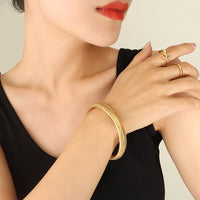
The piece they're describing → Gold Elastic Bangle Bracelet for Women — 18K Gold Plated, Stretch Fit, Stackable
Personalize Yours


