


Last updated: June 2026
The alexandrite vs emerald debate comes up often among gem buyers, and for good reason — both stones are extraordinary, but they suit very different tastes and budgets. Alexandrite is one of the rarest gemstones on earth, famous for shifting from green to red or purple depending on lighting. Emerald has been a symbol of prestige for thousands of years, with that unmistakable deep green color that no other stone quite replicates. This guide breaks down every major difference so you can choose with confidence.

Alexandrite vs emerald: alexandrite is a rare color-change variety of chrysoberyl that shifts from green in daylight to red or purple under incandescent light, scoring 8.5 on the Mohs scale; emerald is a variety of beryl with a rich, constant green caused by chromium or vanadium, scoring 7.5–8 on the Mohs scale. Alexandrite costs far more per carat due to extreme rarity, while emerald offers more accessible pricing and broader availability.
Alexandrite vs Emerald: Key Differences at a Glance
| Property | Alexandrite | Emerald |
|---|---|---|
| Appearance | Green in daylight, red/purple under incandescent light | Deep, constant green with velvety depth |
| Price Range | $3,000–$70,000+ per carat (fine natural) | $500–$10,000 per carat (fine natural) |
| Hardness / Durability | 8.5 Mohs — excellent scratch resistance | 7.5–8 Mohs — good but chips more easily |
| Lifespan | Decades with basic care | Decades with careful, gentle handling |
| Best For | Collectors, rare investment pieces, June birthstone | Classic jewelry, May birthstone, statement pieces |
| Sparkle / Effect | Dramatic color-change effect; moderate brilliance | Rich, velvety glow; less sparkle, more depth |
| Origin | Russia (original), Brazil, Sri Lanka, East Africa | Colombia, Zambia, Brazil, Zimbabwe |
| Care Requirements | Mild soap and water; avoid ultrasonic if heavily included | Avoid ultrasonic; re-oil periodically; gentle cleaning only |
| Overall Value | Extremely high; among the world's rarest gems | High; a classic prestige stone with broad market |
Shop Gemstone Birthstone Necklaces at AJLuxe — Shop Our Alexandrite Pendant Necklace → →
What Is Alexandrite?
Alexandrite is a variety of the mineral chrysoberyl, and it's one of the few gemstones defined by a single optical phenomenon: color change. In natural or fluorescent daylight, a fine alexandrite looks green — sometimes a rich blue-green, sometimes a yellowish-green, depending on the stone's origin. Put that same stone under an incandescent bulb or candlelight, and it shifts to red, raspberry, or purplish-red. Gemologists call this the alexandrite effect, and no other major gemstone does it with the same dramatic intensity.
The stone was first discovered in Russia's Ural Mountains around 1830 and named after Tsar Alexander II because its colors matched the Russian imperial flag. Those original Russian deposits are now almost entirely depleted, which drives prices for Russian-origin alexandrite into the stratosphere. Today, most natural alexandrite comes from Brazil, Sri Lanka, and East Africa, though stones from all origins are rare.
According to the Gemological Institute of America (GIA), fine alexandrite with strong color change and good clarity is rarer than ruby, emerald, or sapphire. Lab-grown alexandrite exists and shows the same color-change effect at a fraction of the price — useful if you love the look but not the budget. Alexandrite is the June birthstone, alongside pearl and moonstone.
On the Mohs hardness scale, alexandrite scores 8.5 — harder than most colored gemstones, second only to corundum (ruby and sapphire) among commonly used gems. That hardness makes it a practical choice for everyday rings and pendants.
What Is Emerald?
Emerald is a variety of beryl, the same mineral family as aquamarine. Its distinctive green comes from trace amounts of chromium, vanadium, or both — elements that absorb red and blue wavelengths and reflect back that iconic, saturated green. No two emeralds look exactly alike: Colombian emeralds tend toward a pure, vivid green with a slight blue cast; Zambian emeralds often run darker and more bluish-green; Brazilian stones vary widely in color and clarity.
Emeralds have appeared in royal crowns, ancient Egyptian burial sites, and Mughal jewelry collections for millennia. Cleopatra was famously obsessed with them. The Jewelers of America notes that emerald is one of the four "precious" gemstones alongside diamond, ruby, and sapphire — a category recognition that reflects both historical prestige and market demand.
Most natural emeralds carry inclusions — internal fractures and tiny crystals — that gemologists call "jardin" (French for garden). These inclusions are so common that heavily included emeralds are still considered acceptable; the trade grades clarity differently for emerald than for other gems. To improve their appearance and stability, nearly all emeralds on the market are treated with cedar oil or synthetic resin to fill surface fractures. This is a standard, accepted practice, but it means emeralds need periodic re-oiling to maintain their best appearance.
Emerald scores 7.5–8 on the Mohs scale, which is decent hardness, but its inclusions make it more prone to chipping than its hardness number alone suggests. Emerald is the May birthstone.
Alexandrite vs Emerald: Which Looks Better in Jewelry?
The answer depends entirely on what you want a piece of jewelry to do.
Alexandrite is a conversation starter. Wear it to a daytime outdoor event and it glows green; move inside under warm lighting and it shifts to red or purple. That transformation never gets old, and it's something people genuinely notice. Because alexandrite tends toward cooler tones in daylight, it pairs especially well with white gold and platinum settings that amplify its clarity and color-shift contrast.
Emerald is a statement of timeless elegance. That rich green holds its beauty in every lighting condition, and emerald's velvety depth gives it a look that photographs beautifully and reads clearly across a room. It works in both modern minimalist settings and elaborate vintage designs. Yellow gold complements emerald's warm green undertones particularly well, a pairing you'll see throughout centuries of royal jewelry.
For engagement rings, emerald is more common because its constant color makes it easier to coordinate with wedding bands and everyday outfits. For a collector's piece or heirloom, alexandrite's rarity and optical drama make it arguably the more interesting stone. If you want to explore birthstone jewelry options, both stones have deep meaning as June and May birthstones respectively.
Price Comparison: Alexandrite vs Emerald
Fine natural alexandrite is one of the most expensive gemstones in the world. A 1-carat stone with strong color change and good clarity regularly sells for $10,000–$30,000. Exceptional stones over 2 carats with Russian origin and a near-complete color shift can exceed $70,000 per carat at auction. According to a 2023 report by the International Colored Gemstone Association, alexandrite prices have increased over 40% in the past decade as deposits continue to deplete.
Lab-grown alexandrite brings that price down dramatically — expect $50–$200 per carat for a lab-created stone with the same optical effect. Lab stones are chemically identical to natural alexandrite but carry no collector premium.
Fine natural emerald runs $500–$10,000 per carat depending on color saturation, clarity, and origin. Colombian emeralds with exceptional color and minimal treatment command the highest prices. Commercial-grade emeralds with visible inclusions and heavy treatment can be found for $50–$200 per carat — making them much more accessible than alexandrite at most quality levels.
For a comparable look in fine jewelry, emerald wins on affordability. A beautiful emerald pendant in 14K gold runs $500–$3,000 at most retailers. An alexandrite pendant of equivalent quality in natural stone would cost multiples of that. Lab-grown alexandrite narrows the gap significantly if budget is a concern. You can also explore our complete crystal and gemstone jewelry guide for more comparisons across popular stones.
Durability and Everyday Wearability
Alexandrite handles daily wear better than emerald. At 8.5 Mohs hardness and without the inclusion-related brittleness that affects emerald, alexandrite resists scratches and chips well. Clean it with warm water, mild dish soap, and a soft brush. Ultrasonic cleaners are generally safe for alexandrite unless the stone has significant inclusions, but check with your jeweler first.
Emerald requires more careful handling. Its inclusions create internal fracture points that can propagate if the stone takes a sharp knock. Avoid hard impacts, extreme temperature changes, and steam cleaners. Never put an oiled emerald in an ultrasonic cleaner — the vibration strips out the oil treatment and can worsen existing fractures. Clean emerald with a damp soft cloth or very gentle soap and water, and have it professionally re-oiled every few years if it starts to look dull.
Both stones do fine in pendants and earrings, where impact risk is low. For rings — especially engagement rings worn daily — alexandrite is the more practical choice. If you choose an emerald ring, a bezel or halo setting that protects the stone's edges reduces chipping risk considerably.
Store both stones separately from harder gems like diamonds to prevent scratching. A fabric-lined jewelry box or individual pouches work well for either stone.
Frequently Asked Questions
Is alexandrite rarer than emerald?
Yes — alexandrite is significantly rarer than emerald. Fine natural alexandrite with strong color change is rarer than ruby or sapphire, making it one of the scarcest colored gemstones in commercial jewelry. Emerald is also rare compared to many gems, but it's mined in greater quantities from multiple countries including Colombia, Zambia, and Brazil, so it's far easier to find at retail. The rarity gap between the two stones is why alexandrite costs so much more per carat.
Which is more valuable, alexandrite or emerald?
Fine natural alexandrite is more valuable per carat than fine natural emerald in almost every comparable situation. A top-quality 1-carat alexandrite can sell for $10,000–$30,000, while a comparable emerald typically runs $1,000–$5,000 per carat. However, exceptionally large or historically significant emeralds — like the famous Rockefeller Emerald — can command extraordinary prices. For most buyers comparing stones of the same size and quality, alexandrite will cost more.
Can alexandrite be used as an engagement ring stone?
Yes, alexandrite makes an excellent engagement ring stone. At 8.5 on the Mohs scale, it's hard enough for daily wear and resists scratching better than emerald, sapphire, or most colored gems. Its color-change effect makes every proposal story unique and memorable. The main challenge is cost — fine natural alexandrite is expensive, but lab-grown alexandrite gives you the same optical effect at a much lower price point, making it a practical alternative for engagement rings.
Does alexandrite really change color?
Yes, and the change is dramatic in fine stones. Alexandrite contains chromium, the same element that gives ruby its red color and emerald its green. Chromium in alexandrite absorbs different wavelengths depending on the light source: in daylight or fluorescent light, it transmits green; under incandescent light or candlelight, it transmits red or purple. The strength of the color change varies by stone — the best specimens shift almost completely from green to red, while lower-quality stones show a muddier transition between brownish-green and brownish-red.
Are most emeralds treated?
Yes — the vast majority of emeralds on the market are treated with oil or resin to fill surface fractures and improve their appearance. The GIA estimates that over 90% of natural emeralds have been treated in this way. This treatment is widely accepted in the gem trade and doesn't reduce value when disclosed, but it does require periodic maintenance. Untreated emeralds with excellent clarity are extremely rare and command significant premiums at auction.
What is the best setting for an emerald?
A bezel setting or halo setting works best for emeralds worn in rings, because both styles protect the stone's vulnerable edges from chipping. Prong settings leave more of the stone exposed, which increases impact risk for a gem that's prone to fracturing along its inclusion planes. For pendants and earrings, prong settings are fine since those pieces rarely take direct impact. Yellow gold complements emerald's green tones beautifully, though white gold and platinum work well for a more modern look.
Is lab-grown alexandrite real alexandrite?
Lab-grown alexandrite is chemically and optically identical to natural alexandrite — same mineral composition, same color-change effect, same hardness. The only difference is origin: lab-grown stones form in a controlled environment over weeks rather than millions of years underground. A reputable jeweler will disclose whether a stone is lab-grown or natural, and the price difference is substantial. Lab-grown alexandrite typically sells for $50–$200 per carat versus thousands for natural stones of equivalent quality.
Which stone is better for a May or June birthday gift?
If you're shopping for a May birthday, emerald is the traditional birthstone — a classic and meaningful choice. For June birthdays, alexandrite is one of three official birthstones alongside pearl and moonstone. Alexandrite is the most distinctive and rare of the June options, making it a particularly memorable gift. Either stone works beautifully in a birthstone necklace that celebrates the recipient's birth month in a personal way.
Do alexandrite and emerald hold their value?
Fine natural alexandrite has shown strong value appreciation over time, largely because natural supplies are dwindling and demand from collectors remains high. Fine emeralds also hold value well, particularly Colombian stones with minimal treatment and strong color saturation. Like all colored gemstones, value retention depends heavily on quality — exceptional stones in both categories appreciate; lower-quality stones with heavy treatment or weak color are harder to resell at or above purchase price. Neither stone should be bought primarily as an investment without expert guidance.
How do I tell alexandrite and emerald apart?
The easiest way is to change the lighting. Take the stone into incandescent light or direct sunlight and compare the colors: alexandrite will shift noticeably from green toward red or purple, while emerald stays the same rich green in any light. If you're looking at loose stones without the ability to test under different lights, a gemologist can confirm identity through refractive index testing and spectroscopy. Alexandrite has a refractive index of 1.746–1.763, while emerald reads 1.565–1.602 — a measurable difference with standard gemological equipment.
Final Thoughts
When it comes to alexandrite vs emerald, neither stone is objectively better — they serve different purposes and speak to different personalities. Alexandrite is for the buyer who wants something genuinely rare, scientifically fascinating, and visually dynamic. Emerald is for the buyer who wants enduring elegance, deep historical meaning, and a color that photographs beautifully in any light. Both are exceptional choices for fine jewelry, and both hold emotional and monetary value over time.
If you're drawn to gemstone jewelry and want to explore both birthstone options, browse the Gemstone Birthstone Necklaces at AJLuxe — a collection designed for people who appreciate the meaning behind each stone. Whether you choose the color-shifting wonder of alexandrite or the timeless depth of emerald, the right gem is the one that resonates with you.
All third-party trademarks, brand names and product names are the property of their respective owners. AJLuxe is not affiliated with, endorsed by, sponsored by, or otherwise connected to any third-party brand referenced in this article. Brand names are used solely for accurate comparative reference, and material descriptions reflect each brand's own published product specifications at the time of writing.
You Might Also Like
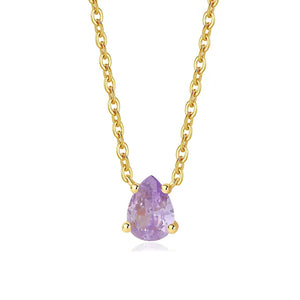
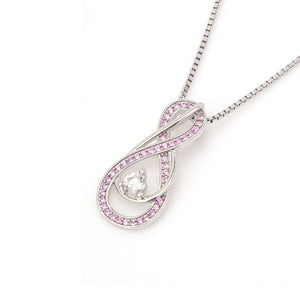
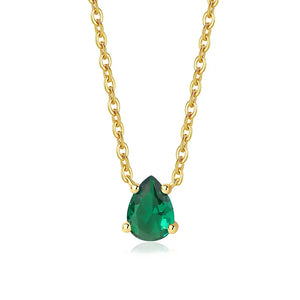
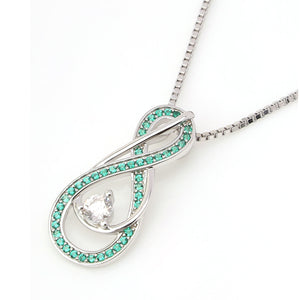
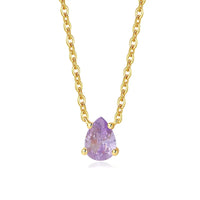
The piece they're describing → Alexandrite Teardrop Pendant Necklace for Women — 925 Sterling Silver, Gold Plated
Personalize Yours


