


"Tarnish resistant" shows up on almost every jewelry product page you'll find this week — and it means at least three different things depending on which listing you're reading. Sometimes it describes the metal itself (gold doesn't react with air). Sometimes it describes a coating over a different metal (rhodium or gold plating on a base that would otherwise tarnish). And sometimes it's simply marketing language attached to a product that hasn't actually been tested against tarnish at all.
This guide explains what the claim is actually describing at the chemistry level, gives you a way to decode the specific wording brands use, and tells you honestly which finishes earn the claim and to what degree — including where AJLuxe's own 18K gold plated sterling silver pieces fall on that scale.

What "Tarnish-Resistant" Actually Means
Tarnish-resistant means a piece of jewelry slows or blocks the chemical reaction that causes tarnish — it does not mean the reaction can never happen. That single distinction separates an honest claim from an oversold one. A genuinely tarnish-resistant metal (solid gold, platinum, titanium, 316L stainless steel) resists the reaction because of what it's made of. A tarnish-resistant plated piece resists it because a thin protective layer is sitting between the air and a more reactive metal underneath — and that layer is a wear item, not a permanent shield.
Neither version is a false claim on its own. The dishonesty only shows up when a plated product is marketed with tarnish-proof language ("will never tarnish," "lasts forever") that belongs to the solid-metal category, not the plated one.
The Chemistry: Why Some Metals Tarnish and Others Don't
Tarnish is a surface oxidation reaction, not damage to the metal underneath. According to the Gemological Institute of America, tarnish forms when a reactive metal's surface reacts with sulfur compounds or oxygen in the air, sweat, and everyday products — it changes the surface layer's appearance without affecting the metal's structural integrity.
- Silver and copper alloys react with sulfur. Sterling silver is 92.5% silver and 7.5% copper — both react with hydrogen sulfide (present in polluted air, some tap water, rubber, and sulfur-containing foods) to form silver sulfide and copper sulfide, the grey-black and greenish layers people call tarnish.
- Copper-heavy alloys (brass, bronze) oxidize with plain oxygen as well as sulfur, which is why base-metal costume jewelry tarnishes fastest and most visibly.
- Gold, platinum, and titanium are chemically inert at room temperature — they simply don't form stable compounds with the sulfur and oxygen in everyday air. This is why solid gold or platinum jewelry can sit in a humid drawer for years and come out looking the same.
- 316L stainless steel resists both because its chromium content forms a passive, self-repairing oxide layer on the surface — the same chemistry that keeps surgical instruments corrosion-free.
Plated jewelry adds a fourth mechanism: a thin layer of an inert metal (gold or rhodium) is bonded over a more reactive base. While that layer is fully intact, the base metal never touches air or moisture, so it can't tarnish — the piece behaves like solid gold on the surface. The moment the layer wears through at a friction point (a ring's underside, a clasp, a chain's inner curve), the base metal is exposed and the original chemistry — silver-sulfide or copper-oxide — resumes at that spot.
The Tarnish-Resistant Claim Decoder
Because "tarnish resistant" gets used loosely, here's what the common phrasings on product pages actually mean and what to expect from each — read this before the metal-comparison table, because the wording matters as much as the metal.
| The claim you'll see | What it actually means | The honest caveat |
|---|---|---|
| "Tarnish-free" | Usually solid gold, platinum, titanium, or 316L steel — metals that don't tarnish at the material level. | Accurate for the metals above. Inaccurate if used on a plated product — a coating is never permanently "free" of the reaction it's blocking. |
| "Tarnish-resistant" | The reaction is slowed or blocked, either by the metal's own chemistry or by a protective layer. | The most honest and most common accurate phrase for plated jewelry — resistant, not immune. |
| "Waterproof" / "shower-safe" | A separate claim about water exposure, usually referring to PVD-coated 316L stainless steel. | Not the same promise as tarnish-resistant. Traditional gold or rhodium plating over sterling silver is splash-safe, not swim- or shower-safe — water speeds up wear on that thinner coating. |
| "Hypoallergenic + tarnish-resistant" | Two separate properties bundled in one line. Hypoallergenic describes what touches your skin; tarnish-resistant describes the surface chemistry. | A piece can be genuinely hypoallergenic and only moderately tarnish-resistant at the same time — check both claims separately. |
| "Lifetime" / "will never tarnish" | An absolute claim that only solid inert metals can back up. | A red flag on any plated product listing. No plating layer is permanent — treat this phrase as marketing copy, not a spec. |
Which Metals and Platings Legitimately Qualify — and to What Degree
Every finish below is genuinely more tarnish-resistant than plain, uncoated sterling silver or brass — but "resistant" means something different at each tier. This table ranks them by where the resistance comes from, which is the honest way to set expectations.
| Metal / plating | Source of resistance | Honest timeframe |
|---|---|---|
| Platinum | The metal itself — chemically inert | Permanent; no coating to wear through |
| Solid 18K–24K gold | The metal itself — chemically inert | Permanent; the gold color doesn't fade or shift |
| Titanium | The metal itself — self-sealing oxide layer | Permanent |
| 316L stainless steel | The metal itself — passive chromium-oxide layer | Permanent; surface can dull with scratches (not tarnish) |
| Gold-filled | A thick, pressure-bonded gold layer (legally required to be at least 1/20th of the item's total weight) | Years to decades before the base metal can show at extreme wear points |
| Gold vermeil (10K+ gold over sterling silver, 2.5-micron minimum) | A coating layer, but the thickest and most regulated type of gold plating | Longer-lasting than standard plating; still a wear layer, not permanent |
| 18K gold plated on 925 sterling silver (AJLuxe's line) | A coating layer over a precious, hypoallergenic base metal (not brass) | Bright and tarnish-resistant at the surface for roughly 2–5 years of normal wear with basic care; the layer thins gradually rather than failing all at once |
| Rhodium-plated white gold or silver | A coating layer | Typically needs replating every 1–3 years as the rhodium wears thin |
| 925 sterling silver, unplated | None — reacts directly with air | Tarnishes on a scale of weeks to months depending on storage; cleans back to bright easily |
Deeper dives on two of those rows: does sterling silver tarnish and a full metal-by-metal ranking. If you're comparing tarnish-free jewelry brands by name rather than by material, see our brand comparison.
Being Honest About Plated Jewelry — Including Ours
18K gold plated 925 sterling silver is genuinely tarnish-resistant, not tarnish-proof, and that distinction matters enough to state plainly: the gold surface layer is chemically inert and will not tarnish on its own, but it is a wear layer bonded to a base metal that can tarnish once exposed. That's true of every plated product on the market, not a weakness specific to any one brand — the difference between a fair plated product and a poor one comes down to plating thickness, base metal quality, and how honestly the timeframe is stated.
What that means in practice for 18K gold plated sterling silver: with normal wear and basic care (wiping the piece down after wear, storing it dry and out of direct water exposure), the gold surface typically stays bright and tarnish-resistant for about 2 to 5 years. Rings and pieces with more friction wear faster than necklaces and studs. When the plating eventually thins, the base underneath is 925 sterling silver — a precious, hypoallergenic metal, not brass — so what you're left with is still real jewelry, and pieces can be replated rather than replaced.
This is why "tarnish-resistant" rather than "tarnish-free" is the accurate phrase for any gold plated piece, including our own. If a listing anywhere promises a plated product will "never tarnish," that's the marketing-spin version of the claim this guide is decoding — not the honest one.
How to Verify a Tarnish-Resistant Claim Before You Buy
Verify a tarnish-resistant claim by checking what's actually under the finish, not just the word on the label — the product description should name the base metal, not only the surface color. A quick checklist:
- Look for the base metal, not just the finish. "Gold" or "gold-toned" alone tells you nothing — you need "18K gold plated on 925 sterling silver," "gold-filled," or "solid 14K gold" to know what's actually resisting tarnish and how.
- Check the plating thickness or standard where it's listed. Vermeil has a legal minimum (10K+ gold, at least 2.5 microns thick over sterling silver, per FTC jewelry guidelines) — plain "gold plated" has no required minimum, so thickness can vary widely between brands.
- Separate "tarnish-resistant" from "waterproof." A piece can be one without the other. If you want to shower or swim in it daily, look specifically for PVD-coated stainless steel, not standard gold or rhodium plating.
- Treat "lifetime" or "never tarnishes" language on a plated product as a red flag, not a spec — no plating layer is permanent, and a brand that's honest about that timeframe is more trustworthy than one that isn't.
Frequently Asked Questions
What is the best jewelry that doesn't tarnish?
Solid platinum, solid gold, and titanium are the jewelry types that genuinely don't tarnish, because none of them react with the sulfur and oxygen that cause tarnish in the first place. For an accessible price point, 316L stainless steel and gold-filled jewelry come closest to that same "set it and forget it" experience without the fine-jewelry price tag.
What type of jewellery does not tarnish?
Jewelry made from chemically inert metals — platinum, solid gold, and titanium — does not tarnish, because those metals don't react with air, sweat, or sulfur compounds. 316L surgical stainless steel comes very close, resisting tarnish through a self-repairing protective oxide layer rather than pure inertness. Plated jewelry (gold or rhodium over silver or steel) resists tarnish only while the coating stays intact.
Which brand is best for anti-tarnish jewellery?
Rather than one "best" brand, match the material to how you wear it: PVD-coated stainless steel brands are the strongest choice for daily shower-and-swim wear, gold-filled and solid-gold jewelers are the strongest choice for long-term wear with zero maintenance, and 18K gold plated sterling silver — including AJLuxe — is a strong middle option for a dressier, hypoallergenic look at an accessible price, with the honest expectation that the plating is a multi-year wear layer rather than a permanent one. See our tarnish-free brand comparison for a fuller breakdown.
What is jewelry called that doesn't tarnish?
There isn't one industry-standard name for it — you'll see it marketed as "tarnish-free," "tarnish-resistant," "anti-tarnish," or "hypoallergenic and waterproof" jewelry. The only way to know which claim you're actually getting is to check the base metal: solid gold, platinum, and titanium earn "tarnish-free" outright, while plated pieces earn "tarnish-resistant" for as long as the coating lasts.
Final Thoughts
"Tarnish-resistant" is a real, useful claim — it just describes a spectrum, not a single guarantee. Solid gold, platinum, titanium, and 316L stainless steel resist tarnish permanently because of what they're made of. Plated jewelry, including 18K gold plated 925 sterling silver, resists tarnish for as long as the coating stays intact — typically several years of normal wear — and that's a genuinely good outcome at an accessible price, as long as the label doesn't oversell it as permanent.
Browse AJLuxe's 18K gold plated sterling silver necklaces, bracelets, and earrings — honestly described, with the same base metal and plating standard across the line.
Written by the AJLuxe team — specialists in 18K gold plated sterling silver jewelry. Last updated: August 2026.
Alle Marken, Markennamen und Produktnamen Dritter sind Eigentum ihrer jeweiligen Inhaber. AJLuxe steht in keiner Verbindung zu den in diesem Artikel genannten Marken Dritter und wird von diesen weder unterstützt noch gesponsert. Markennamen werden ausschließlich zur sachlichen vergleichenden Bezugnahme verwendet; Materialangaben entsprechen den eigenen veröffentlichten Produktangaben der jeweiligen Marke zum Zeitpunkt der Erstellung.
You Might Also Like
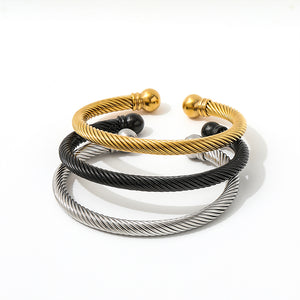
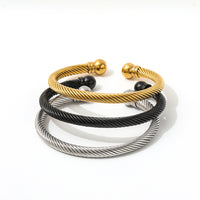
The piece they're describing → Kabelketten-Armreif für Damen – 18K vergoldet, offen, verstellbar
Personalize Yours


