


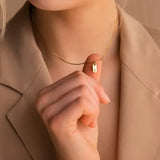
- A ring holder necklace (also called a ring keeper necklace) is any pendant or chain designed so you can slide a ring onto it and wear it around your neck instead of your finger — popular with nurses, surgeons, gym-goers, cooks, and anyone with pregnancy or humidity-related finger swelling.
- Scratching is a real but manageable risk: it comes mostly from the ring swinging and clacking against the pendant during movement, not from wearing it still. A smooth, rounded bail is far safer than a textured or gem-studded one.
- Best styles by use case: a smooth pendant loop for everyday wear, a twist-lock "ring keeper" clasp for high-movement jobs, and a plain sturdy chain for a no-frills budget option.
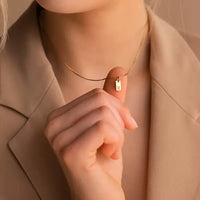
- ⚠️ Catalog gap: AJLuxe does not currently sell a dedicated ring-holder pendant. Our closest honest match is a smooth, flat 18K gold-plated initial tag necklace — a low-scratch-risk stopper for a ring, not a purpose-built ring keeper. Flagged for SKU expansion below.
- Chain length matters more than most guides admit: 16–18 inches sits high enough to tuck under a collar or scrub top for discreet daily wear; 20–24 inches sits lower for visible layering.
If you've ever had to pull off your ring to wash your hands, lift weights, knead dough, or just because your fingers were too swollen to wear it comfortably, you've probably typed "ring holder necklace" into Google looking for somewhere safer than a pocket or a soap dish. It's a surprisingly common search — nurses and surgeons who scrub in dozens of times a shift, new parents managing swollen fingers, gym-goers protecting a wedding band from a barbell, and cooks who don't want cubic zirconia or diamonds anywhere near raw dough all land on the same question. This guide answers it honestly: whether ring holder necklaces actually work, whether they scratch your ring, which holder style fits which use case, and exactly where AJLuxe's catalog does — and doesn't — have a real answer for you.
What Is a Ring Holder Necklace, and Who Actually Wears One?
A ring holder necklace is exactly what it sounds like: a necklace built (or repurposed) so a ring can slide onto the chain or pendant and rest there securely instead of sitting in a pocket, a dish by the sink, or nowhere at all. Some are purpose-designed — a small twist-lock clasp or a smooth loop sized specifically to cradle a ring band. Others are simply a plain chain or a pendant with a large enough bail that a ring slides on and rests against it like a stopper.
The people searching for this most aren't doing it casually. The real use cases behind the 12,000+ monthly searches for "ring holder necklace" cluster around a handful of very specific, very real needs:
- Nurses and surgeons who scrub in and sanitize their hands dozens of times per shift and aren't allowed to wear rings at the sink or in the OR.
- Gym-goers and weightlifters protecting a wedding band or engagement ring from getting bent, scratched, or caught on a barbell or resistance machine.
- Pregnant and postpartum wearers dealing with finger swelling that makes a ring temporarily too tight — a genuinely common, genuinely uncomfortable problem.
- Cooks and bakers who don't want raw dough, dish soap, or hand sanitizer sitting against a gemstone or setting all day.
- Swimmers and dishwashers avoiding chlorine or prolonged water exposure that can dull certain finishes or loosen prong settings over time.
In every one of these cases, the appeal is the same: a ring holder necklace keeps a valuable, sentimental object on your body, visible and secure, instead of risking loss in a pocket, a locker, or a random drawer.
Most people assume the scratching happens just from wearing the ring on the chain all day. It doesn't — a ring sitting still against a smooth pendant does almost no damage. The actual culprit is motion: every time you walk, bend, or reach, the ring swings and taps against the pendant, the chain links, or itself if you're holding more than one ring. That repeated micro-impact is where the fine scratches come from, especially on softer metals like 18K gold, rose gold, or platinum, which sit lower on the hardness scale than the harder metals many chains are made from. The fix is simple: choose a holder with a smooth, rounded bail (not a textured or gem-set one), keep the necklace snug enough that the ring doesn't swing freely, and take it off before high-motion activity like a heavy workout if you're wearing a soft-metal ring. A dangling ring on a loose, long chain during a run is the worst-case scenario; a ring resting against a smooth pendant on a shorter chain during a normal day is low-risk.
Do Ring Holder Necklaces Actually Work?
Yes, ring holder necklaces work for most people, though there are a couple of real caveats worth knowing before relying on one daily. First, the chain has to be sturdy enough to carry the ring's weight without stretching or bending its jump rings over months of daily wear; an extremely delicate, hollow chain isn't built for that job even though it's marketed as "dainty." Second, the closure matters: a secure lobster clasp keeps the whole necklace from slipping off if it snags on clothing, which a ring resting loose against a simple hook clasp won't reliably do. Buy a ring holder necklace expecting it to function like actual jewelry hardware, not a novelty, and it holds up fine for years of daily on-and-off wear.
What Most Ring-Holder Guides Don't Tell You About Everyday Chains
Most guides skip the fact that resting a ring against a single point on an everyday chain concentrates weight and friction there, which can wear or stretch the chain over time. On a genuinely delicate or hollow chain, that can slowly stretch a link, bend a jump ring, or wear a visible groove into a soft-plated finish over several months. It's a slow failure, not a dramatic one, which is exactly why it doesn't show up in quick "just use any chain" advice — by the time it's noticeable, the damage is already done.
The fix isn't complicated: pick a chain gauge built for actual daily wear, not the thinnest, most delicate option in a jewelry box. A solid cable, snake, or curb-style chain distributes weight far better than a fine box or singapore chain. If you're curious how different chain styles compare on durability and daily-wear suitability more broadly, our chain length guide breaks down length and fit — the same "built for daily wear" logic applies directly to picking a ring-holder chain.
The Nurse and Surgeon Use Case Nobody Explains Well
This is the single most common real-world reason people search "ring holder necklace," and most content treats it as an afterthought. Hospital and OR hygiene protocols typically require bare hands for scrubbing and frequent sanitizing, which means a ring has to come off — often dozens of times in a single shift. A necklace solves the "where does it go" problem, but it introduces two practical needs generic advice misses:
- It has to tuck away instantly. A ring holder necklace worn under scrubs needs a shorter length (16–18 inches works well) so it sits high enough to disappear under a collar without extra tucking.
- Skin contact matters more, not less. Hands and necks that get sanitized and washed dozens of times a day are already under more chemical stress than average — a nickel-heavy or low-quality plated chain is more likely to cause irritation on skin that's already compromised. See our guide to jewelry for sensitive skin for what to look for in a hypoallergenic chain.
A "ring holder necklace for surgeons" isn't a different product category — it's the same concept with a shorter, more discreet chain and a genuinely skin-safe finish, which is exactly the combination most quick roundups don't spell out.

Ring Holder Necklace Styles Compared
Not every "ring holder necklace" on the market is built the same way. Here's how the main styles stack up on the things that actually matter — how many rings they hold, how scratch-safe they are, and what they typically cost:
| Holder style | Rings it holds | Scratch-safe? | Approx. price |
|---|---|---|---|
| Twist-lock ring keeper clasp | 1 (sometimes 2, snug) | Yes — locks the ring still, minimal movement | $15–$45 |
| Smooth pendant with large bail | 1 | Mostly — depends on how smooth/rounded the bail is | $20–$60 |
| Plain chain (no pendant) | 1–2 (rings can slide and knock together) | Depends — nothing stops the ring from swinging | $15–$40 |
| Locket-style pendant | 1, tucked inside | Yes — fully enclosed, no swinging contact | $30–$70 |
| Charm/gem-set pendant (not designed as a holder) | 1, awkward fit | No — textured or set surfaces are the highest scratch risk | $20–$80 |
The pattern across every style: anything that stops the ring from swinging freely (a twist-lock, an enclosed locket, or a smooth bail sized to sit snugly) is safer than a plain chain or a pendant not actually designed for the job. If scratch-safety is your top priority — say, for an engagement ring — a twist-lock ring keeper or a locket-style pendant beats a plain chain every time.
How to Wear a Wedding or Engagement Ring on a Necklace Safely
If you're moving a ring to a necklace temporarily — for a shift, a workout, or weeks of pregnancy swelling — a few habits meaningfully cut the risk:
- Choose a shorter chain (16–18 inches) so the pendant sits closer to your collarbone with less room to swing during movement.
- Use a secure clasp, not a simple hook, so the whole necklace can't slip off if it catches on a collar, scarf, or seatbelt.
- Pick a smooth, rounded bail or an enclosed locket over anything textured, hammered, or gem-set, for the scratch reasons covered above.
- Take it off for genuinely high-impact activity — heavy lifting, contact sports, swimming laps — the same way you'd take off any necklace during those activities.
- Check the chain periodically for stretched links if you're wearing it as a ring holder daily for months, especially with a heavier ring.
For general daily wear, our full guide to waterproof jewelry and waterproof jewelry basics cover which finishes hold up to frequent hand-washing, sanitizer, and water exposure — relevant if you're wearing your ring-holder necklace through the same routine that made you take the ring off your finger in the first place.

AJLuxe's Honest Answer: We Don't Have a Dedicated Ring Holder Pendant Yet
We want to be direct about this rather than quietly steer you toward a product that isn't built for the job. After checking our full catalog, AJLuxe does not currently carry a purpose-built ring-holder or ring-keeper pendant — no twist-lock clasp, no dedicated ring-loop design. That's a real catalog gap given how much genuine demand there is for this exact product, and it's one we're flagging internally for a future addition.
What we do have that works as an honest, if imperfect, stand-in is our Initial Tag Necklace — a flat, smooth-edged 18K gold-plated tag on a fine 925 sterling silver chain. Its flat, rounded profile means a ring slides on easily and rests against it without the scratch risk of a textured or gem-set pendant, and the personalization option (your own initial) makes it double as a small keepsake rather than a purely functional add-on. It is not a dedicated ring keeper — there's no locking mechanism, and it won't hold two rings as securely as a purpose-built twist-lock — but of everything in our current catalog, it's the closest honest match for someone who wants a smooth, low-scratch-risk pendant to slide a ring onto during the day.
If a true dedicated ring-holder pendant matters more to you than the tag styling, a twist-lock ring keeper clasp (see the comparison table above) is the more purpose-built option, and we'd rather tell you that plainly than oversell a product that isn't designed for it.
Frequently Asked Questions
Do ring holder necklaces work?
Yes, for most people. Sliding a ring onto a sturdy chain or a pendant with a smooth, secure bail keeps it visible and off your fingers during hand-washing, workouts, or swelling. The main requirements for it to work well long-term are a chain gauge sturdy enough to carry the ring's weight and a secure clasp so the whole necklace doesn't slip off.
What is the best necklace to hold rings?
A twist-lock "ring keeper" clasp or an enclosed locket-style pendant are the most purpose-built options, since both stop the ring from swinging freely against the metal. A smooth, rounded pendant bail on a sturdy chain is a solid everyday alternative if you don't need a dedicated locking mechanism.
Do ring keeper necklaces scratch rings?
They can, but the scratching mostly comes from motion — a ring swinging and tapping against the pendant or chain during the day — rather than from simply wearing it. Choosing a smooth, rounded bail over a textured or gem-set pendant, and a shorter chain that limits swinging, meaningfully lowers the risk, especially for softer metals like 18K gold or platinum.
What is a ring holder necklace for surgeons or nurses?
It's the same concept as any ring holder necklace, adapted for hospital use: a shorter chain (16–18 inches) that tucks discreetly under scrubs or a collar, paired with a hypoallergenic, low-irritation finish suited to skin that's already stressed from frequent hand-washing and sanitizing.
How do I wear my wedding ring on a necklace safely?
Wear it safely with a shorter 16–18 inch chain, a secure clasp instead of a simple hook, a smooth or enclosed pendant style, and remove the necklace during high-impact activity.
What is the best chain length for a ring holder necklace?
16–18 inches works best for discreet, everyday wear — it sits high enough to tuck under a collar or scrub top. 20–24 inches sits lower and is better if you want the ring visible as a styled layering piece rather than hidden.
Can you shower or sleep with a ring holder necklace on?
It depends on the finish. Solid sterling silver or genuinely waterproof-rated plating can typically handle brief water exposure, but frequent showering in gold-plated jewelry accelerates wear on the plating over time. Sleeping in any necklace carries a small snag risk regardless of the ring — many people remove it at night out of habit rather than necessity.
Will a ring holder necklace stretch or damage the chain?
Over months of daily wear, a delicate or hollow chain can slowly stretch a link or bend a jump ring under the concentrated weight of a ring resting at one point. A sturdier chain gauge — solid cable, snake, or curb-style — handles this far better than the thinnest, most delicate chain in a jewelry box.
Are ring holder necklaces hypoallergenic?
It depends entirely on the metal and plating quality, not the "ring holder" category itself. Nickel-heavy base metals are the most common irritation trigger; 925 sterling silver and genuine 18K gold plating over sterling silver are safer bets for sensitive skin, especially for necklaces worn against frequently washed or sanitized skin.
Can a ring holder necklace hold more than one ring?
Some can, but it depends on the style. A twist-lock keeper or a chain with room to spread rings apart can usually manage two without them knocking together constantly; a single smooth pendant bail is best suited to one ring at a time to avoid the rings scratching each other.
What's the difference between a ring holder necklace and a locket?
A ring holder necklace is designed for a ring to slide onto the outside of the chain or pendant and rest against it visibly. A locket fully encloses the ring inside a small hinged compartment, which is the most scratch-safe option since the ring has no contact with anything during movement, but it hides the ring from view rather than displaying it.
Is it okay to wear my engagement ring on a necklace instead of my finger?
Yes — plenty of people do this temporarily for work rules, swelling, or activity, and there's no rule that a ring has to stay on a finger. The main things to get right are a secure clasp so you don't lose the necklace, and a smooth, low-friction pendant style so the ring isn't at higher risk of scratching than it would be on your hand.
Final Thoughts
Ring holder necklaces solve a genuinely common problem — nurses, gym-goers, cooks, and anyone dealing with finger swelling need somewhere safer than a pocket to keep a ring during the day. They work well when you treat the chain and pendant like real jewelry hardware: sturdy gauge, secure clasp, smooth low-friction contact points. The scratch risk is real but manageable, and it comes almost entirely from motion, not from wearing the ring still. As for AJLuxe: we're not going to pretend our Initial Tag Necklace is a purpose-built ring keeper — it isn't, and we'd rather flag that catalog gap honestly than oversell it. It is, however, a genuinely smooth, low-scratch-risk pendant that works as a stand-in until we (hopefully) add a dedicated ring-holder design to the catalog. For more on the everyday chains this concept depends on, see our chain length guide and sensitive-skin jewelry guide.
Shop AJLuxe's closest match: the Initial Tag Necklace
Shop the Initial Tag NecklaceShop This Guide
Browse our full necklace collection for a smooth pendant, sturdy chain, or layering piece — and if a dedicated ring-holder design matters more to you than styling, a purpose-built twist-lock ring keeper (see the comparison table above) is the better fit.
AJLuxe Team. Last updated: July 2026. Sources: Jewelers of America.
Alle Marken, Markennamen und Produktnamen Dritter sind Eigentum ihrer jeweiligen Inhaber. AJLuxe steht in keiner Verbindung zu den in diesem Artikel genannten Marken Dritter und wird von diesen weder unterstützt noch gesponsert. Markennamen werden ausschließlich zur sachlichen vergleichenden Bezugnahme verwendet; Materialangaben entsprechen den eigenen veröffentlichten Produktangaben der jeweiligen Marke zum Zeitpunkt der Erstellung.
You Might Also Like
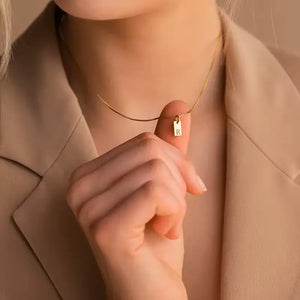

The piece they're describing → Anfangsbuchstaben-Halskette – 18K vergoldet, personalisierbar
Personalize Yours


