


- Titanium is extremely hypoallergenic, lightweight, scratch-resistant, and tarnish-proof — a genuinely strong daily-wear metal.
- It cannot be resized, soldered, or repaired the way gold and sterling silver can, since standard jewelers' tools can't work it.
- Color comes from anodizing (an oxide-layer coating), not true plating, so finishes can wear or scratch off over years of heavy contact.
- It's not considered "fine jewelry" in the traditional sense — no resale market, no heirloom pedigree, and limited setting/engraving options.
- Cheap titanium-look jewelry is often just titanium-coated steel or aluminum, not implant-grade titanium — always check the grade before buying.
- For most non-piercing jewelry (earrings, rings, necklaces), 925 sterling silver with genuine rhodium or 18K gold plating offers a comparably hypoallergenic, more repairable, better-value alternative.
If you're asking is titanium jewelry good, the short answer is yes for the right use case — but it's not automatically the best choice for every piece of jewelry you own. Titanium earned its reputation in body piercing and surgical implants because it's biocompatible, corrosion-proof, and essentially impossible to bend, scratch, or tarnish. That same toughness, though, is exactly why it can't be resized at a jewelry counter, repaired if a prong bends, or engraved the way gold and silver can. This guide breaks down what titanium jewelry actually is, where it genuinely outperforms other metals, where it falls short, what cheap "titanium" jewelry usually gets wrong, and when a hypoallergenic precious-metal alternative makes more sense.
What Titanium Jewelry Actually Is
Titanium is a naturally occurring metal known for an unusually high strength-to-weight ratio — it's about as strong as some steel alloys but roughly 45% lighter. In jewelry, the material used is almost always implant-grade titanium (commonly Grade 5, also called Ti-6Al-4V), the same alloy used in surgical implants, aerospace parts, and medical devices. This grade is prized for jewelry because it's biocompatible — meaning the body tolerates it extremely well — and contains no nickel, the metal responsible for the vast majority of jewelry-related skin allergies.
Unlike gold or silver, titanium isn't naturally colorful. Its native finish is a matte, silvery-gray tone. Colored titanium jewelry gets its color through anodizing — an electrochemical process that builds up an oxide layer on the surface, which bends light to produce blues, purples, golds, and other tones without adding any pigment or coating material. This is fundamentally different from gold or rhodium plating, where a separate metal layer is deposited on top of a base metal. Anodized color is part of the titanium itself, so it won't flake off the way plating can — but it can dull or scratch through with heavy abrasion, and once it's gone, it can't be "re-plated" back on the way a gold-plated piece can be re-dipped.
The Real Pros of Titanium Jewelry
Hypoallergenic to an unusually high degree. Implant-grade titanium contains no nickel and is inert enough to be surgically implanted in the body, which is why it's the default recommendation for fresh piercings and anyone with a diagnosed nickel allergy. Among all commonly used jewelry metals, only niobium rivals titanium for hypoallergenic performance.
Genuinely lightweight. A titanium ring or pair of earrings can weigh roughly a third to half of what an equivalent gold or sterling silver piece weighs, which matters for stretched or healing piercings, oversized rings, and anyone who finds heavier metals uncomfortable for all-day wear.
Scratch- and dent-resistant. Titanium is significantly harder than gold, sterling silver, and most steel alloys. It resists the everyday dings, scuffs, and scratches that dull softer precious metals over time — a real advantage for active daily wear like gym sessions, manual work, or households with kids.
Doesn't tarnish or corrode. Titanium forms a stable oxide layer on its surface that protects it from oxidation, so it won't tarnish, rust, or discolor from water, sweat, or humidity the way sterling silver and lower-karat gold can.
Genuinely safe for swimming, showering, and the gym. Because it's corrosion-proof and hypoallergenic, titanium is one of the few metals that holds up to daily water exposure without the tarnish or plating-wear concerns that come with sterling silver or gold-plated pieces.
The Real Cons of Titanium Jewelry
It can't be resized. This is the single biggest practical drawback. Titanium's hardness — the same property that makes it scratch-resistant — means it can't be cut, stretched, or soldered using the tools and techniques standard jewelers use on gold or silver. If a titanium ring doesn't fit, the piece typically has to be replaced entirely rather than resized.
It's difficult to repair. A bent prong, a loose stone setting, or a broken clasp on a gold or silver piece can usually be repaired by a jeweler. Titanium generally cannot be soldered with conventional jewelry equipment, so structural repairs are limited or impossible — most damaged titanium pieces are simply retired.
Color is a coating, not a solid property. Anodized color sits at the surface level. While it won't peel or flake like true plating, heavy abrasion over years can dull or wear through the color in high-contact areas, leaving the base gray-silver titanium showing underneath — and there's no easy way to restore the original shade at home.
Design and setting limitations. Titanium's hardness that makes it durable also makes it harder to cast into intricate, detailed designs the way gold and silver can be. It's less common to see titanium used for elaborate filigree, pavé stone-setting, or delicate vintage-style detailing — most titanium jewelry favors simpler, more architectural shapes.
No resale value or "fine jewelry" prestige. Titanium has no meaningful scrap or resale market the way gold does — it's not a precious metal in the commodity sense. It's also generally not considered "fine jewelry" for engagement rings, heirloom pieces, or investment purposes, even though implant-grade titanium is a genuinely high-quality material for everyday wear.
The "Cheap Titanium" Problem: What to Watch For
One of the most common complaints in piercing and jewelry communities isn't about titanium itself — it's about jewelry marketed as titanium that isn't actually implant-grade. Because titanium is relatively expensive to machine, some budget jewelry uses titanium-coated stainless steel or aluminum instead of solid titanium, or uses a lower, non-implant grade that hasn't been tested for biocompatibility. These pieces can still trigger nickel reactions if the base metal underneath the coating contains nickel, defeating the entire hypoallergenic purpose of buying titanium in the first place.
If hypoallergenic performance is your priority, look specifically for jewelry labeled "implant-grade," "Grade 5," "Ti-6Al-4V," or "ASTM F136," which is the medical standard for surgical titanium. Jewelry that's simply labeled "titanium" or "titanium-plated" without a grade specification is far less reliable, and reviewers on piercing forums consistently flag unbranded marketplace listings as the most likely to misrepresent their materials. The Association of Professional Piercers' jewelry guidelines recommend confirming implant-grade material documentation before using any metal in a fresh piercing, titanium included.
Titanium vs. Other Hypoallergenic Metals
| Metal | Hypoallergenic Rating | Repairable / Resizable | Typical Price | Best For |
|---|---|---|---|---|
| Implant-grade titanium | Very high — no nickel, biocompatible | No — cannot be resized or soldered | $30–$150 | Piercings, active daily wear, sensitive skin |
| 925 sterling silver (rhodium plated) | High — nickel-free base, hypoallergenic finish | Yes — standard jeweler resizing and repair | $20–$70 | Rings, necklaces, everyday fine-jewelry look |
| 18K gold-plated 925 silver | High — same nickel-free base as above | Yes — standard resizing and repair | $25–$80 | Warm-tone daily wear with resizing flexibility |
| Niobium | Very high — comparable to titanium | No — similarly difficult to resize | $20–$100 | Piercings, anodized color variety |
| Surgical stainless steel | Moderate — contains bound nickel | Limited | $15–$50 | Budget-friendly, healed piercings only |
The pattern that stands out: titanium and niobium win decisively on hypoallergenic performance and are genuinely the best choice for fresh or sensitive piercings. For rings, necklaces, and other jewelry you might eventually want resized, repaired, or re-plated in a new tone, 925 sterling silver closes almost the entire hypoallergenic gap while adding the flexibility titanium simply can't offer.

Who Titanium Jewelry Is Good For — and Who Should Look Elsewhere
Titanium makes sense if: you have a fresh or sensitive piercing and need a metal your body will tolerate without question, you want genuinely low-maintenance jewelry that survives the gym, showers, and swimming without tarnishing, or you have a diagnosed nickel allergy and want the highest margin of safety available. It's also a strong pick for anyone who dislikes the weight of gold or silver rings and wants something that disappears on the hand or ear.
Titanium is a poor fit if: you want a ring that can be resized later (engagement and wedding rings being the clearest example — sizing needs change over time, and titanium rings generally can't accommodate that), you want detailed, intricate, or pavé-set designs, you're building a jewelry collection with resale or heirloom value in mind, or you simply want the classic look and prestige of gold or sterling silver rather than titanium's matte, industrial aesthetic.
The Honest Alternative: Hypoallergenic 925 Silver
AJLuxe doesn't sell titanium jewelry, and we won't pretend it isn't a genuinely good option for the reasons above — for piercings and maximum-sensitivity situations, it's hard to beat. But for everyday rings, earrings, and necklaces where you might eventually want resizing, repair, or a different finish, 925 sterling silver with genuine rhodium or 18K gold plating is the more practical hypoallergenic choice. Because the nickel-free silver base — not a coating — is what makes it skin-safe, it holds up to daily wear, water, and sweat while still being fully repairable and resizable by any jeweler, something titanium simply can't offer. Our Flat Back Stud Earrings use exactly this approach: a hypoallergenic 925 silver or 18K gold-plated base designed for daily, all-day comfort without titanium's resizing and repair limitations.
Want titanium-level comfort without giving up resizing or repair options? Our Flat Back Stud Earrings are built on hypoallergenic 925 sterling silver with genuine rhodium or 18K gold plating — nickel-free, comfortable for sensitive ears, and fully repairable, unlike titanium.

Caring for Titanium Jewelry
Titanium needs less maintenance than almost any other jewelry metal, but a few habits help it last: clean it with mild soap and warm water rather than abrasive jewelry polish, which can dull the anodized finish faster than normal wear would; avoid harsh chemical cleaners, which can degrade the oxide color layer over time; and store pieces separately from harder gemstone jewelry to avoid surface scuffing, even though titanium itself resists most scratches. Because anodized color can't be restored at home, treat colored titanium pieces a bit more gently than plain silver-tone titanium if you want the finish to last as long as possible.
Frequently Asked Questions
Is titanium jewelry actually good quality?
Yes, implant-grade titanium is a genuinely high-quality material — it's biocompatible, scratch-resistant, tarnish-proof, and one of the most hypoallergenic metals available. Quality varies by grade, though, so it's worth confirming a piece is implant-grade (Grade 5 / ASTM F136) rather than a lower, non-medical grade.
Is titanium jewelry worth the money?
For piercings and sensitive-skin situations, yes — the durability and hypoallergenic performance justify the price for most buyers. For general fashion jewelry like rings and necklaces, it's a reasonable choice, but the inability to resize or repair pieces means the long-term value proposition is weaker than a comparably priced sterling silver piece.
Can titanium jewelry be resized?
No. Titanium's hardness prevents standard jewelers from cutting, stretching, or soldering it the way they can with gold or silver. If a titanium ring doesn't fit correctly, it typically needs to be replaced rather than resized.
Does titanium jewelry turn skin green or cause allergic reactions?
Almost never. Implant-grade titanium contains no nickel and is biocompatible enough for surgical implants, making allergic reactions and skin discoloration extremely rare compared to nickel-containing alloys.
Does titanium jewelry tarnish?
No. Titanium forms a stable, self-protecting oxide layer that prevents tarnish and corrosion, so it holds up to water, sweat, and humidity better than sterling silver or lower-karat gold.
Can you shower and swim with titanium jewelry?
Yes, this is one of titanium's biggest advantages. It's corrosion-resistant and doesn't react with chlorine, saltwater, or everyday moisture the way many other metals do, making it one of the few metals genuinely safe for constant water exposure.
What is the difference between titanium and titanium-plated jewelry?
Solid or implant-grade titanium jewelry is titanium all the way through. "Titanium-plated" jewelry usually means a different base metal — often stainless steel or aluminum — with a thin titanium coating, which does not offer the same hypoallergenic guarantee if the base metal underneath contains nickel.
Is titanium better than stainless steel for jewelry?
Titanium is generally more hypoallergenic and lighter than stainless steel, making it the better choice for fresh piercings or diagnosed nickel allergies. Surgical-grade stainless steel is a solid, budget-friendly option for healed piercings on people without a known sensitivity. See our titanium vs. stainless steel earrings comparison for a full breakdown.
Can titanium rings be engraved?
It's possible but limited. Titanium's hardness makes traditional hand-engraving difficult, so most titanium engraving is done with laser equipment, and design options are generally simpler than what's achievable on gold or silver.
Why is some titanium jewelry so cheap?
Very low-priced "titanium" jewelry is often titanium-coated steel or aluminum rather than solid implant-grade titanium, or uses a non-medical grade that hasn't been tested for biocompatibility. Genuine implant-grade titanium costs more to machine, so unusually cheap listings are worth double-checking for grade and material claims.
Is titanium a precious metal like gold or platinum?
No. Titanium is valued for its performance properties — strength, weight, and biocompatibility — not as a precious or investment metal. It has no meaningful scrap or resale market, unlike gold, silver, or platinum.
What's a good alternative to titanium for everyday jewelry?
925 sterling silver with genuine rhodium or 18K gold plating is the closest hypoallergenic alternative for rings, earrings, and necklaces you might want to resize or repair later — something titanium can't accommodate.
Final Thoughts
So, is titanium jewelry good? For the right use case, yes — it's genuinely one of the most durable, lightweight, and hypoallergenic metals available, and it earns its reputation in piercings and sensitive-skin situations. The honest trade-offs are just as real: it can't be resized or meaningfully repaired, its color comes from a coating rather than a solid property, and it doesn't carry the prestige or resale value of true fine jewelry. If you need maximum hypoallergenic performance for a piercing, titanium is a smart choice. If you want everyday rings, earrings, or necklaces that stay comfortable on sensitive skin but can still be resized, repaired, or re-plated down the road, a nickel-free 925 sterling silver piece — like AJLuxe's hypoallergenic collection — gives you nearly all of titanium's comfort with none of its long-term limitations.
Shop This Guide
Written by the AJLuxe Team — specialists in hypoallergenic 925 sterling silver jewelry. Last updated: July 2026.
Alle Marken, Markennamen und Produktnamen Dritter sind Eigentum ihrer jeweiligen Inhaber. AJLuxe steht in keiner Verbindung zu den in diesem Artikel genannten Marken Dritter und wird von diesen weder unterstützt noch gesponsert. Markennamen werden ausschließlich zur sachlichen vergleichenden Bezugnahme verwendet; Materialangaben entsprechen den eigenen veröffentlichten Produktangaben der jeweiligen Marke zum Zeitpunkt der Erstellung.
You Might Also Like
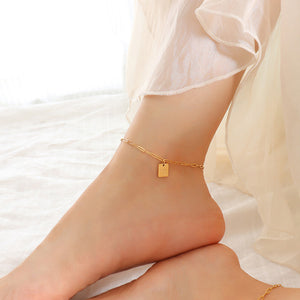
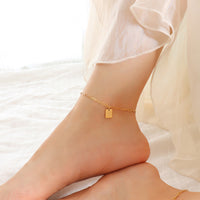
The piece they're describing → Glücksbringer-Fußkette für Damen – 18 Karat vergoldet, quadratischer Anhänger, Strandschmuck
Personalize Yours


