


- Moissanite is lab-grown silicon carbide, 9.25 on the Mohs scale (diamond is 10), so it resists scratches and holds up to decades of daily wear.
- It costs a small fraction of natural diamond, typically $300 to $600 per carat versus $2,000 to $15,000-plus for a comparable diamond, so it is worth it for anyone prioritizing size and budget over resale value.
- It has more brilliance and "fire" than diamond due to a higher refractive index, which some buyers love and others find too flashy or rainbow-colored in sunlight.
- It is not worth it as an investment. Moissanite has essentially no secondary resale market, unlike diamonds, which retain some trade-in value.
- Honest note: AJLuxe's "moissanite" halo ring is set with cubic zirconia (branded as 5A zircon), not genuine lab-grown moissanite. We say so plainly below so you know exactly what you are buying.
If you are shopping for an engagement ring or a statement piece and trying to stretch your budget, you have probably come across moissanite and wondered whether it is actually worth it or just a compromise. It is neither. Moissanite is a legitimate gemstone with its own strengths and real tradeoffs, not a lesser diamond substitute. So is moissanite worth it? For the right buyer, absolutely. This guide covers the honest pros and cons, how moissanite compares to diamond and cubic zirconia on durability, price, and brilliance, what its resale reality actually looks like, and where AJLuxe's own moissanite-style jewelry fits in, including a transparent note about what our "moissanite" ring is actually set with.
What Is Moissanite, Exactly?
Moissanite is silicon carbide (SiC), a mineral first discovered in 1893 by French chemist Henri Moissan inside fragments of a meteorite. Natural moissanite is so rare that virtually every moissanite sold today is lab-grown, a process perfected commercially in the late 1990s. It is a genuine gemstone in its own right, not an imitation diamond, even though it is most often marketed as a diamond alternative because the two can look similar to an untrained eye.
Because it is created in a lab under controlled conditions, moissanite is consistently clear, conflict-free, and available at a fraction of the price of a mined diamond of similar size. That combination is exactly why it has become one of the most popular diamond alternatives for engagement rings and everyday fine jewelry over the past two decades.

Durability: How Tough Is Moissanite Really?
Durability is where moissanite makes its strongest case. On the Mohs hardness scale, moissanite scores 9.25, second only to diamond's perfect 10, and well above popular alternatives like cubic zirconia (8 to 8.5), white sapphire (9), and even most other gemstones used in fine jewelry.
- Scratch resistance: At 9.25, moissanite resists everyday scratches from keys, countertops, and other jewelry far better than CZ or glass-based simulants, which visibly dull and scratch within a year or two of regular wear.
- Toughness for daily wear: Moissanite is suitable for rings worn every day, including engagement rings, without special precautions beyond normal jewelry care.
- Longevity of sparkle: Unlike CZ, which fogs and loses brilliance as microscopic surface scratches accumulate, moissanite keeps its clarity and sparkle for decades with ordinary wear.
The practical takeaway: if durability for daily wear is your main concern, moissanite is genuinely close to diamond-level performance, and it is the most durable common diamond alternative on the market today. See our full moissanite rings vs. diamond rings comparison for price, fire, and resale value side by side.
The Real Pros of Moissanite
Here is where moissanite's worth-it case comes from in practice:
- Exceptional durability for the price. At 9.25 Mohs, it withstands decades of daily wear, unlike CZ or glass simulants that need frequent replacement.
- More brilliance than diamond. Moissanite has a refractive index of about 2.65 to 2.69, higher than diamond's 2.42, which gives it more visible "fire," the colorful flashes of light you see as the stone moves.
- Dramatic cost savings. A moissanite stone typically runs $300 to $600 per carat, compared to $2,000 to $15,000-plus for a natural diamond of similar size and quality. That lets buyers get a noticeably larger stone for the same budget.
- Conflict-free by default. Because it is entirely lab-grown, moissanite carries none of the ethical sourcing concerns tied to mined diamonds.
- Consistent clarity. Lab-grown moissanite is almost always eye-clean, without the inclusions that can affect lower grades of natural diamond.
The Real Cons of Moissanite
An honest worth-it review has to cover the downsides too, because moissanite is not a perfect diamond substitute:
- Near-zero resale value. There is essentially no secondary market for moissanite. Unlike diamonds, which can be resold, traded in, or used as loan collateral, moissanite is bought to wear, not to hold value.
- Extra sparkle can look less "diamond-like." Moissanite's higher fire means it throws more rainbow-colored flashes than a diamond, especially in direct sunlight. Some buyers love this; others find it reads as noticeably different from a diamond's whiter sparkle, which is the most common complaint in the "does moissanite look fake" search.
- Testable by jewelers. Standard diamond testers that measure thermal conductivity can mistake moissanite for a diamond, but dedicated moissanite testers (which also check electrical conductivity) can reliably tell them apart. If undisclosed substitution matters to you, this is worth knowing.
- Some jewelers are wary of it. A portion of traditional jewelers dislike moissanite because it complicates diamond testing and, in their view, undercuts the perceived exclusivity of diamond sales. This is a trade attitude, not a flaw in the stone itself.
- Slight color at larger sizes. Stones over roughly one carat can show a faint yellow or gray-green tint in certain lighting, particularly in older or lower-grade moissanite. Premium colorless grades largely solve this at a higher price.
Moissanite vs. Diamond vs. Cubic Zirconia
Here is how the three most commonly compared stones stack up side by side:
| Factor | Natural Diamond | Moissanite | Cubic Zirconia |
|---|---|---|---|
| Mohs hardness | 10 | 9.25 | 8 to 8.5 |
| Price per carat | $2,000 to $15,000-plus | $300 to $600 | A few dollars to $20 |
| Brilliance/fire | Classic white brilliance | Higher fire, more color flash | Flat, glassy sparkle |
| Typical lifespan of sparkle | A lifetime | Decades with normal wear | 2 to 5 years before visible dulling |
| Resale value | Real, though below retail | Essentially none | None |
The pattern is clear: moissanite sits in a genuinely useful middle ground on durability and looks, far closer to diamond than to CZ, while costing far closer to CZ than to diamond on price. For a deeper head-to-head on the durability and cost gap specifically, see our full guide on moissanite vs. cubic zirconia, and for how moissanite compares directly against mined diamond, see moissanite vs. diamond.
Is Moissanite a Good Investment? The Resale Reality
This is the question that trips up the most buyers, so it deserves a direct answer: no, moissanite is not an investment, and you should not buy it expecting one. Unlike natural diamonds, which have an established (if imperfect) secondary market through jewelers, pawn shops, and resale platforms, moissanite has essentially no resale infrastructure. Jewelers do not typically buy back moissanite, and resale platforms value it near its low production cost rather than its retail price.
That is not a flaw unique to moissanite. Cubic zirconia and most lab-grown diamonds share the same weak resale story; jewelry as a category is a poor investment vehicle outside of gold and platinum content and a small number of natural, certified diamonds. The honest framing is this: buy moissanite to wear and enjoy for what it is, a durable, brilliant, affordable gemstone, not as a store of value you plan to liquidate later.

Does Moissanite Look Fake? What to Expect
Moissanite does not look fake in the sense of looking cheap or glassy the way CZ can. It looks noticeably different from a diamond, though, and that difference is what fuels most "does moissanite look fake" questions online. Because moissanite has a higher refractive index than diamond, it throws more colorful, rainbow-toned flashes of light, sometimes described as a "disco ball" effect, especially in direct sunlight or under strong artificial lighting.
Whether that reads as fake or simply as its own distinct kind of sparkle depends entirely on personal taste and expectations. Buyers who want their stone to be indistinguishable from a diamond can be disappointed by the extra fire. Buyers who like a stone that visibly stands out and catches more light often prefer moissanite specifically for that reason. Premium colorless grades and smaller carat sizes minimize the effect if a more diamond-like look is the goal.
Where AJLuxe Fits: An Honest Disclosure
We want to be direct here, because this is exactly the kind of detail most brands blur. AJLuxe's moissanite halo ring is set with cubic zirconia, marketed in our catalog under the industry term "5A zircon," on a 925 sterling silver base with an 18K gold finish, priced at $47.99. It is not set with genuine lab-grown silicon carbide moissanite.
That distinction matters because everything this guide covers about moissanite's superior hardness, its decades-long sparkle retention, and its higher fire applies to true silicon carbide moissanite, not to cubic zirconia. Our ring gives you the halo-ring look and a durable, hypoallergenic sterling silver and 18K gold-plated setting at an accessible price, but the center stone will behave like CZ over time: it can dull and lose brilliance within roughly 2 to 5 years of regular wear, faster than true moissanite would.
What that means for you: if you want the exact look of a halo ring at a low price and plan to treat it as fashion jewelry you may eventually replace, our ring is a strong, honestly priced option. If genuine moissanite's hardness and long-term sparkle retention are what you are shopping for specifically, look for a retailer that explicitly states silicon carbide moissanite with a grading report, and expect to pay closer to $300 to $600 per carat for the stone alone. We would rather tell you plainly what you are buying than let the product name do the talking. For more on how CZ performs over time, see our guide on moissanite vs. cubic zirconia.
Who Should Buy Moissanite (and Who Should Not)
Pulling it all together, here is the honest buyer's verdict:
- Buy genuine moissanite if: you want a durable, brilliant stone for daily wear at a fraction of diamond prices, you like extra fire and sparkle, and you are not buying for resale value.
- Consider a diamond instead if: resale value, the classic white brilliance, or a certified natural stone matters more to you than saving money.
- Consider cubic zirconia instead if: you want the lowest possible price for occasional or trend-driven wear and do not mind replacing the stone every few years.
- Choose based on your priority for AJLuxe specifically: our halo ring gives you the look and a quality sterling silver and 18K gold-plated setting with a CZ center stone, an honest, affordable fashion-jewelry option rather than a genuine-moissanite purchase.
If you want a genuine moissanite engagement ring rather than a fashion-jewelry alternative, Olive Ave Jewelry is one fine-jewelry retailer that sells real moissanite (alongside natural and lab-grown diamonds) in 14K gold settings — see our honest review of its pricing and reputation.
For a closer look at how moissanite stacks up against another popular diamond alternative, see our guide on moissanite vs. white sapphire, and for the basics of the stone itself, start with what is moissanite and the meaning behind moissanite.
Moissanite vs. Lab-Grown Diamond: A Quick Note
Shoppers weighing moissanite often also consider lab-grown diamonds, which are chemically identical to natural diamond but produced in a lab. Lab diamonds cost more than moissanite (though far less than natural diamonds) and match diamond's Mohs 10 hardness and classic brilliance exactly, without moissanite's extra fire. If budget is the primary driver, moissanite wins; if you want a stone that is literally diamond in every respect at a lower price than mined diamond, lab-grown diamond is the better fit. We break this down fully in lab diamond vs. moissanite.
Frequently Asked Questions
Is moissanite worth it?
For most buyers, yes. Moissanite offers near-diamond hardness (9.25 Mohs), more brilliance than diamond, and costs a fraction of the price per carat. It is worth it for daily-wear and budget-conscious engagement jewelry, but it is not worth it as an investment, since it has almost no resale value.
What is the downside to moissanite?
The main downsides are its extra fire, which can look noticeably different from diamond's classic sparkle in direct light, its lack of resale value, and the fact that specialized testers can distinguish it from a real diamond. Larger stones can also show a faint color tint in certain lighting.
Do moissanite rings look fake?
Not fake, but noticeably different from diamond. Moissanite's higher refractive index gives it more colorful, rainbow-toned flashes of light than a diamond, especially in sunlight. Whether that looks better or worse than a diamond is a matter of personal taste, not a sign of poor quality.
Why don't jewelers like moissanite?
Some traditional jewelers are wary of moissanite because it can register as a diamond on basic thermal-conductivity testers, complicating in-store testing, and because it competes with higher-margin diamond sales. This reflects trade attitudes more than any flaw in the stone itself.
Is moissanite a good investment?
No. Moissanite has essentially no secondary resale market. Buy it to wear and enjoy for its durability, brilliance, and affordability, not as a financial investment. Natural diamonds hold modest resale value; moissanite does not.
How much does moissanite cost per carat?
Moissanite typically runs $300 to $600 per carat, compared to $2,000 to $15,000-plus for a natural diamond of comparable size and quality. That price gap is the main reason moissanite has become a popular diamond alternative.
Is moissanite as hard as a diamond?
Almost. Moissanite scores 9.25 on the Mohs hardness scale, just below diamond's perfect 10, and well above cubic zirconia's 8 to 8.5. It is durable enough for daily wear, including engagement rings.
Can a jeweler tell moissanite from a diamond?
Yes, with the right equipment. Standard thermal-conductivity diamond testers can be fooled by moissanite, but dedicated moissanite testers, which also check electrical conductivity, reliably distinguish the two. A trained jeweler with proper tools can always tell them apart.
Does moissanite turn yellow or dull over time?
Genuine moissanite keeps its clarity and sparkle for decades with normal wear; it does not dull the way cubic zirconia does. Some lower-grade or older moissanite can show a faint yellow or gray-green tint in certain lighting, particularly at larger carat sizes, but this is a color characteristic, not a sign of wear.
Is moissanite vs cubic zirconia a big difference?
Yes. Moissanite is significantly harder (9.25 versus 8 to 8.5 Mohs), holds its sparkle for decades instead of a few years, and has genuinely more fire, though it also costs considerably more than CZ. See our full moissanite vs. cubic zirconia comparison for the details.
Is AJLuxe's moissanite ring genuine moissanite?
No, and we say so plainly. AJLuxe's moissanite-style halo ring is set with cubic zirconia (listed in our catalog as 5A zircon) on a 925 sterling silver base with an 18K gold finish. It is not genuine lab-grown silicon carbide moissanite, and the center stone will behave like CZ over time rather than like true moissanite.
What is the difference between moissanite and a lab-grown diamond?
Lab-grown diamonds are chemically identical to natural diamond, matching its Mohs 10 hardness and classic brilliance, and cost more than moissanite. Moissanite is a different mineral (silicon carbide), slightly softer at 9.25 Mohs, with more fire, at a lower price than lab diamond. See lab diamond vs. moissanite for the full comparison.
Final Thoughts
Moissanite is worth it for the right buyer: someone who wants near-diamond durability, more sparkle than a diamond, and dramatic savings, and who understands they are buying a distinct gemstone rather than a diamond substitute or an investment. It genuinely outperforms cubic zirconia on hardness and longevity while costing far less than diamond, which is exactly why it has become such a popular engagement-ring and everyday-jewelry choice. Where it falls short is resale value and, for some buyers, its extra fire reading as visibly different from diamond, which is worth weighing honestly before you buy. If you want genuine silicon carbide moissanite, shop from a retailer that explicitly states it and expect to pay $300 to $600 per carat for the stone. If you want the halo-ring look at an accessible price and are comfortable with a CZ center stone in a quality sterling silver and 18K gold-plated setting, AJLuxe's ring is built for exactly that, with the honest caveat spelled out above.
Weighing a gemstone choice against a metal choice? Our guides to is Mejuri worth it and is gold filled jewelry worth it cover the value tradeoffs on the metal side of the equation.
Shop AJLuxe's moissanite-style halo ring
Shop the Moissanite Halo RingShop This Guide
Browse our full rings collection to find sterling silver and 18K gold-plated rings, including our moissanite-style halo design, an affordable way to get the look while you decide what stone is right for you.
AJLuxe Team. Last updated: July 2026. AJLuxe's moissanite-style ring is set with cubic zirconia (5A zircon), not genuine lab-grown moissanite. Sources: Jewelers of America, and Charles & Colvard, the original patent holder for lab-grown moissanite.
Alle Marken, Markennamen und Produktnamen Dritter sind Eigentum ihrer jeweiligen Inhaber. AJLuxe steht in keiner Verbindung zu den in diesem Artikel genannten Marken Dritter und wird von diesen weder unterstützt noch gesponsert. Markennamen werden ausschließlich zur sachlichen vergleichenden Bezugnahme verwendet; Materialangaben entsprechen den eigenen veröffentlichten Produktangaben der jeweiligen Marke zum Zeitpunkt der Erstellung.
You Might Also Like
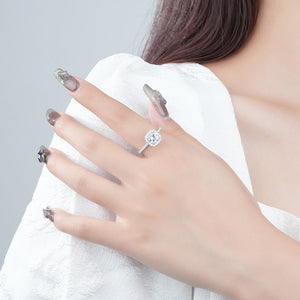
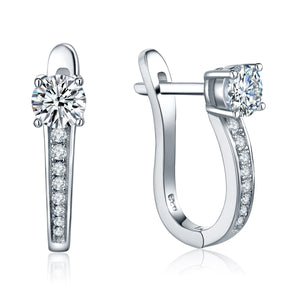
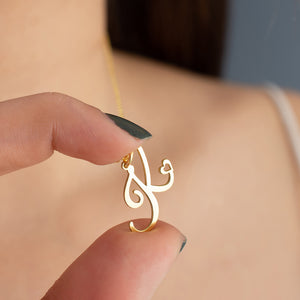
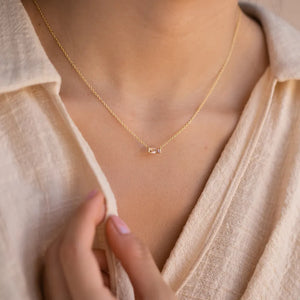
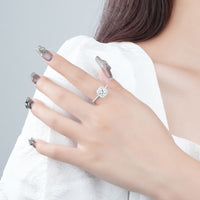
The piece they're describing → Moissanit-Halo-Ring — Sterlingsilber, 18 Karat Weißgold, Zirkonia
Personalize Yours


