Hypoallergenic Engagement Rings: What Actually Counts, By Metal
Why 'hypoallergenic' and 'nickel-free' mean almost the same thing for engagement rings, which metals genuinely qualify, and how to verify a real claim versus marketing language.
TL;DR: "Hypoallergenic" for rings mostly means nickel-free, since nickel triggers roughly 90% of metal-related skin reactions. Platinum, palladium, titanium, and high-karat gold (18K+) are naturally nickel-free; genuinely 925-stamped sterling silver also qualifies once you confirm the alloy. Cubic zirconia set on real sterling silver is a durable, honestly hypoallergenic, budget-friendly option — just not a genuine gemstone.
Reddit's r/weddingplanning community asks this constantly because ring shopping is where a lot of people first discover they have a nickel allergy — a cheap-alloy ring worn daily is often the first piece of jewelry that actually triggers a reaction. Here's what genuinely counts as hypoallergenic, and what to check before you buy.
Is Hypoallergenic the Same as Nickel-Free?
"Hypoallergenic" and "nickel-free" are effectively the same claim in ring jewelry, since nickel is responsible for the vast majority of metal-related skin reactions — the American Academy of Dermatology cites roughly 1 in 5 U.S. women as nickel-allergic. A small number of people also react to cobalt or chromium, but nickel dominates so heavily that "nickel-free" is the specific, checkable claim behind the vaguer marketing word "hypoallergenic." When a listing says hypoallergenic without naming the metal, treat it as unverified until you can confirm the actual alloy.
What Ring Material Is Hypoallergenic?
Platinum, palladium, titanium, and 18K+ gold are naturally hypoallergenic ring materials, since none of them use nickel as an alloying metal. Genuinely 925-stamped sterling silver is also hypoallergenic — the alloy is copper, not nickel — though "silver-tone" or unstamped costume jewelry often isn't real sterling and may contain nickel. 14K gold sits in a gray zone: it's usually nickel-free in the U.S. and Europe, but some older or imported pieces use a nickel-white-gold alloy specifically, so a stated karat alone doesn't guarantee it.
Metal
Typically nickel-free?
Notes
Platinum
Yes
Most reliably hypoallergenic, highest cost
Palladium
Yes
Similar profile to platinum, lighter weight
Implant-grade titanium
Yes
Very durable, limited resizing options
18K+ gold
Yes
Reliable at higher karats
925 sterling silver (genuine)
Yes
Confirm the "925" stamp; unstamped "silver-tone" may not be real
14K white gold
Usually, not always
Some alloys specifically use nickel -- ask
Costume/fashion alloy
Often no
Unknown base metal is the main risk factor
What Rings Are Best for Sensitive Skin?
The best rings for sensitive skin combine a verified nickel-free metal with a setting that minimizes prolonged skin contact, since even a hypoallergenic metal can cause mild irritation from moisture trapped under a very low-profile setting during hours of wear. Beyond metal choice, keeping the ring clean (soap residue and lotion buildup can irritate skin independent of any metal allergy) and removing it before swimming in chlorinated water reduces most of the remaining irritation people mistake for a metal allergy.
Best Hypoallergenic Jewelry Brands
Brands worth checking for genuinely hypoallergenic engagement rings include those that explicitly state their alloy composition rather than just using the word "hypoallergenic" — platinum and palladium specialists, implant-grade titanium jewelers, and sterling silver brands that stamp "925" directly into the metal. A brand's willingness to name the exact alloy, not just claim "hypoallergenic," is the real signal of a legitimate claim.
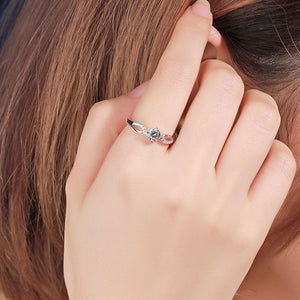
Our own micro pave CZ engagement ring is built on genuine 925 sterling silver — stamped, not just labeled — with pave-set cubic zirconia. It's an honest, budget-friendly hypoallergenic option: real nickel-free metal, just not a genuine gemstone.
Straight answers to the questions people actually ask about hypoallergenic engagement rings.
What ring material is hypoallergenic?
Platinum, palladium, implant-grade titanium, 18K+ gold, and genuine 925-stamped sterling silver are all naturally nickel-free and hypoallergenic. 14K white gold is usually but not always nickel-free, so it's worth confirming with the seller.
Is hypoallergenic the same as nickel-free?
Effectively yes for rings — nickel causes the large majority of metal-related skin reactions, so "nickel-free" is the specific, verifiable claim behind the more general marketing word "hypoallergenic."
What are the best hypoallergenic jewelry brands?
Look for brands that name their exact alloy rather than just saying "hypoallergenic" — platinum/palladium specialists, implant-grade titanium jewelers, and sterling silver brands that stamp "925" directly into the metal are the most verifiable options.
What rings are best for sensitive skin?
Rings combining a verified nickel-free metal (platinum, titanium, 18K+ gold, genuine sterling silver) with regular cleaning and removal before swimming or heavy lotion use tend to cause the least irritation for sensitive skin.
Final Thoughts
A genuinely hypoallergenic engagement ring comes down to one checkable fact: is the metal actually nickel-free, and can the seller name the exact alloy. Platinum and titanium sit at the top of the price range; genuine 925 sterling silver with CZ delivers the same nickel-free promise at a fraction of the cost — know which tradeoff you're making before you buy.
Alle Marken, Markennamen und Produktnamen Dritter sind Eigentum ihrer jeweiligen Inhaber. AJLuxe steht in keiner Verbindung zu den in diesem Artikel genannten Marken Dritter und wird von diesen weder unterstützt noch gesponsert. Markennamen werden ausschließlich zur sachlichen vergleichenden Bezugnahme verwendet; Materialangaben entsprechen den eigenen veröffentlichten Produktangaben der jeweiligen Marke zum Zeitpunkt der Erstellung.