


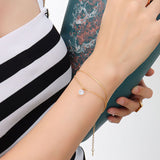
- The surgeon's knot is the most secure fixed knot for bracelets — the extra wrap adds friction a basic overhand knot doesn't have.
- A sliding (adjustable) knot uses two surgeon's knots facing each other, so you get resizing without much loss of security.
- Waxed cord (like C-Lon or waxed Irish linen) holds a knot far better than silk, plain cotton, or slippery satin.
- A small dot of clear jewelry glue or clear nail polish on a finished knot roughly doubles how long it holds before working loose.
- Square knots are the standard for flat friendship-style bracelets but aren't meant to be resizable.
- If you'd rather not deal with a knot at all, an adjustable slide-clasp chain bracelet solves the sizing problem outright.
Knotting a bracelet sounds simple until the one you tied last week is suddenly dangling off your wrist by a thread — literally. Which knot you use matters more than most tutorials let on, because cord material, wrist size, and whether the bracelet needs to be adjustable all change which knot actually holds. Here's how the main options stack up, and how to tie one so it doesn't come undone.
Which Knot Is Actually the Most Secure for a Bracelet?
The surgeon's knot is the most secure standard knot for a bracelet because it's tied like a basic overhand knot but with one extra wrap before you pull it tight — that second pass creates enough friction that the knot resists loosening under normal wear, even on smoother cords. A plain single overhand knot, by contrast, is the knot most likely to slip open over a few weeks of wear, especially on nylon, satin, or elastic cord where there's less natural grip. The tradeoff is size: a surgeon's knot isn't adjustable once it's pulled tight, so it only works well if you already know the exact wrist measurement.
The 5 Best Knots for Bracelets
Each of these knots solves a different problem — adjustability, flatness, a decorative finish, or raw holding power. The table below ranks them by how secure they are and what they're actually best suited for.

| Knot | Best For | Difficulty | Security |
|---|---|---|---|
| Sliding (adjustable) knot | Cord bracelets you want to resize | Moderate | High |
| Surgeon's knot | Fixed-length cord or leather bracelets | Easy | Highest |
| Square knot | Flat friendship-style or macramé bracelets | Moderate | Medium-High |
| Double overhand knot | Stopper knots on beaded or elastic bracelets | Easy | Medium |
| Button (barrel) knot | Decorative end knots that double as a stopper | Hard | Medium-High |
1. Sliding Knot
The sliding knot is the best all-around choice for a bracelet you want to fit multiple wrist sizes, because it's really two surgeon's knots tied around each other's cord so the whole bracelet can be cinched tighter or loosened by pulling the ends. It's the knot behind most modern adjustable cord and macramé bracelets for exactly this reason — no clasp needed, and it holds well as long as each side is wrapped twice rather than once.
2. Square Knot
The square knot is the standard for flat, woven friendship bracelets because it lies flush against the cord instead of bulging like other knots, which matters when you're stacking multiple wraps side by side. It's tied by crossing left over right then right over left (or vice versa in sequence), and while it's not adjustable, it's one of the most secure options when the bracelet is finished at a fixed length.
3. Surgeon's Knot
The surgeon's knot is the single most secure fixed knot for a bracelet, and it's exactly the extra wrap described above applied to a basic overhand knot. Use it whenever you already know the finished length — it's the fastest knot to tie that still resists slipping on smoother cords like satin or waxed nylon.
4. Double Overhand Knot
The double overhand knot is the simplest reliable stopper knot, mainly used to keep beads or an elastic loop from sliding off the end of a bracelet rather than to join two ends together. It's not as strong as a surgeon's knot for holding tension, but it's fast, low-bulk, and works fine as a finishing knot when it's backed up with a small dot of glue.
5. Button (Barrel) Knot
The button knot, also called a barrel knot, is the best choice when you want the knot itself to look decorative rather than hidden, since it forms a small round bead-like lump at the cord's end. It takes more practice to tie neatly than the other four, but once it's set it's both a stopper and a secure finish in one.
Sliding Knot vs. Fixed Knot: Which Should You Use?
Choose a sliding knot if you don't know the exact wrist size or want the bracelet to fit more than one person, and choose a fixed knot (surgeon's or square) if you already have a precise measurement and want the strongest possible hold. Adjustable pieces are more forgiving as gifts — a sliding knot means the recipient can resize it themselves rather than returning it — but a well-tied surgeon's knot on a correctly sized cord will generally outlast a sliding knot under daily wear, since there's no moving mechanism to loosen over time.
Should You Knot Your Bracelet or Skip It With an Adjustable Clasp?
If you want the resizing benefit of a sliding knot without re-learning knot-tying every time a cord wears out, the more practical fix is a bracelet that's adjustable at the clasp instead of the cord. AJLuxe's CZ Chain Bracelet ($34.99) is built in 925 sterling silver with 18K gold plating and an adjustable S-chain closure, so it sizes to the wrist the same way a sliding knot would, just with a metal clasp instead of cord that can fray, stretch, or come untied. For anyone who's tired of re-tying a knotted bracelet every few months, that's the simpler long-term choice — and like the rest of AJLuxe's pieces, it's hypoallergenic and gift-ready out of the box.
Frequently Asked Questions
What is the most secure knot for a bracelet?
The surgeon's knot is the most secure knot for a bracelet because the extra wrap before pulling it tight creates friction that resists slipping, especially on smoother cords like satin or waxed nylon. For adjustable pieces, two surgeon's knots tied as a sliding knot are nearly as strong while still letting you resize the bracelet.
What kind of knot is used for bracelets?
Most bracelets use one of a handful of knots depending on the material and whether the piece needs to be adjustable: square knots and surgeon's knots for fixed-length cord or friendship bracelets, sliding knots for cord bracelets meant to resize, and double overhand knots as simple stopper knots at the ends of beaded or elastic pieces.
How do you tie a bracelet knot so it doesn't come undone?
Wrap the cord around itself twice instead of once before pulling tight — that's what turns a basic overhand knot into a much stronger surgeon's knot. Pull each end tight individually rather than tugging both at once, add a small dot of clear jewelry glue or clear nail polish to the finished knot, and only trim the ends once the glue has fully dried.
What is the best string for knotted bracelets?
Waxed polyester or nylon cord, such as waxed Irish linen or C-Lon, holds knots best because the wax coating adds grip that plain cotton or silk cord lacks. Braided cord is a close second; stretch elastic cord is the easiest for beginners but shouldn't be relied on for expensive beads long-term, since elastic dries out and can snap.
Can you fix a bracelet knot that keeps coming loose?
Yes — untie the loose knot, re-tie it as a surgeon's knot (with the extra wrap) instead of a single overhand knot, and seal it with a small drop of clear jewelry glue once it's pulled tight. If the cord itself has gone slippery or worn thin at the knot point, it's worth re-cutting a fresh length rather than re-tying the same worn spot.
Related reading: 10 Types of Necklace Clasps, Ranked by Security (2026).
Related reading: Best Elastic for Bracelets (2026): Which Cord Actually Holds Up.
Related reading: How to Tie a Necklace Knot.
Alle Marken, Markennamen und Produktnamen Dritter sind Eigentum ihrer jeweiligen Inhaber. AJLuxe steht in keiner Verbindung zu den in diesem Artikel genannten Marken Dritter und wird von diesen weder unterstützt noch gesponsert. Markennamen werden ausschließlich zur sachlichen vergleichenden Bezugnahme verwendet; Materialangaben entsprechen den eigenen veröffentlichten Produktangaben der jeweiligen Marke zum Zeitpunkt der Erstellung.
You Might Also Like
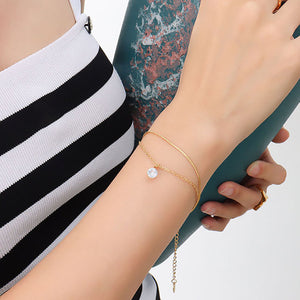

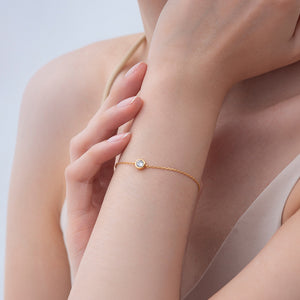
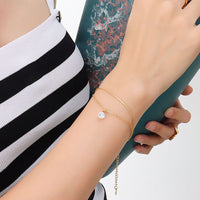
The piece they're describing → CZ-Gliederarmband für Frauen – 18K vergoldet, S-Kette mit Zirkonia, verstellbar
Personalize Yours


