


- Tungsten carbide rates near the top of the Mohs hardness scale (around 9, with diamond at 10) and resists everyday scratches better than almost any other ring metal.
- Titanium is significantly lighter than tungsten carbide, so it wears more like you've forgotten it's on your hand.
- Tungsten is hard but brittle under high-force impact and can crack or shatter; titanium is more likely to dent or bend without breaking.
- Neither metal can go through a standard jeweler's sizing process — both are usually bought at exact size or with a removable sizing-bead workaround.
- Both are generally hypoallergenic, though some tungsten carbide rings use a nickel binder, so nickel-sensitive buyers should confirm the alloy first.
- AJLuxe works in 925 sterling silver with 18K gold plating, not tungsten or titanium — worth knowing before you compare metal types.
Tungsten and titanium dominate the men's ring aisle for one reason: both hold up to daily wear in a way traditional gold and silver sometimes can't. But the two metals aren't interchangeable — they behave differently under stress, wear differently on the hand, and fail differently when things go wrong. Here's how tungsten and titanium jewelry actually compare, feature by feature, so you can choose based on how you live rather than marketing copy.
What's the Difference Between Tungsten and Titanium Jewelry?
Tungsten jewelry is almost always tungsten carbide — a compound of tungsten and carbon fused with a metal binder, usually cobalt or nickel — while titanium jewelry is typically commercial-grade or aerospace-grade titanium used on its own. The core difference is density and hardness: tungsten carbide is dense, heavy, and extremely hard, while titanium is light, springy, and moderately hard. That single distinction drives almost every other difference between the two metals.
Tungsten vs Titanium: Durability and Scratch Resistance
Tungsten carbide wins on scratch resistance, but titanium wins on impact resistance — the two metals fail in opposite ways. Tungsten carbide sits around 9 on the Mohs hardness scale, just below diamond at 10, so it shrugs off scuffs from keys, tools, and rough surfaces that would visibly mark gold, silver, or even titanium. Titanium sits closer to 6 on the same scale, meaning it picks up fine surface scratches over time. The tradeoff shows up under real impact: tungsten carbide is a hard but brittle compound, so a sharp blow — a slammed car door, a dropped weight, a hard fall — can crack or shatter it outright. Titanium is more ductile, so it dents or bends under that same force rather than breaking apart, which is why some manual-labor jobs and gyms specifically discourage wearing tungsten rings on-site.
| Feature | Tungsten Carbide | Titanium |
|---|---|---|
| Hardness (Mohs scale) | ~9, just below diamond | ~6 |
| Weight | Heavy, dense | Very light |
| Scratch resistance | Excellent | Good, but scratches more easily than tungsten |
| Impact behavior | Can crack or shatter under a hard blow | Dents or bends rather than shattering |
| Resizing | Not possible with standard tools | Rarely possible, specialty shops only |
| Hypoallergenic | Usually — confirm the metal binder | Yes, widely used in medical implants |
| Typical price tier | Mid-range | Mid-range |
Tungsten vs Titanium: Weight and Comfort
Titanium is noticeably lighter than tungsten — a titanium ring can feel like you're barely wearing anything, while a tungsten ring has real, noticeable heft. Tungsten carbide is a dense compound, so even a plain band feels substantial next to the same design in titanium or gold. That difference is purely personal preference: some people like the reassuring solidity of tungsten, while others find it fatiguing after a full day and prefer titanium's near-weightless feel.
Can Tungsten or Titanium Rings Be Resized?
No — neither tungsten nor titanium rings can be resized using a standard jeweler's stretching or cutting tools, unlike gold or silver. Tungsten carbide is too hard to cut or stretch without specialized equipment, and most local jewelers won't attempt it. Titanium can technically be resized by a handful of specialty shops with the right tools, but it's uncommon and not offered by most jewelers. The practical takeaway: confirm your ring size in person before ordering either metal, since exchanging for a different size is far more realistic than resizing.
Which Is More Hypoallergenic, Tungsten or Titanium?
Titanium is generally the safer choice for sensitive skin, since pure titanium contains no nickel and is widely used in medical implants and body piercings for that exact reason. Tungsten carbide is also usually well-tolerated, but it isn't pure tungsten — it's bonded with a metal binder, and some manufacturers use nickel instead of cobalt for that binder. If you have a known nickel allergy, ask specifically what binder a tungsten piece uses before buying, or default to titanium.
Tungsten vs Titanium: Price Comparison
Tungsten and titanium jewelry generally sit in a similar mid-range price bracket — both typically cost more than basic stainless steel but less than solid gold or platinum, with the final price driven mostly by width, finish, and any inlay materials like wood, carbon fiber, or precious-metal accents rather than the base metal itself. Because neither metal can be resized, it's worth factoring in the cost of a possible exchange or reorder if you're not fully certain of your size.
Which Should You Choose?
Choose tungsten carbide if scratch-free, mirror-polish durability matters most and you're not in a job with a high risk of hard impacts to your hands; choose titanium if you want a lighter, more comfortable everyday ring that bends rather than breaks under real force. Neither is objectively "better" — they're built around different tradeoffs, and the right call depends on your job, hobbies, and how the ring actually feels on your hand day to day.
Does AJLuxe Carry Tungsten or Titanium Jewelry?
No — AJLuxe doesn't currently carry a dedicated tungsten or titanium line; the collection is built in 925 sterling silver with 18K gold plating instead. If you're set on tungsten or titanium specifically, for something like a men's wedding band that needs industrial-level scratch resistance, those metals are better sourced from a specialist. But if you're comparing options and decide you'd rather have a piece that can actually be resized or repaired later, plus the classic warmth of silver or gold tones, AJLuxe's hypoallergenic 925 sterling silver and 18K gold-plated pieces are worth a look as a different kind of everyday-durable option. — see our sterling silver and gold-plated rings, including the 18K Gold Plated Statement Ring — Tarnish-Resistant CZ ($29.99) for a similarly scratch-resistant everyday piece.
Frequently Asked Questions
Is tungsten or titanium better for a wedding band?
Tungsten is better if you want maximum scratch resistance and don't mind extra weight, while titanium is better if you want a lighter, more comfortable ring that bends instead of shattering under a hard impact — most couples pick based on lifestyle (manual labor and impact risk favor titanium; office and everyday wear can favor either).
Can tungsten or titanium rings be resized?
No, not with standard jeweler's tools — tungsten carbide is too hard to cut or stretch, and titanium resizing is only offered by a small number of specialty shops, so both are best ordered at a confirmed, exact size.
Does tungsten or titanium turn your finger green?
No, neither tungsten carbide nor titanium contains the copper alloys that cause the greenish discoloration sometimes seen with cheaper base-metal rings, so both are considered safe against skin discoloration.
Which is more expensive, tungsten or titanium?
Tungsten and titanium jewelry generally fall into a similar mid-range price bracket, with the exact price driven more by ring width, finish, and inlay materials than by which of the two base metals is used.
Can you wear tungsten or titanium jewelry every day?
Yes, both metals are designed for daily wear — tungsten holds its polish through constant scratching and knocking, while titanium's light weight makes it comfortable for all-day, every-day use.
Is titanium or tungsten hypoallergenic?
Titanium is the more reliably hypoallergenic option since pure titanium contains no nickel, while tungsten carbide is usually well-tolerated but depends on which metal binder — cobalt or nickel — was used to bond it.
Toutes les marques, noms de marque et noms de produits tiers sont la propriété de leurs détenteurs respectifs. AJLuxe n’est affilié à aucune marque tierce citée dans cet article, ni approuvé ou sponsorisé par celle-ci. Les noms de marque sont utilisés uniquement à des fins de comparaison factuelle, et les descriptions de matériaux reflètent les spécifications produit publiées par chaque marque au moment de la rédaction.
You Might Also Like
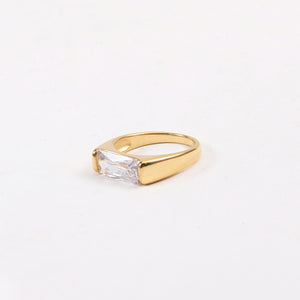
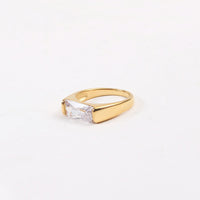
The piece they're describing → Bague en plaqué or 18 carats pour femme — Bague audacieuse en zircone cubique, résistante au ternissement
Personalize Yours


