


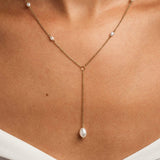
If you searched "Singapore chain necklace" hoping to land on a product page, we'd rather tell you straight away: this is a construction guide first, with an honest disclosure about what AJLuxe stocks and doesn't. Most of what ranks for this term is either a shop category page (Jared, Kay, JTV, QGold) or a single product listing (Linjer) — genuinely useful if you already know what you're shopping for, but none of them explain what actually makes a Singapore chain different from a rope chain, or when it's the right call over one.
This guide covers the construction itself, an honest comparison against rope chain (the pairing people search for most), whether it's actually a good chain to buy, and where the name comes from.
What Is a Singapore Chain? (Construction, Not a Brand)
A Singapore chain is a necklace chain built from small, twisted links — each individual link is itself a diamond-cut, slightly spiral shape, and the links interlock in a way that makes the whole chain look like a fine, sparkling rope. The diamond-cut faceting on each link is what gives it that shimmer: light catches the twist at every point along the chain rather than only where a flat link would reflect it.
The key thing that separates it from a true rope chain is scale and weight. Singapore chains are almost always made thin — commonly in the 1–2mm range — which keeps them light and flexible enough to sit close to the neck or layer easily with other pieces. That's also the honest tradeoff: the same delicacy that makes a Singapore chain comfortable for everyday wear means it isn't built to be the sturdy, heavy-duty chain you'd choose for a large pendant or daily hard wear.
Singapore Chain vs. Rope Chain: What's Actually Different
The real difference between a rope chain and a Singapore chain is scale and heft, not just the twisted look — a rope chain uses larger, more tightly wound links built for weight and durability, while a Singapore chain uses smaller twisted links designed to stay thin and light.
Both styles share the same basic idea — twisted links that mimic the look of actual twisted rope or cord — which is exactly why people search for the two together and why competitors' SERP entries (Jared, JTV, QGold) sell them right next to each other. But side by side, they behave differently:
| Feature | Singapore Chain | Rope Chain |
|---|---|---|
| Link construction | Small twisted, diamond-cut links interlocked in a fine spiral | Larger links tightly wound together to mimic actual twisted rope |
| Typical thickness | ~1–2mm, built to stay delicate | ~2mm and up, often much chunkier |
| Weight & drape | Light, sits close and flat to the skin | Noticeably heavier, more substantial drape |
| Durability for heavy daily wear | Fine for everyday wear, but a thin gauge is easier to kink or catch on fabric than a thicker chain | More resistant to kinking given the thicker, denser link structure |
| Best used for | Layering, delicate solo wear, small pendants | Standalone statement chain, heavier pendants |
In short: reach for a Singapore chain when you want the sparkle of a twisted-link chain without the bulk. Reach for a rope chain when you want that same twisted look, but heavier and sturdier.
Is a Singapore Chain Good?
Yes, for what it's designed to do — a Singapore chain is a genuinely good choice for a delicate, everyday necklace that still catches light, but it's not the right pick if you want one heavy-duty chain to wear constantly with a large pendant.
Its strengths are real: the diamond-cut twist gives it more visual sparkle than a plain flat chain of the same weight, it's light enough to layer without adding bulk, and it's a classic, widely available style — not a passing trend — so it pairs easily with almost anything. The honest caveat is gauge-dependent: because it's built thin by design, a very fine Singapore chain can be more prone to kinking or snagging on fabric than a thicker chain style, simply due to the smaller, lighter links. Choosing a slightly heavier gauge Singapore chain (rather than the thinnest available) is the easiest way to reduce that risk while keeping the same look.
What Does a Singapore Chain Mean?
A Singapore chain doesn't carry a symbolic meaning — the name describes a chain construction style, not a message or sentiment the way a lock-and-key or infinity pendant might. It's named for its historical association with Singapore's role as a major gold and jewelry trading hub in Southeast Asia, though, like a number of chain-style names, the exact origin story isn't precisely documented — it's best understood as a construction term that stuck, the same way "curb chain" or "figaro chain" describe a link pattern rather than a place or a story.
Where Can You Find a Singapore 14K Gold Chain Necklace?
Singapore chains are a mainstream, widely stocked style — you'll find them at most fine-jewelry retailers and independent goldsmiths carrying 14K and 18K solid gold chains, typically sold by length (16–24 inches being the common range) and by link gauge rather than as a single fixed design. We'd rather say plainly, though, that AJLuxe is not one of those retailers right now.
Caring for a Twisted-Link Chain
The thin, twisted links that give a Singapore chain its sparkle are also the part most likely to trap dirt, so a soft-bristle jewelry brush and mild soap-and-water clean reaches into the twists better than wiping with a cloth alone. Store it flat or hanging rather than balled up in a drawer — a fine gauge chain of this style tangles easily, and working out a knot risks stressing the small links. If your version is gold-plated rather than solid gold, keep it away from perfume, lotion, and chlorine, which shorten plating life on any thin chain regardless of link style.
Frequently Asked Questions
Is Singapore chain good?
Yes, for a delicate, everyday necklace that still catches light — a Singapore chain's diamond-cut twisted links give it more sparkle than a plain flat chain at the same weight, and it's light enough to layer comfortably. The honest tradeoff is that its thin gauge makes it more prone to kinking or catching on fabric than a heavier chain style, so it's a better fit for everyday layering than for constant heavy-duty wear with a large pendant.
What does a Singapore chain mean?
It doesn't carry a symbolic meaning — "Singapore chain" describes a construction style (small twisted, diamond-cut links), named for its historical association with Singapore's gold trading history, not a message the way an infinity or lock-and-key pendant might carry. The exact origin story behind the name isn't precisely documented, similar to other construction-based chain names like curb or figaro.
Where can I find a Singapore 14K gold chain necklace?
Most fine-jewelry retailers and independent goldsmiths that carry solid 14K or 18K gold chains stock Singapore chains, typically sold by length and link gauge. AJLuxe doesn't currently carry a dedicated Singapore-twist chain — we'd rather say that plainly than point you to a different construction and imply it's the same thing. If a light, delicate everyday chain is what you're after, our dainty freshwater pearl necklace on a 14K gold plated chain is the closest genuine match in the current catalog.
What is the difference between a rope chain and a Singapore chain?
Scale and heft. A rope chain uses larger, more tightly wound links built for weight and durability, typically 2mm and up, while a Singapore chain uses smaller twisted, diamond-cut links kept thin — usually 1–2mm — for a lighter, more delicate everyday piece. Both mimic the look of twisted rope or cord, which is why they're often shopped side by side, but a rope chain is the sturdier, heavier-duty pick and a Singapore chain is the lighter, more layering-friendly one.
The Bottom Line
A Singapore chain is a construction choice, not a brand or a single fixed design: small, twisted, diamond-cut links built thin and light, distinct from a rope chain mainly in scale and heft rather than in the basic twisted-link idea both styles share. It's a genuinely good pick for everyday layering and a delicate look with real sparkle, and a less ideal pick if you want one heavy-duty chain built for constant wear with a large pendant. For chain construction more broadly — including how Singapore, rope, curb, and figaro compare — our complete necklace chain guide breaks down every major style, and our gold chain necklace guide covers what to look for when choosing solid vs. plated gold at any chain thickness.
Written by the AJLuxe team — specialists in 925 sterling silver and 18K gold-plated jewelry. Last updated: September 2026.
Toutes les marques, noms de marque et noms de produits tiers sont la propriété de leurs détenteurs respectifs. AJLuxe n’est affilié à aucune marque tierce citée dans cet article, ni approuvé ou sponsorisé par celle-ci. Les noms de marque sont utilisés uniquement à des fins de comparaison factuelle, et les descriptions de matériaux reflètent les spécifications produit publiées par chaque marque au moment de la rédaction.
You Might Also Like
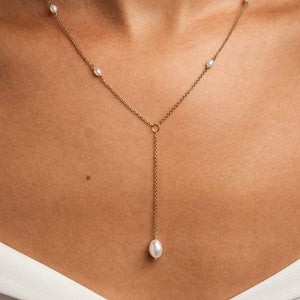
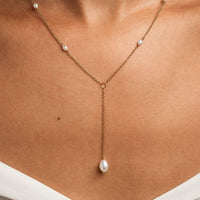
The piece they're describing → Collier de perles d'eau douce pour femmes – Chaîne plaquée or 14 carats, pendentif perle naturelle
Personalize Yours


