


The rook sits on the antihelix — the ridge of cartilage that runs between the outer rim of your ear and the inner conch — and it's a narrower, more angled fold than the flatter conch or helix, which is why the jewelry rules here are stricter early on. This guide covers what actually goes in a fresh rook, how to size a hoop once you're healed, and an honest look at which of our own pieces are (and aren't) a fair swap at that point.
What a Rook Piercing Is
The rook is the raised ridge of cartilage above the tragus and below the outer rim, sitting between the conch and the top of the ear. Not everyone's anatomy has enough of a defined ridge for a rook to sit well — this is one of the piercings where a piercer may tell you your ear shape isn't a good candidate, which is a normal and worthwhile thing to hear before you book.
Starting Jewelry: Curved Barbell, Not a Hoop
A curved barbell is the standard starting jewelry for a fresh rook. The ridge the rook sits on is narrow and angled, so a hoop shape at this stage tends to sit crooked or press unevenly against the surrounding cartilage — a curved barbell follows the angle of the ridge cleanly and doesn't shift as much when it catches on hair, headphones, or a pillow.
The material bar is the same as any other fresh cartilage piercing: implant-grade titanium (ASTM F136), niobium, or nickel- and cadmium-free solid 14K+ gold, per the APP's jewelry standards for initial piercings. Gold-plated, gold-filled, vermeil, and sterling silver — all common in fashion jewelry — aren't on that list for a piercing that's still healing.

Sizing a Rook Hoop, Once You're Healed
Rook hoops run smaller than conch hoops because the ridge itself is narrow:
- 6mm — the common starting point for smaller anatomy once you've healed enough to switch
- 8mm — a mid-range size for most healed rook anatomy
- 10mm — for larger or more prominent ridges
Post gauge is typically 16 gauge (1.2mm), sometimes 14 gauge (1.6mm). As with any cartilage swap, match both the diameter and the gauge to what you were actually pierced at — a hoop that's the right look but the wrong gauge either won't fit or will sit loosely enough to migrate.
Healing Timeline
Rook piercings take roughly 6–9 months to heal fully, with some taking longer depending on aftercare and how much the jewelry gets bumped day to day (glasses, headphones, and sleeping on that side are common culprits). Cartilage heals slowly because it has limited blood supply of its own, unlike a lobe. Most piercers recommend waiting until the piercing feels completely normal — no tenderness, discharge, or reaction to being bumped — for several consecutive months before switching to a hoop, since the surface can look settled well before the tissue underneath actually is.
Piercing elsewhere on the ear? See our conch piercing jewelry guide and daith piercing jewelry guide for the same honest breakdown on those placements.
An Honest Note on Buying From Us
We don't carry implant-grade titanium or niobium body jewelry, which is what a rook needs for the piercing itself and the healing period after it — for that, see a licensed piercer or body-jewelry specialist who can match your exact gauge and bar length. What we do carry is 925 sterling silver and 18K gold-plated small gold hoop earrings, which some people wear as a styling swap in a fully healed rook once their piercer has cleared them for regular fashion jewelry — not before that point, and not as a substitute for a curved barbell while healing.
Rook Piercing Jewelry: Common Questions
- Can a rook be pierced with a hoop?
- Not usually as starting jewelry — the ridge is narrow and angled, and a hoop tends to sit crooked or press against the surrounding cartilage before it's healed. A curved barbell is the standard first piece; a hoop is something you switch to once fully healed, if your anatomy allows it.
- Does a rook piercing hurt more than a helix or conch?
- Most people rate rook as one of the more uncomfortable cartilage piercings, since the antihelix ridge is thick and the placement can involve more pressure during the piercing itself. Pain tolerance varies significantly from person to person.
- Why did my piercer say my ear isn't a good candidate for a rook?
- Not every ear has a defined enough antihelix ridge for a rook to sit correctly and heal well. A piercer telling you this before piercing, rather than after, is doing you a favor — it's a legitimate anatomical call, not an arbitrary one.
- How do I know when I can switch my rook to a hoop?
- Wait until the piercing has felt completely normal — no tenderness, discharge, or redness when bumped — for several consecutive months, generally in the 6–9 month range, and check with your piercer if you're unsure. Ask them to confirm your specific anatomy can take a hoop before you buy one.
- Is sterling silver safe for a healed rook piercing?
- For finished jewelry in a fully healed rook that you're not sleeping in constantly, many people wear sterling silver without issue, though it isn't the material professional piercers use for the piercing itself. If you react to silver in other piercings, apply the same caution here and stick with titanium or solid gold.
- What gauge is a rook piercing usually done at?
- Most rook piercings use 16 gauge (1.2mm), with some piercers using 14 gauge (1.6mm) depending on your anatomy and their equipment. Confirm your exact gauge with your piercer before buying replacement jewelry.
This guide covers general piercing-industry standards and jewelry sizing conventions. It isn't medical advice — for anything specific to your piercing, healing, or anatomy, talk to a licensed professional piercer.
Toutes les marques, noms de marque et noms de produits tiers sont la propriété de leurs détenteurs respectifs. AJLuxe n’est affilié à aucune marque tierce citée dans cet article, ni approuvé ou sponsorisé par celle-ci. Les noms de marque sont utilisés uniquement à des fins de comparaison factuelle, et les descriptions de matériaux reflètent les spécifications produit publiées par chaque marque au moment de la rédaction.
You Might Also Like
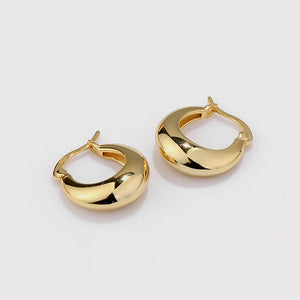
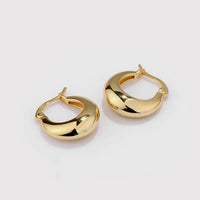
The piece they're describing → Petites boucles d'oreilles créoles dorées pour femme — Argent sterling 925, plaqué or 18 carats, 15 mm
Personalize Yours


