


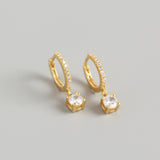

Ear climbers are one of the more distinctive earring shapes because of how they sit — instead of hanging down from the lobe like a stud or drop, they curve upward along the ear's outer edge, creating the visual effect of the earring "climbing" toward the top of the ear. That shape makes them genuinely different to shop for and wear than any other earring style, and this guide covers what to know before buying, including an honest note on where they stand in AJLuxe's current catalog.
What Are Climber Earrings?
A climber earring is designed to hug the curve of the outer ear, starting near the lobe and extending upward — sometimes with a single line of stones, sometimes with a branching, vine-like design. Unlike a standard stud or drop earring, which relies purely on the post and lobe piercing to stay in place, a true climber usually needs the earring's shape itself to rest against the ear's cartilage curve for a secure, natural-looking fit — which is why they don't always work identically on every ear shape.
How Climber Earrings Actually Work
Most climbers use a standard post through the earlobe piercing, then the decorative element extends upward and rests against the ear's outer edge rather than hanging free. Some designs include a small secondary point of contact or a curved wire that tucks behind the ear's upper cartilage for extra stability, though this isn't universal — simpler climber designs rely purely on the post and the earring's own curve holding its position. This is different from a true cuff (which clips onto the cartilage with no piercing needed) or a connected ear-crawler-and-stud combination that some brands sell as a single piece.
How to Put On Climber Earrings
Insert the post through your lobe piercing as usual, then gently guide the upward-curving portion along the natural line of your ear's outer edge rather than forcing it into position. It typically takes a few tries to get comfortable with the motion, especially compared to a stud that only requires the post to go through — climbers benefit from checking a mirror the first several times you wear them until the motion becomes familiar. Left and right climbers are sometimes mirrored to match each ear's specific curve, so check whether a pair is sold as left/right-specific or symmetric before assuming either earring works on either ear.
Are Climber Earrings Comfortable?
Most wearers find them comfortable once correctly positioned, though the fit depends more on individual ear shape than most other earring styles — because the design relies on the ear's own curve for part of its structure, a climber that sits perfectly on one person's ear may sit slightly differently on someone with a different ear shape. Lightweight materials (sterling silver rather than a heavier base-metal-and-stone combination) reduce the chance of the earring feeling like it's pulling or shifting throughout the day.
Climber vs. Ear Cuff vs. Ear Crawler
| Style | Needs a piercing? | Where it sits |
|---|---|---|
| Climber / ear crawler | Yes, standard lobe piercing | Curves upward from the lobe along the outer ear |
| Ear cuff | No — clips onto cartilage | Wraps around the upper cartilage, no post |
| Standard stud/hoop | Yes, standard lobe piercing | At or just below the lobe piercing point |
These three terms get used loosely and sometimes interchangeably in product listings, which causes real confusion when shopping — a listing titled "ear climber" sometimes actually describes a no-piercing cuff design. Checking the product photos for whether the piece requires threading through a piercing (a true climber) or simply clips on (a cuff) is the most reliable way to confirm which you're actually buying.
Are Climber Earrings Trending?
Yes, alongside the broader trend toward more architectural, non-traditional earring shapes over the past several years — ear cuffs, climbers, and multi-piercing curated looks have all grown in visibility together as a category, moving away from the single-stud-per-lobe default. They're commonly featured in editorial and red-carpet styling specifically because of their distinctive silhouette, though they've also become accessible at everyday price points, not just designer ones.
Materials and Sensitive Ears
Because the post is the only piece actually passing through your piercing, that's the component that matters most for anyone with metal sensitivity — regardless of how the decorative climbing portion is finished. 925 sterling silver and 316L stainless steel posts are the most reliable hypoallergenic options; a listing that doesn't specify the post material separately from the overall design is worth a direct question to the seller before buying, especially given how long a climber design typically stays in contact with the ear compared to a simple stud.
Styling Climber Earrings
Because a climber already covers more visual ground along the ear than a standard stud, it typically works best worn alone rather than combined with several other piercings in the same ear — the architectural line of the climber can get visually lost or compete with additional jewelry crowded around it. If you do want to combine it with other pieces, a single small stud lower on the lobe (below where the climber's post sits) tends to work better than multiple additional pieces along the same curve the climber occupies.
An Honest Note on AJLuxe's Fit
AJLuxe's current earring lineup doesn't include a true climber or ear-crawler design — the catalog is built around stud, huggie hoop, and drop styles instead. If the climbing-upward silhouette specifically is what you're after, that's worth knowing upfront rather than stretching a different shape to fit the description. The closest real match for a similarly distinctive, non-traditional look is the Drop Huggie Hoop Earrings — 18K gold-plated 925 sterling silver with a layered hoop-and-drop silhouette that reads as more architectural than a plain stud, hypoallergenic, $24.99–$79.99.
Climber Earrings: Common Questions
- How does a climber earring work?
- The post goes through your standard lobe piercing as usual, and the decorative portion extends upward, following the natural curve of the ear's outer edge rather than hanging down like a typical earring.
- What are the earrings that climb up your ear called?
- Ear climbers or ear crawlers — both terms describe the same style, an earring that appears to climb from the lobe upward along the ear's curve.
- What are the best climbing earrings?
- The best fit depends more on individual ear shape than most earring styles, since climbers rely on the ear's own curve for part of their positioning — trying a few different designs, or checking a brand's fit photos on varied ear shapes, is more useful than any single universal recommendation.
- Are climber earrings comfortable?
- Most wearers find them comfortable once correctly positioned, though fit varies more by individual ear shape than a standard stud does — lighter materials generally feel more secure and comfortable over a full day of wear.
- Do climber earrings need a special piercing?
- No — a true climber or ear-crawler style uses your standard lobe piercing, the same one a regular stud or hoop uses. Only a separate cartilage or helix piercing (for a different jewelry style entirely) would require additional piercings.
- How do you put on ear climber earrings correctly?
- Insert the post through your lobe piercing, then gently guide the upward portion along your ear's outer curve rather than forcing it — it takes a few practice tries for most people, and checking a mirror the first several times helps.
- Are climber earrings the same as ear cuffs?
- No — a climber uses a standard post through your lobe piercing, while an ear cuff clips onto the cartilage with no piercing required at all. The two terms are sometimes used loosely in product listings, which causes confusion.
- Can climber earrings fall off easily?
- They're generally secure once correctly positioned, though a poor initial fit (not following your ear's actual curve) can make them feel looser than a standard stud — taking the time to position them correctly matters more with this style than with most others.
- Can I wear climber earrings with sensitive ears?
- Yes, as long as the post specifically is 925 sterling silver, 316L stainless steel, or another confirmed hypoallergenic material — the post is the only part actually contacting the piercing channel, regardless of how the visible climbing portion is finished.
Final Thoughts
Climber earrings are a genuinely distinctive shape, worth understanding on their own terms rather than confusing with a cuff or a standard drop. AJLuxe doesn't carry a true climber design today, but for a similarly architectural, non-standard look, the Drop Huggie Hoop Earrings deliver a layered silhouette in hypoallergenic gold-plated sterling silver, $24.99–$79.99.
Last updated: September 2026. Written by the AJLuxe team — specialists in personalized sterling silver jewelry.
Toutes les marques, noms de marque et noms de produits tiers sont la propriété de leurs détenteurs respectifs. AJLuxe n’est affilié à aucune marque tierce citée dans cet article, ni approuvé ou sponsorisé par celle-ci. Les noms de marque sont utilisés uniquement à des fins de comparaison factuelle, et les descriptions de matériaux reflètent les spécifications produit publiées par chaque marque au moment de la rédaction.
You Might Also Like
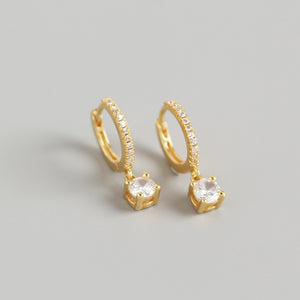
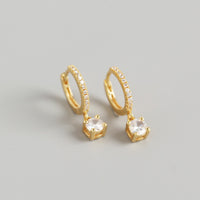
The piece they're describing → Boucles d'oreilles créoles pendantes pour femmes — Plaqué or 18 carats, argent sterling 925
Personalize Yours


