


If you searched "box chain bracelet" hoping to land on a product page, we'd rather tell you up front that this is a style guide with an honest disclosure built in, not a sales pitch dressed up as one. What we can do is actually explain the style properly: what makes a box link a box link instead of any other chain, whether the "symbolism" claims floating around search results hold up, the real two-finger sizing rule jewelers use, and the honest answer on durability and price.
This guide covers the construction, the sizing method that actually works, who tends to wear the style, and what AJLuxe would point you to instead if a box chain bracelet isn't in our active catalog when you're reading this.
What Is a Box Chain Bracelet?
A box chain bracelet is a bracelet built from a series of small, uniform links — usually square or slightly rounded-square in cross-section — that connect at alternating 90-degree angles, so each link "boxes in" the next one. The result is a chain that looks solid and almost seamless from the outside, without the visible open loops you'd see in a curb or cable chain. That structural interlocking is also what gives a box chain its reputation for being sturdy for its size: the square links distribute tension more evenly along the chain than a chain built from simple open rings does.
Box chains come in a wide range of thicknesses, from delicate 1–2mm styles worn as a quiet daily-wear piece to bold 4mm-plus versions worn as a standalone statement, and in both precious metal (sterling silver, gold, gold-plated) and stainless steel builds. Some are solid-link (heavier, more substantial per inch) and some are hollow-link (lighter, less expensive per inch, still sturdy for normal wear but generally more prone to denting or crushing under real pressure — a detail worth asking about before buying, since sellers don't always volunteer it upfront).
What Does the Box Chain Symbolize?
A box chain doesn't carry a fixed, historically documented symbolic meaning the way some jewelry motifs do — it's a construction style, not an iconographic one, and most of what circulates online about "box chain meaning" is styling commentary rather than established symbolism. What people do tend to read into it is more about what the shape communicates visually: the uniform, geometric links suggest order and structure, which is part of why the style pairs so naturally with minimalist and modern-menswear aesthetics rather than romantic or ornate ones. If a specific piece is marketed with a meaning attached (protection, connection, and so on), that's the brand's framing for that design, not an inherited tradition behind the box link itself.
How to Size a Box Chain Bracelet (The Two-Finger Rule)
The two-finger rule is the sizing check most jewelers use: with the bracelet fastened, you should be able to comfortably slide two fingers between the bracelet and your wrist. If you can't fit two fingers, it's too tight and will feel restrictive over a full day of wear; if there's room for three or more, it's likely to slide around and sit loosely rather than draping naturally.
In practical wrist-size terms, that generally works out to: your bare wrist measurement plus about 0.5–0.75 inches (1.3–1.9cm) of ease for a bracelet you want to sit close and comfortable, or plus about 1–1.25 inches (2.5–3.2cm) if you prefer a slightly looser drape. Because box chain bracelets have less give than a bangle and don't stretch, getting the base measurement right matters more here than it does for stretch-style pieces — measure your actual wrist with a soft tape or a strip of paper marked and measured against a ruler, rather than guessing from a ring size or another bracelet's fit.
Who Wears Box Chain Bracelets?
Box chain bracelets read as genuinely unisex, and the current search landscape for the style leans noticeably toward men's and gender-neutral jewelry — brands like John Hardy, David Yurman, Tateossian, and Jaxxon market box chain bracelets specifically within men's collections, usually in bolder 3–5mm widths in sterling silver, gold, or stainless steel. That's a real, current shift worth naming rather than glossing over: heavier box-link bracelets have become one of the more mainstream entry points into men's jewelry generally, alongside Cuban link and cable chain styles.
Thinner 1–2mm box chain bracelets, meanwhile, still show up regularly in women's minimalist jewelry — worn solo as an everyday layer or stacked with a few other delicate chains and bangles. The style genuinely works at both ends of that thickness range; which one reads as "right" mostly comes down to link width and how you style it, not the construction itself.
Frequently Asked Questions
What is a box chain bracelet?
It's a bracelet made from small, uniform square (or slightly rounded-square) links connected at alternating right angles, so the links "box in" each other and form a chain that looks solid and continuous rather than showing individual open loops. That interlocking structure is what gives box chains their reputation for being sturdy relative to their thickness.
What does the box chain symbolize?
Nothing fixed or historically documented — a box chain is a construction style, not a symbol with an established meaning behind it. Any "meaning" attached to a specific piece is usually the brand's own framing rather than an inherited tradition tied to the box link itself.
What is the two finger rule for bracelets?
It's the sizing check most jewelers use: fasten the bracelet, and you should be able to comfortably fit two fingers between it and your wrist. Less room than that and it's too tight for all-day comfort; more than two fingers' worth of slack and it'll likely slide around rather than sit close.
Are box chains expensive?
It depends entirely on metal, thickness, and whether the links are solid or hollow — box chains span a wide price range rather than sitting at one price point. A thin, hollow-link stainless steel or gold-plated box chain bracelet is typically an affordable everyday piece, while a thick, solid-link piece in solid gold or fine sterling silver from a name jewelry brand runs considerably higher, since solid links use more metal and cost more to fabricate than hollow ones at the same visual width.
Do box chain bracelets break easily?
Well-made box chains are generally considered a sturdier chain style, since the interlocking square links distribute stress more evenly than simple open-ring chains do — but "sturdy" isn't "indestructible," and hollow-link versions specifically are more prone to denting, crushing, or kinking under real pressure (catching on a doorframe, gym equipment, and so on) than solid-link versions of the same width. Clasp failure, not the chain links themselves, is also a common point of failure across chain jewelry generally, so a secure, well-made clasp matters as much as the link construction.
What chain style pairs well with a box chain bracelet?
Thin box chains stack cleanly with other minimalist styles — cable chain, delicate curb chain, or a simple bar-link chain — since the uniform, low-profile links don't visually compete with a second thin chain the way a chunkier style might. Bolder box chains are more often worn solo as a standalone statement, the same way a heavier Cuban link bracelet typically is, rather than layered with other bracelets.
The Bottom Line
A box chain bracelet is defined by its construction, not a symbolic meaning: small interlocking square links built at alternating angles into a chain that reads as solid and continuous rather than obviously "chained." It spans a genuinely wide range — thin and minimalist to thick and statement-making, women's-leaning to the men's-jewelry-heavy demand that currently dominates search for the style — and sizing it right comes down to the two-finger rule and an accurate wrist measurement, since box chains don't stretch to compensate for a rough guess. For other chain bracelet options in the meantime, our complete bracelet styles and clasp guide covers cable, cuban, and other chain constructions in more depth, and our gold chain bracelet guide rounds up the chain bracelet styles currently in the AJLuxe catalog.
Toutes les marques, noms de marque et noms de produits tiers sont la propriété de leurs détenteurs respectifs. AJLuxe n’est affilié à aucune marque tierce citée dans cet article, ni approuvé ou sponsorisé par celle-ci. Les noms de marque sont utilisés uniquement à des fins de comparaison factuelle, et les descriptions de matériaux reflètent les spécifications produit publiées par chaque marque au moment de la rédaction.
You Might Also Like
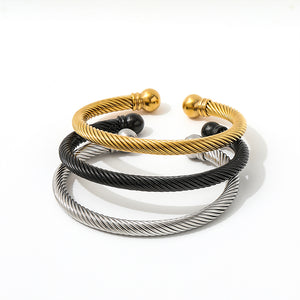
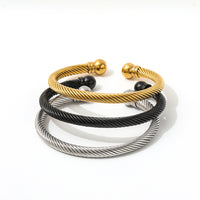
The piece they're describing → Bracelet Manchette Femme Chaîne Câble — Plaqué Or 18 Carats, Ouvert, Ajustable
Personalize Yours


