


- Genuine 925 sterling silver contains no nickel, which is the metal behind roughly 90% of costume-jewelry ear reactions.
- Look for a “925” or “.925” stamp — “silver-tone,” “silver-plated,” or “silver-finish” often means a base-metal core underneath.
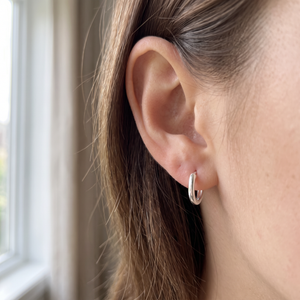
- Small hoops and huggies tend to irritate less than heavy studs because they don't press flat against the piercing all day.
- AJLuxe earrings are 925 sterling silver, hypoallergenic and nickel-free, priced $24.99–$79.99, with 18K gold plating options available.
- Even hypoallergenic metal can irritate a freshly pierced or infected ear — the piercing needs to heal first, regardless of metal.
- If solid sterling silver still bothers your ears, titanium or niobium is usually the next step up in allergy safety.
If every pair of earrings you own eventually leaves your ears red, itchy, or crusted at the back, the problem is almost never “sensitive ears” in some vague sense — it's a reaction to a specific metal, most often nickel. Sterling silver marked 925 solves that for the vast majority of people, but not all “silver” earrings are actually 925, and metal isn't the only variable that decides whether a pair feels fine or ends up in a drawer. Here's what's actually going on, and how to shop for earrings that won't fight you.
Are Sterling Silver Earrings OK for Sensitive Ears?
Yes — genuine 925 sterling silver is safe for the large majority of people with sensitive ears because it's 92.5% pure silver alloyed with other metals (usually copper), and that alloy doesn't include nickel. Nickel is the single most common trigger for earring-related contact dermatitis, so removing it from the equation removes the cause of most reactions. The catch is the word “genuine”: a lot of jewelry sold as “silver” is actually a nickel or brass base with a thin silver-tone coating that wears off within weeks, exposing the reactive metal underneath.
Is Sterling Silver Hypoallergenic?
Sterling silver is considered hypoallergenic for most people because standard 925 alloys are nickel-free, though “hypoallergenic” means lower-risk, not zero-risk for every single person. A very small number of people react to the trace copper in the alloy or to silver itself, but this is uncommon compared to nickel reactions. For daily earrings, 925 stamped sterling silver is one of the more reliable hypoallergenic choices without moving up to surgical-grade or precious metals.
What Actually Causes Ear Sensitivity?
Most “sensitive ear” reactions are a nickel allergy, not a general intolerance to metal or jewelry. Nickel is cheap, durable, and common in costume jewelry, so it shows up constantly in earring posts and backs even when the visible surface looks like gold or silver. Once skin becomes sensitized to nickel through repeated exposure, even brief contact — a post left in overnight, a coated earring wearing thin — can trigger redness, itching, swelling, or a crusty rash at the piercing site. Switching to a metal that never contained nickel in the first place, rather than one that's simply plated over it, is the fix that actually holds.
Sterling Silver vs Other Metals for Sensitive Ears
Not all “safe for sensitive ears” claims hold up the same way once you compare what's actually in the metal.
| Metal | Nickel-free? | Typical price | Best for |
|---|---|---|---|
| 925 Sterling Silver | Yes | $25–$80 | Daily wear, most sensitive ears |
| Nickel-plated / costume metal | No | Under $15 | Nobody with a known metal allergy |
| Gold-filled | Usually | $20–$60 | Warm-tone lovers, moderate sensitivity |
| Surgical steel | Mostly (trace nickel possible) | $15–$40 | New piercings, active wear |
| Titanium / niobium | Yes | $20–$70 | Severe or confirmed metal allergies |
| 14K–18K solid gold | Yes (at 14K+) | $150+ | Splurge pieces, permanent jewelry |
For most budgets, 925 sterling silver sits in the sweet spot: nickel-free like titanium, but far more affordable, and easier to find in the hoop, huggie, and stud styles people actually wear daily.
What Earring Type Is Best for Sensitive Ears?
Small huggie hoops and lightweight hoops are generally the best earring style for sensitive ears because they sit close to the piercing without the flat back-plate pressure that heavy studs create against the skin. A stud's flat backing traps moisture and presses directly against the earlobe for hours at a time, which can irritate skin even in a nickel-free metal. Hoops and huggies have more airflow around the piercing and less constant surface contact, which is why people who react to studs often do fine in hoops made from the exact same metal.

How to Check If Earrings Are Genuine Sterling Silver
Look for a “925” or “.925” stamp on the post, clasp, or inside of the hoop — that stamp is the legal marking for genuine sterling silver and the fastest way to rule out a plated imitation. Beyond the stamp, genuine sterling silver darkens slightly with a light gray tarnish over time (which polishes back off), while cheap silver-tone coatings tend to flake, yellow, or reveal a different-colored metal underneath within weeks. If a listing only says “silver” or “silver-tone” with no “925,” treat it as unverified rather than assuming it's safe.
Signs Your Ears Are Reacting — and What To Do
Redness, itching, swelling, a rash around the piercing, or a crusty discharge that shows up within hours or days of wearing a pair are the classic signs of a metal reaction, not just “new piercing soreness.” If that happens with a specific pair, remove them immediately and switch to confirmed 925 sterling silver or titanium while the area calms down. A brand-new piercing can also feel irritated simply because it's still healing — that's a timing issue, not necessarily a metal issue, so give it the full healing window before ruling any metal in or out.
18K gold plating option
Nickel-free, safe for daily wear
Boxed, no extra charge
Insured shipping, easy returns
Which Sterling Silver Earrings Should You Choose for Sensitive Ears?
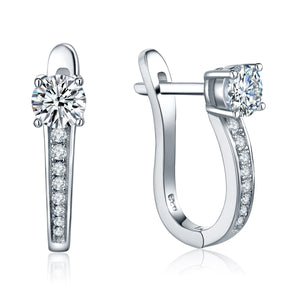
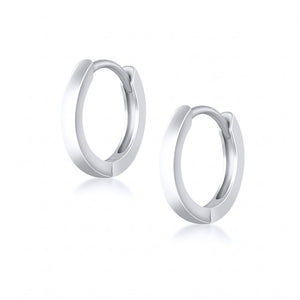
Start with a small hoop or huggie in genuine 925 sterling silver — it combines the nickel-free metal that solves most reactions with the lower-contact shape that solves the rest. The Silver Huggie Earrings ($34.99) are built exactly for this: 925 sterling silver, hypoallergenic, and small enough to sit comfortably against the lobe without the pressure a stud creates. If you'd rather have a slightly larger everyday hoop, the Silver Hoop Earrings ($31.99) and their 18K gold-plated version ($31.99) are the same nickel-free 925 base with a warmer finish, and the Moissanite Hoop Earrings ($49.99) add sparkle without changing the metal underneath. Whichever shape you pick, the metal is doing the real work — as long as it's stamped 925, your ears have the best shot at wearing it every day without a reaction.
For more background on nickel allergy and metal contact dermatitis, see the American Academy of Dermatology: https://www.aad.org.
Shop the Red Heart Stud Earrings
925 sterling silver studs set with a heart-cut red cubic zirconia in an open 3-prong basket — unplated, nickel-free, butterfly back.
Shop the Red Heart Stud Earrings →Frequently Asked Questions
Are sterling silver earrings ok for sensitive ears?
Yes, genuine 925 sterling silver earrings are generally safe for sensitive ears because they don't contain nickel, the most common trigger for earring reactions. The exception is jewelry that's only silver-plated over a nickel or brass core — check for a 925 stamp before assuming a pair is safe.
What earring type is best for sensitive ears?
Small hoops and huggies are typically best for sensitive ears because they don't press flat against the earlobe the way heavy studs do. Less constant contact and better airflow around the piercing usually means less irritation, even when the metal is identical to a stud you've reacted to before.
Which silver is best for sensitive ears?
925 sterling silver is the best silver option for sensitive ears because “925” is the stamped guarantee that the alloy is 92.5% pure silver with no nickel added. Silver marked only “silver-tone” or “silver-plated” doesn't carry that guarantee and may have a reactive base metal underneath.
What earrings won't hurt my ears?
Earrings that won't hurt sensitive ears are ones made from a metal that never contained nickel in the first place — genuine 925 sterling silver, titanium, or niobium — in a lightweight shape like a small hoop or huggie rather than a heavy flat-backed stud. Confirming a 925 stamp and choosing a smaller silhouette covers both major causes of ear irritation.
Is sterling silver hypoallergenic?
Sterling silver is considered hypoallergenic for most wearers because standard 925 alloys don't contain nickel, the metal behind the majority of earring reactions. A small minority of people are sensitive to the trace copper in the alloy, but this is far less common than nickel reactions.
Can you still react to genuine sterling silver?
Yes, a small number of people react to the copper alloyed into sterling silver even though the silver itself and the nickel-free formula work for most wearers. If solid 925 sterling silver still causes irritation, titanium or niobium is the next option to try since both are inert and contain no nickel or copper alloy.
Alle Marken, Markennamen und Produktnamen Dritter sind Eigentum ihrer jeweiligen Inhaber. AJLuxe steht in keiner Verbindung zu den in diesem Artikel genannten Marken Dritter und wird von diesen weder unterstützt noch gesponsert. Markennamen werden ausschließlich zur sachlichen vergleichenden Bezugnahme verwendet; Materialangaben entsprechen den eigenen veröffentlichten Produktangaben der jeweiligen Marke zum Zeitpunkt der Erstellung.
You Might Also Like

The piece they're describing → Silberne Huggie-Ohrringe für Damen — 925er Sterlingsilber, hypoallergen, minimalistisch
Personalize Yours


