


- Serpentine isn't a single mineral — it's a group of related magnesium-silicate minerals (antigorite, chrysotile, lizardite, and others) that share a similar look and softness
- The name comes from its mottled green, scale-like surface pattern, which resembles snakeskin — not from any connection to actual snakes or venom
- It's one of the most common jade substitutes in the gem trade; some varieties are even sold as "new jade" or "Korea jade," which is misleading marketing, not a real jade classification
- Serpentine is soft (2.5–5.5 Mohs) compared to true jade (6–7), so it scratches easily and needs gentler care than harder gemstones
- AJLuxe's "Serpentine Anklet" is named for its snake-chain link style, not the serpentine mineral — see the disambiguation section below before assuming the two are connected
Search "serpentine stone meaning" and you'll run into two completely different things wearing the same name: a mottled green gemstone with a long history as a jade substitute, and a style of jewelry chain called a "serpentine chain" or "snake chain," named for how its flat, interlocking links slither and coil like a snake when it moves. This guide is about the actual mineral — its geology, its meaning in crystal healing traditions, how to tell a real piece from a fake or a dyed substitute, and how to care for it — with a clear note on where the naming overlap with snake-chain jewelry comes from, so you're never confused about what you're buying.
By the end you'll know what serpentine is made of, why it's associated with transformation and renewal, how it compares to true jade, what to check before buying a "jade" piece that might actually be serpentine, and how to keep a serpentine stone looking good for years.
What Is Serpentine, Geologically?
Serpentine isn't one mineral — it's a mineral group name covering several closely related hydrous magnesium silicates, most commonly antigorite, chrysotile, and lizardite. All three form through the same basic process: seawater reacting with mantle rock (peridotite) at tectonic boundaries, a process called serpentinization. This is why serpentine deposits show up in specific geological settings — ophiolite belts, where ancient ocean floor has been thrust up onto continents, notably in California, Vermont, Cornwall (UK), Italy, and Zimbabwe.
The mineral's defining visual trait is its surface pattern: mottled patches of green, ranging from pale olive to deep forest, sometimes streaked with black, yellow, or brown, in a texture that resembles reptile scales. That resemblance is exactly where the name comes from — the Latin serpentinus, meaning "serpent-like." It has nothing to do with actual snakes beyond the visual similarity; there's no folklore tradition tying the stone to venom, shedding, or literal snake symbolism the way, say, moonstone is tied to lunar cycles.
Serpentine typically forms as massive, opaque material rather than transparent crystals, which is why it's almost always cut into cabochons, beads, or carved into figures rather than faceted like a diamond or sapphire. Some serpentine contains fine fibrous inclusions of chrysotile — the mineral form once used commercially as asbestos — which is why loose, unpolished serpentine rough (especially chrysotile-rich material) should be handled with the same basic care as any fibrous mineral: avoid grinding, sanding, or inhaling dust from raw material. Finished, sealed, polished jewelry-grade serpentine poses no such risk during normal wear.
What Serpentine Means in Crystal Healing
Serpentine's meaning in modern crystal-healing traditions centers on a few consistent themes, most of them tied to its association with the heart chakra and its long history as a "transitional" or shape-shifting stone in folk mineralogy:
- Transformation and renewal: Because serpentine forms through a chemical transformation of one rock type into another (peridotite into serpentinite), it's often described symbolically as a stone of change — supporting people moving through a life transition, a habit change, or emotional healing after a difficult period.
- Heart-chakra balance: Green stones are broadly associated with the heart chakra in crystal-healing systems, and serpentine is grouped with stones like jade, aventurine, and malachite as a "heart opener" — associated with self-compassion, emotional release, and calming an overactive nervous system.
- Grounding: Serpentine's earthy, mottled coloring and mineral origin (formed deep within the earth's mantle) give it a grounding association in crystal-healing lore, similar to other earth-toned stones like tiger's eye and labradorite.
- Kundalini energy: In some New Age traditions, serpentine is specifically linked to Kundalini — the concept of dormant spiritual energy "coiled" at the base of the spine, echoing the stone's serpent-like surface pattern. This is a symbolic/associative connection based on the name and appearance, not a claim with any scientific basis.
As with any crystal-healing claim, none of this is medically or scientifically validated — it's a long-standing folk and New Age tradition, not a clinical one. If you're drawn to serpentine, the honest framing is that it's a genuinely striking, historically significant gemstone with a meaningful symbolic story, not a stone with measurable healing properties.
History and Origin of Serpentine
Serpentine has been carved and worn for thousands of years, in part because it's abundant, workable, and visually similar to far more expensive jade. Ancient Egyptian, Chinese, and Central American cultures all used serpentine for carved figures, seals, and ornamental objects. In China specifically, serpentine has been used as a jade substitute for centuries — some historic Chinese carvings originally believed to be jade have later been identified as serpentine once tested with modern gemological tools.
In the Victorian era, serpentine (sometimes called "Connemara marble" when quarried in Ireland, though that name technically refers to a serpentine-marble mix) was popular for mourning jewelry and decorative objects because of its somber green-black coloring. Cornwall, England became a major historic source, and polished Cornish serpentine ornaments were a popular souvenir item well into the 20th century.
GIA's Gems & Gemology journal has documented gem-quality serpentine finds in modern research, including a notable study of material from Val Malenco in the Central Alps of Italy — one of the world's most significant serpentine-producing regions, still yielding fine specimens today.
Serpentine vs. True Jade: How to Tell the Difference
This is the single most important practical thing to know about serpentine: it is one of the most common jade substitutes in the trade, and it's frequently sold — sometimes honestly, sometimes not — under names that borrow jade's reputation. "New jade," "Korea jade," "Suzhou jade," and "olive jade" are all marketing names for serpentine, not for actual nephrite or jadeite jade. None of those names indicate real jade.
| Property | Serpentine | True Jade (Jadeite / Nephrite) |
|---|---|---|
| Mohs hardness | 2.5–5.5 (soft, scratches with a knife or even a fingernail on softer material) | 6–7 (jadeite) / 6–6.5 (nephrite) — much harder |
| Feel | Slightly waxy or soapy to the touch, feels lighter | Cool, dense, notably heavy for its size |
| Color pattern | Mottled, streaky, often with visible veining or "flow" patterns | More even, translucent color; fine jadeite is uniform and glassy |
| Sound test | Dull "thud" when two pieces are tapped together | Clear, almost bell-like "ring" when tapped |
| Price | Inexpensive — a few dollars to low tens of dollars per piece | Fine jadeite can command thousands to millions of dollars per piece |
| Common trade names to watch for | "New jade," "Korea jade," "Suzhou jade," "olive jade," "verdite" (a related mineral) | Sold honestly as jadeite or nephrite, ideally with a lab report for higher-value pieces |
If a "jade" piece is priced suspiciously low, feels light and slightly soapy rather than cool and dense, and shows a streaky rather than uniform color, there's a good chance it's serpentine rather than true jade. That's not necessarily a scam — serpentine is a legitimate, attractive stone in its own right — but it should be priced and labeled accordingly.
How to Identify Real Serpentine

Because serpentine is so often used to imitate other stones (and occasionally imitated itself with dyed glass or resin), a few quick checks help confirm you're looking at genuine material:
- Hardness check: Real serpentine is soft enough that a steel knife blade or even a fingernail (on the softest varieties, like bowenite) can leave a faint mark. If a "serpentine" piece resists a gentle scratch test, it may be a harder substitute like dyed jade, glass, or resin.
- Temperature test: Genuine mineral serpentine feels cool to the touch initially, like most natural stones, then warms quickly against skin because it's a poor thermal conductor. Glass and resin imitations often feel noticeably different — either too light or with an unnatural, uniform warmth.
- Pattern inspection: Real serpentine has organic, irregular mottling — no two patches look identical. Dyed or resin imitations often show unnaturally repetitive or overly uniform patterning under close inspection.
- Weight: Serpentine is noticeably lighter than true jade or many other green gemstones of the same size, since it has a lower specific gravity (roughly 2.5–2.6 versus jadeite's 3.3).
- Ask for provenance: Reputable sellers will tell you plainly whether a piece is serpentine, jade, or another mineral. If a seller is vague or uses only trade nicknames like "new jade" without clarifying the actual mineral, that's worth asking about directly before buying.
A Quick Note: "Serpentine Stone" vs. "Serpentine Chain"
Here's where a lot of shoppers get genuinely confused, and it's worth clearing up directly: the word "serpentine" shows up in jewelry in two completely unrelated ways.
Everything above describes serpentine the mineral — a green, mottled gemstone used for carvings, beads, and cabochons. Separately, "serpentine chain" (also called "snake chain") is a jewelry-making term describing a specific style of chain link — flat, tightly interlocking metal links that create a smooth, continuous surface with no visible individual links, so the chain moves fluidly and coils like a snake. A serpentine chain can be made from gold, silver, or any other metal; it has nothing to do with the serpentine gemstone at all.
That naming overlap means a "serpentine anklet" or "serpentine necklace" you find while browsing jewelry is almost always describing the chain style, not a piece made from the serpentine stone. AJLuxe's own Serpentine Anklet is a good example — it's named for its snake-chain link construction in 925 sterling silver or 18K gold plating, not because it contains serpentine gemstone. If you came to this guide because you love the name "serpentine" and want to see what that anklet actually looks like, it's a completely different (and completely accurate) reason to check it out — just know you're shopping for a chain style, not this mineral.
How to Care for Serpentine Jewelry
Because serpentine sits so low on the Mohs hardness scale, it needs gentler handling than most gemstones you'd find in fine jewelry:
- Avoid ultrasonic and steam cleaners — the vibration and heat can crack or cloud serpentine, unlike harder stones such as sapphire or diamond that tolerate both.
- Clean with a soft, damp cloth only — skip harsh chemicals, abrasive polishing compounds, and anything acidic (including some jewelry-cleaning solutions), which can dull or etch the surface.
- Store separately from harder stones and metal jewelry that could scratch it — a soft pouch or a lined compartment works best.
- Remove before physical activity — gardening, sports, or manual work can easily chip or scratch a stone this soft.
- Keep away from prolonged sun exposure and heat, which can fade or dull the color of some serpentine varieties over time.
- Reapply a light coat of mineral oil occasionally (a traditional practice for serpentine carvings) if the piece looks dry or chalky — this is common for display carvings more than wearable jewelry, but worth knowing if you own both.
Serpentine vs. Other Green Grounding Stones
If you're drawn to serpentine's earthy, grounding energy, it's worth knowing how it compares to a few other stones commonly used for the same purpose:
| Stone | Hardness | Primary association | Best for |
|---|---|---|---|
| Serpentine | 2.5–5.5 | Transformation, heart-chakra healing, renewal | Carved pieces, cabochons, display objects more than everyday rings |
| Tiger's Eye | 7 | Confidence, protection, grounding willpower | Everyday jewelry — durable enough for rings and bracelets |
| Labradorite | 6–6.5 | Transformation, intuition, protection of the aura | Statement jewelry with light-play; moderate durability |
| Jade (jadeite/nephrite) | 6–7 | Harmony, luck, protection | Fine jewelry and heirloom carvings; genuinely durable |
If you like serpentine's transformation symbolism but want a stone that holds up better to daily wear in rings or bracelets, our Tiger's Eye healing properties guide and Labradorite healing properties guide cover two harder, more jewelry-practical grounding stones with similar earthy symbolism.
Frequently Asked Questions
What does serpentine stone mean spiritually?
Serpentine is associated with transformation, renewal, and heart-chakra healing in crystal-healing traditions, symbolism tied to its formation through chemical transformation deep within the earth and its resemblance to shedding, scale-like skin.
What are the healing properties of serpentine crystal?
In crystal-healing traditions, serpentine is said to support emotional release, grounding, and heart-centered healing. None of these claims are scientifically validated — they're part of a long-standing folk and New Age tradition rather than clinical medicine.
Which chakra is serpentine associated with?
Serpentine is most commonly linked to the heart chakra because of its green coloring, and to the root chakra for its grounding, earthy associations.
How do you identify real serpentine versus fake or jade?
Check hardness (real serpentine scratches easily, unlike true jade), weight (serpentine is noticeably lighter than jadeite), pattern (organic, irregular mottling rather than uniform dye patterns), and sound (a dull thud rather than jade's clear ring when tapped).
What are the common colors and patterns in serpentine gemstone?
Serpentine typically ranges from pale olive to deep forest green, often mottled or streaked with black, yellow, or brown in an irregular, scale-like pattern that resembles snakeskin.
Is serpentine durable enough for everyday jewelry?
Not especially — at 2.5–5.5 on the Mohs hardness scale, serpentine scratches far more easily than harder stones like quartz or jade, so it's better suited to carvings, pendants, and low-contact jewelry than rings worn daily.
How do you clean and care for serpentine stones and jewelry?
Wipe with a soft, damp cloth only. Avoid ultrasonic cleaners, steam, harsh chemicals, and prolonged sun exposure, all of which can crack, cloud, or fade the stone.
What is the history and origin of serpentine gemstone?
Serpentine has been carved for thousands of years by Egyptian, Chinese, and Central American cultures, largely as an accessible substitute for true jade. It's historically significant in Cornwall, England and Val Malenco, Italy, both notable source regions.
What is another name for serpentine stone?
Trade names include "new jade," "Korea jade," "Suzhou jade," and "olive jade" — all of these describe serpentine, not actual jadeite or nephrite jade, despite the misleading naming.
Is serpentine the same as a serpentine chain?
No. Serpentine the gemstone is a green mineral used for carvings and beads. A "serpentine chain" (or "snake chain") is an unrelated jewelry-making term for a flat, tightly interlocking metal chain style — it can be made in any metal and has no connection to the mineral.
Can serpentine be harmful to humans?
Finished, polished serpentine jewelry is safe to wear. Raw, unpolished serpentine rough can contain chrysotile fibers (a form once used commercially as asbestos), so unsealed rough material shouldn't be ground, sanded, or have its dust inhaled — this doesn't apply to normal wear of finished jewelry.
How can you tell if a serpentine stone is real by weight or density?
Genuine serpentine has a specific gravity around 2.5–2.6, noticeably lighter than true jadeite (about 3.3) of the same size — a piece that feels unexpectedly heavy for "serpentine" may actually be jade or another denser stone.
Final Thoughts
Serpentine earns its name honestly — it looks like scaled skin, it's formed through a genuine geological transformation, and it's been prized (and sometimes mislabeled as jade) for thousands of years. If you're drawn to the transformation symbolism and want a real serpentine specimen, buy from a seller who names the mineral directly rather than only using trade nicknames like "new jade." And if you came here because you love the name and were curious about our Serpentine Anklet, now you know exactly what you're getting: a beautifully fluid snake-chain design in 925 sterling silver, not the mineral itself — an honest, good-looking piece either way.
Shop This Guide
Written by the AJLuxe Team. Last updated: July 2026. Gem-quality serpentine research referenced from GIA's Gems & Gemology journal, Spring 2016.
Related: How to Tell Real vs Fake Pearls
Alle Marken, Markennamen und Produktnamen Dritter sind Eigentum ihrer jeweiligen Inhaber. AJLuxe steht in keiner Verbindung zu den in diesem Artikel genannten Marken Dritter und wird von diesen weder unterstützt noch gesponsert. Markennamen werden ausschließlich zur sachlichen vergleichenden Bezugnahme verwendet; Materialangaben entsprechen den eigenen veröffentlichten Produktangaben der jeweiligen Marke zum Zeitpunkt der Erstellung.
You Might Also Like
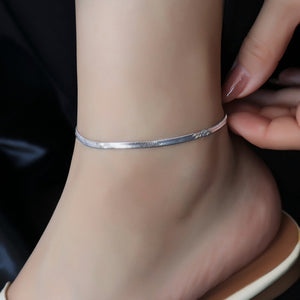
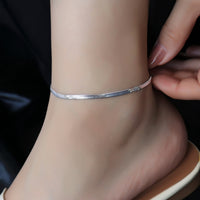
The piece they're describing → Silbernes Schlangen-Fußkettchen für Damen — 925er Sterlingsilber, Schlangenkette, verstellbar
Personalize Yours


