


The short answer
A second ear piercing is most commonly placed either as a second lobe piercing (stacked slightly above or below the first) or as a single cartilage piercing (helix, at the upper outer ear) -- lobe healing takes about 6-8 weeks minimum, cartilage takes several months to a year per general piercer guidance, so lobe is the lower-commitment second piercing if you're unsure. Pain for a second lobe piercing is generally similar to the first (brief, sharp, over in a second); cartilage tends to register as more uncomfortable because it's piercing denser tissue. Style multiple piercings by varying earring size rather than matching every piece -- a small stud in the new piercing and a slightly larger piece in the original lobe reads as a deliberate, curated look rather than a mismatch.
Getting a second ear piercing raises three practical questions before the styling question even comes up: where to place it, how much more it will hurt or take to heal than your first piercing, and how to keep it looking intentional once it's healed. This guide answers all three with real placement options, honest pain and healing comparisons, and a styling approach for wearing multiple piercings together.

Where to Place a Second Ear Piercing
The two most common second-piercing choices are a second lobe piercing (stacked above or below your first) and a single cartilage piercing, most often a helix -- both are considered classic starting points before adding a third or fourth piercing.
| Placement | Where It Sits | Typical Healing Time | Good For |
|---|---|---|---|
| Second Lobe | Directly above or below your original lobe piercing, on the soft fleshy part of the ear. | 6-8 weeks minimum per general piercer guidance, similar to a first lobe piercing. | Lowest-commitment second piercing; easiest to size and style with your existing earring. |
| Helix | Upper outer cartilage, near the top curve of the ear. | Several months to a year -- cartilage heals much slower than lobe tissue. | A classic, versatile cartilage placement that pairs with almost any lobe earring below it. |
| Tragus | The small flap of cartilage just in front of the ear canal. | Several months to a year, similar to other cartilage placements. | A subtle, close-to-face piercing that reads as understated rather than bold. |
| Conch | The larger, bowl-shaped cartilage in the middle-to-lower ear. | Several months to over a year -- one of the longer cartilage healing times. | More visible statement placement, usually chosen after a lobe and one cartilage piercing already exist. |
The "2/3 Rule" and Other Placement Guidance
The informal "2/3 rule" some piercers reference means leaving roughly two-thirds of the space between two piercings clear before adding a third close to them -- it's a spacing guideline for a curated look, not a strict industry standard, and a piercer will size actual placement to your individual ear anatomy at the appointment. For a second piercing specifically, the main decision isn't a rule but a tradeoff: a second lobe piercing heals faster and is easier to style symmetrically, while a cartilage piercing (helix, tragus) adds more visual interest but takes considerably longer to heal and is pierced through denser tissue.
Pain and Healing: What to Actually Expect
A second lobe piercing typically feels similar to your first -- a brief, sharp pinch during the piercing itself, mild tenderness for a few days, and full healing in roughly 6-8 weeks minimum per general piercer guidance (the Association of Professional Piercers publishes these ranges as minimums, not guarantees; individual healing varies). Cartilage placements like helix, tragus, or conch tend to register as more uncomfortable during piercing because cartilage is denser tissue than the lobe's soft flesh, and they take considerably longer to heal -- several months to a year is standard piercer guidance, not a sign something has gone wrong if it feels slow. Whichever placement you choose, get pierced by a professional piercer using a single-use needle (not a spring-loaded piercing gun, which can damage cartilage tissue), and don't change the initial jewelry before healing is complete.
Styling Multiple Ear Piercings Together
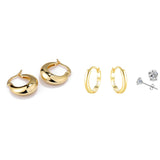
The most reliable way to style a second piercing with your first is to vary size rather than matching every earring -- a small stud or huggie in the newer piercing with a slightly larger stud, huggie, or hoop in your original lobe piercing reads as an intentional, curated ear rather than a random assortment. Keep metal tone consistent across both pieces (all-gold or all-silver) even if the styles differ, since mixed metals on the same ear read as less deliberate than mixed styles in one metal tone. A pre-matched stacking set removes the guesswork here, since the pieces are designed to be worn together in one metal tone from the start.
Choosing Jewelry for a New Second Piercing
For the initial healing period, choose a simple, flat-back or hinged-post stud in 925 sterling silver or implant-grade material -- avoid heavy dangles or hoops in a fresh piercing, since extra weight and movement slow healing and increase irritation risk. Once healed (per the timelines above), a second lobe piercing can wear the same range of studs, huggies, or small hoops as your first; a cartilage piercing typically stays in a small stud or hoop long-term since larger pieces don't sit as comfortably against denser tissue.
Shop This Guide
A 3-piece earring stack -- hoop, huggie, and CZ stud -- in one consistent 18K gold-plated tone, designed to be worn together across multiple piercings without guessing at matching. 925 sterling silver base, hypoallergenic and gift-ready.
Shop the Earring Stack SetFrequently Asked Questions
How painful is a second ear piercing?
A second lobe piercing feels similar to a first -- a brief, sharp pinch over in a second. Cartilage placements (helix, tragus, conch) tend to feel more uncomfortable because they go through denser tissue, though the piercing itself is still quick.
Is a second ear piercing classy?
Yes -- a single, well-placed second piercing styled with simple, well-fitted earrings reads as intentional and is standard, professional-appropriate styling in most settings today. Perception issues around "too many" piercings are almost always about styling and upkeep, not the piercing count itself.
What's the 2/3 rule for ear piercings?
It's an informal spacing guideline some piercers use -- leaving roughly two-thirds of the space between two existing piercings clear before adding a new one close to them -- rather than a strict industry standard. A piercer sizes actual placement to your individual ear at the appointment.
How long does it take for a second ear piercing to heal?
A second lobe piercing takes about 6-8 weeks minimum per general piercer guidance, similar to a first lobe piercing. Cartilage placements like helix or tragus take considerably longer -- several months to a year -- because cartilage heals more slowly than lobe tissue.
Where should a second ear piercing be placed?
The two most common choices are a second lobe piercing (stacked above or below your first) or a single cartilage piercing such as a helix. A second lobe is the faster-healing, lower-commitment option; cartilage adds more visual variety but takes longer to heal.
What are creative ideas for a second piercing?
Beyond a straight second lobe, options include an angled second lobe piercing for a stacked look, a helix for classic cartilage placement, or a tragus for a subtler statement close to the face -- all of which pair with a simple stud or small hoop in the original lobe.
What are the ear piercing trends for 2026?
A curated, varied-size ear -- mixing small studs, huggies, and hoops across multiple piercings in one consistent metal tone -- remains the dominant styling approach, rather than matching identical earrings in every piercing.
Can you get a second piercing with a piercing gun?
A single-use needle from a professional piercer is the standard recommendation over a spring-loaded piercing gun, especially for cartilage, since a gun can cause more tissue trauma and is harder to sterilize fully between uses.
Alle Marken, Markennamen und Produktnamen Dritter sind Eigentum ihrer jeweiligen Inhaber. AJLuxe steht in keiner Verbindung zu den in diesem Artikel genannten Marken Dritter und wird von diesen weder unterstützt noch gesponsert. Markennamen werden ausschließlich zur sachlichen vergleichenden Bezugnahme verwendet; Materialangaben entsprechen den eigenen veröffentlichten Produktangaben der jeweiligen Marke zum Zeitpunkt der Erstellung.
You Might Also Like
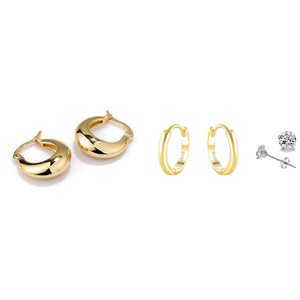

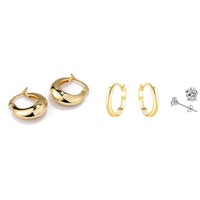
The piece they're describing → Earring Stack Set for Women — 3-Piece Ear Stack, Hoop, Huggie & CZ Stud, 18K Gold Plated
Personalize Yours


