


- "Ring with an initial" and "signet ring" describe the same style — a flat-top band built to carry one letter.
- Letters are added two ways: cast directly into the ring (fixed font, sturdier) or engraved into a blank afterward (custom font, but harder to resize later).
- Real market prices range widely — from roughly $79 in sterling silver up to $490+ in 14K gold, depending on metal and brand.
- There's no strict rule for which hand or finger — the traditional signet-ring placement is the right pinky, but most people today wear one wherever it fits and feels right.
- Because the letter is part of the design (cast or engraved), an initial ring is generally harder and more expensive to resize than a plain band — get your sizing right up front.
- AJLuxe's own initial personalization line is currently necklaces, not rings — details on that below if you want the same personal touch in a different form.
Searching "ring with a initial" usually means one of two things: you've seen the style somewhere — a flat-top band with a single letter, sometimes called a signet ring — and want to know more before you buy, or you already know you want one and are trying to figure out what to look for. This guide covers both: what the style is actually called, how the letter gets onto the ring, real sizing considerations specific to lettered rings, what it typically costs, and where AJLuxe's own personalized-initial pieces fit into that picture.
What Is a Ring With an Initial Called?
A ring built to display a single letter is most commonly called an initial ring, and when it has the traditional flat, wide top associated with the style, it's called a signet ring. Signet rings have carried initials, monograms, or family crests for centuries, originally so the flat face could be pressed into wax to seal a letter or document — a functional origin that's why the style still reads as a flat-top band rather than a rounded one, even on pieces made purely for everyday wear today. "Monogram ring" is used somewhat interchangeably for pieces carrying two or three letters rather than one. All three terms point at the same core idea: a ring where a letter is the visual focus, not an accent.
Initial Ring Styles You'll Actually Find
Most initial rings on the market today fall into a handful of recognizable styles, and knowing the difference helps you search (and shop) more precisely than "ring with a initial" alone:
- Classic signet. A flat, often oval or shield-shaped top with a single engraved or cast letter, usually in a block or serif font. This is the style most people picture first.
- Script/cursive initial. A single letter rendered in a flowing script font, often as a small raised charm on a thin band rather than a wide flat top — softer and more delicate-looking than a traditional signet.
- Stacking initial bands. Thin individual bands, each with one letter, meant to be worn together to spell a name or word across multiple fingers or stacked on one. James Avery's script initial ring, for example, is explicitly designed this way — it's sold as a single letter but built to "stack with others to form monograms."
- Two-letter or couple's initial rings. A single band carrying two letters side by side, a popular choice for couples or as a subtle nod to two names.
How Do You Get an Initial Put on a Ring?
An initial gets onto a ring one of two ways: cast directly into the metal as part of the ring's original mold, or engraved into a blank, flat-top ring afterward. Casting bakes the letter into the piece from the start — it's usually a fixed set of font choices offered by whoever makes the ring, but the letter is structurally part of the metal, not a surface mark, which tends to hold up better over decades of wear. Engraving takes an existing flat-top ring and cuts the letter into the surface — by hand, laser, or rotary machine — which opens up more font and placement flexibility since it's applied after the fact, but it's a surface-level mark that can wear shallower over many years of contact and friction, the same way any engraved jewelry does. Neither method is "better" outright; it's a genuine trade-off between font flexibility (engraving) and built-in durability (casting).
Which Hand and Finger Do You Wear an Initial Ring On?
There's no rule that governs where you wear an initial ring today, but the tradition it comes from is specific: signet rings were historically worn on the right hand's pinky finger, positioned so the flat, engraved face could be pressed into wax without needing to remove the ring. That placement stuck around as a style convention even after the practical wax-sealing reason disappeared, and you'll still see it referenced as the "traditional" way to wear one. In practice, most people now wear an initial ring on whichever finger fits comfortably and suits how they're styling it — a middle or index finger works just as well, and if you're wearing it alongside other rings, the pinky is often the practical choice simply because it's easiest to keep a wider, flat-top piece from crowding a stack.
What Does Wearing an Initial Ring Mean?
An initial ring doesn't carry one fixed meaning — it reads differently depending on context, and that flexibility is part of why the style has stayed popular. Historically, a signet ring's letter or crest was a mark of identity and authority, used to seal and authenticate documents. Today it's worn far more personally: your own initial as a form of self-expression, a loved one's initial as a sentimental keepsake (a common gift for partners, parents, or children), or a shared initial between a couple. Unlike a wedding band or a class ring, there's no widely recognized single meaning attached to modern initial rings — it's closer to initial jewelry generally, where the letter is a personal touch rather than a coded signal others are expected to read.
Initial Ring Sizing — What's Different From a Plain Band
Getting your size right matters more with an initial ring than with a plain band, because resizing a ring that carries an engraved or cast letter is harder and often more expensive than resizing a blank one. Standard ring sizing still applies — most retailers offer sizes roughly 3 to 11 for women's styles and similar ranges for men's and unisex pieces — but a jeweler stretching or shrinking a sized band has to work around the lettering itself, and depending on how the letter was applied, resizing can distort an engraved design or isn't offered at all on certain cast styles. If you're between sizes or unsure, sizing down is usually the safer call for a signet-style ring, since a flat top that's slightly loose is more noticeable (and more likely to spin out of position) than one that's slightly snug. When a size guarantee or free-resize policy is available, it's worth prioritizing that over a marginally lower price — it's the detail most likely to matter after the ring arrives.

What Does an Initial Ring Cost?
Real prices for initial rings vary widely by metal, and it's worth comparing before assuming a lower price means a lower-quality piece. James Avery's script initial ring, for example, ranges from $79 in sterling silver up to $490 in 14K yellow gold, with the exact price depending on metal and ring size. BaubleBar's custom initial ring runs $158 and is made from 14K gold plated sterling silver, with an optional version that adds pavé cubic zirconia stones. That spread — sterling silver at the low end, solid 14K gold at the high end, gold-plated sterling silver in between — is a reasonable way to estimate what you'd expect to pay for a comparable style elsewhere, and it's the same metal hierarchy that applies to most fine jewelry, not something specific to initial rings.
Initial Ring or Initial Necklace — Which Should You Choose?
The honest answer: neither is objectively better, and the right one comes down to how you want to wear a personal detail day to day. A ring sits at eye level with your hands, gets seen constantly in small everyday gestures, but comes off for anything involving water, lotion, or heavy hand use if you're protective of the plating or lettering. A necklace sits closer to your face, layers easily with other pieces, and generally sees less friction and impact over a normal day than something worn on your hand. If you already wear rings daily and rarely take them off, a ring makes sense; if you tend to swap jewelry based on outfit or layer necklaces, an initial pendant is usually the lower-maintenance choice.
Worth being upfront about: AJLuxe doesn't currently carry a single-letter initial ring — our initial personalization line is built as necklaces, not rings, at least for now. If the initial-ring look is what brought you here but you're open to the same personal touch in pendant form, the Initial Tag Necklace ($24.99, 18K gold plated) delivers that same single-letter, personalized feel. And if it's a ring specifically you're after, browse AJLuxe's full rings collection — including stacking bands and statement pieces that pair well if you add an initial ring to your collection from elsewhere down the line.
Frequently Asked Questions
What is a ring with an initial called?
Most commonly an initial ring, or a signet ring if it has the traditional flat, wide top the style is known for. "Monogram ring" is also used, typically for pieces with two or more letters rather than one.
What does wearing an initial ring mean?
It doesn't have one fixed meaning today. Historically a signet ring's letter or crest signified identity and authority; now it's worn more personally — your own initial, a loved one's, or a shared one with a partner — as a form of sentimental self-expression rather than a coded signal.
How do you get an initial put on a ring?
Two ways: cast directly into the metal as part of the original design, which is durable but limited to the maker's available fonts, or engraved into a blank flat-top ring afterward, which allows more font flexibility but is a surface-level mark that can wear shallower over decades.
Which hand do you wear an initial ring on?
There's no modern rule — most people wear one on whichever finger fits and suits their style. The traditional placement, inherited from signet rings used to seal wax, is the right hand's pinky finger, and you'll still see that referenced as the "classic" way to wear one.
Does Pandora sell initial rings?
Pandora's initial personalization is built around a dedicated initial necklace line, not a dedicated initial-ring category — its ring assortment leans toward its Moments and promise ring collections instead. If you're specifically comparing initial ring options, brands like James Avery and BaubleBar carry dedicated signet-style initial rings; AJLuxe's own initial personalization line is also currently in necklace form.
How much does an initial ring cost?
Real market prices span roughly $79 to $490+ depending on metal — sterling silver at the lower end, gold-plated sterling silver in the middle (around $150-160), and solid 14K gold at the top. Cast letters and engraved letters don't consistently differ in price on their own; metal is the bigger cost driver.
You Might Also Like

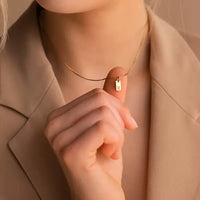
The piece they're describing → Anfangsbuchstaben-Halskette – 18K vergoldet, personalisierbar
Personalize Yours


