


Reddit's r/piercing thread on this exact question — "brands for EXTREMELY hypoallergenic earrings" — gets asked constantly because the honest answer has two different parts depending on timing: what's safe to put in a fresh wound, and what's safe to wear every day after that. Most "hypoallergenic earrings" guides blur the two together. This one doesn't.
Here's the distinction, the material science behind it, and where sterling silver studs — including ours — genuinely fit and where they don't.
Fresh Piercing vs. Healed Piercing: Different Rules Apply
A fresh piercing needs implant-grade material because it's an open wound for the first several weeks, not just a cosmetic choice. The Association of Professional Piercers (APP) recommends ASTM F136 implant-grade titanium, ASTM F1537 implant-grade stainless steel, niobium, or solid 14K/18K+ gold for initial jewelry — materials proven biocompatible with healing tissue and resistant to the corrosion that can happen when metal sits inside broken skin for weeks.
Once a piercing is fully healed (roughly 6–8 weeks for earlobes, several months for cartilage), the skin around it behaves like any other skin contact point — the main thing that matters is avoiding nickel, which is what actually causes most metal allergies. That's where genuinely hypoallergenic sterling silver and gold-plated jewelry earns its place: not as first jewelry in an open piercing, but as the everyday, long-term option once healing is done.
What's the Most Hypoallergenic Material for Earrings?
Implant-grade titanium is the single most hypoallergenic material for earrings, followed closely by niobium and solid 14K+ gold — all three are essentially inert and contain no nickel. Nickel allergy affects an estimated 1 in 5 women in the U.S. according to American Academy of Dermatology data, which is why "hypoallergenic" in jewelry almost always translates to "nickel-free" in practice, not a marketing buzzword with no real definition.
| Material | Best for | Nickel-free? | Notes |
|---|---|---|---|
| Implant-grade titanium (ASTM F136) | Fresh piercings + sensitive ears | Yes | APP's top recommendation for initial jewelry |
| Niobium | Fresh piercings + sensitive ears | Yes | Similar biocompatibility to titanium, fewer color/finish options |
| Solid 14K–18K gold | Fresh piercings + everyday wear | Yes (at 14K+) | Genuinely biocompatible, priced well above costume jewelry |
| 925 sterling silver | Healed piercings + daily wear | Yes, when genuinely 925-marked | Not APP-recommended for a fresh piercing; fine once healed |
| Gold-plated / fashion alloy | Neither, if base metal is unknown | Often no | Plating wears through to a base metal that may contain nickel |
Are Hypoallergenic Earrings Good for New Piercings?
"Hypoallergenic" alone isn't a strong enough claim for a new piercing — the jewelry also needs to meet an implant-grade material standard, since a healing piercing is an open wound, not just skin contact. A stud can be nickel-free and still be a poor choice for day one if it isn't titanium, niobium, or solid 14K+ gold specifically, because non-implant-grade metals (including standard sterling silver) can tarnish or react with the fluids present during healing. This is the single most common gap in "hypoallergenic earring" marketing — plenty of nickel-free products exist that were never designed or tested for fresh-piercing use.
The Best Hypoallergenic Earrings for Piercings, By Stage
The best hypoallergenic earring depends on whether the piercing is fresh or healed — pick implant-grade titanium or niobium for the first 6–8+ weeks, then almost anything genuinely nickel-free works for daily wear afterward.
- Day 1 (fresh piercing): implant-grade titanium (ASTM F136) or niobium flat-back studs from a specialty piercing brand — this is a decision worth making with your piercer, not from a general jewelry guide.
- Once healed (6–8 weeks+): genuinely 925-hallmarked sterling silver or solid gold — a lightweight, secure, nickel-free stud that you can wear every day without worrying about tarnish irritating the piercing.
- Sleeping / low-profile everyday wear: a small, secure stud with a snug push-back post rather than anything with dangling parts that can catch on bedding or pillows.
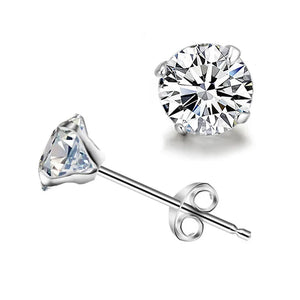
Our own CZ stud earrings are a genuinely nickel-free, 925 sterling silver option built for that second stage — a brilliant-cut cubic zirconia prong-set on a solid sterling silver post, finished in bright rhodium plating, not a costume-jewelry alloy with a thin coating. They're a solid everyday pick once a piercing has healed; if you're shopping for the first earring in a brand-new piercing, talk to your piercer about implant-grade titanium or niobium instead — that's a safety call, not a style preference.

Everyday Studs for Healed, Sensitive Ears
925 sterling silver, prong-set cubic zirconia, rhodium finish — $22.99. Best for healed piercings and daily wear, not as a first earring in a fresh piercing.
Shop CZ Stud Earrings →How to Check If Earrings Are Actually Hypoallergenic
Look for a stamped "925" hallmark on sterling silver posts and an explicit "nickel-free" claim from the seller — a plain "hypoallergenic" label with no material specified isn't enough to verify on its own. Genuine sterling silver is stamped directly into the metal (not printed on a tag), gold-filled or gold-plated pieces should specify the base metal underneath the plating, and any brand claiming implant-grade titanium should be able to cite the ASTM F136 standard by name. If a listing can't answer "what's the post actually made of," treat "hypoallergenic" as a marketing word rather than a verified fact.
Frequently Asked Questions
Straight answers to the questions people actually ask about hypoallergenic earrings for piercings.
What are the best hypoallergenic earrings for piercings?
For a fresh piercing, implant-grade titanium (ASTM F136) or niobium studs from a specialty piercing brand are the safest choice. For a healed piercing, genuinely 925-hallmarked sterling silver or solid gold studs are a reliable, nickel-free everyday option.
Are hypoallergenic earrings good for new piercings?
Being nickel-free isn't enough on its own for a brand-new piercing — the jewelry also needs to meet an implant-grade standard (titanium, niobium, or solid 14K+ gold) recommended by professional piercers, since standard sterling silver and gold-plated pieces aren't designed for wear inside an open, healing wound.
What's the most hypoallergenic material for earrings?
Implant-grade titanium is generally considered the most hypoallergenic material, with niobium and solid 14K+ gold close behind — all three are nickel-free and essentially inert against skin. Genuine 925 sterling silver is also nickel-free and a good hypoallergenic choice once a piercing has healed.
What are the best hypoallergenic earrings?
The best hypoallergenic earrings are ones with a verified nickel-free base metal — implant-grade titanium or niobium for fresh piercings, and genuinely hallmarked sterling silver or solid gold for everyday wear once healed. A "hypoallergenic" label alone, without a stated material, isn't something to take at face value.
Final Thoughts
"Hypoallergenic earrings for piercing" really breaks down into two separate questions — what belongs in a fresh, healing piercing, and what's safe and comfortable for the years of daily wear after that. Implant-grade titanium and niobium own the first answer; genuinely nickel-free sterling silver and gold own the second. Knowing which stage you're shopping for is the difference between a safe choice and an uncomfortable one.
Alle Marken, Markennamen und Produktnamen Dritter sind Eigentum ihrer jeweiligen Inhaber. AJLuxe steht in keiner Verbindung zu den in diesem Artikel genannten Marken Dritter und wird von diesen weder unterstützt noch gesponsert. Markennamen werden ausschließlich zur sachlichen vergleichenden Bezugnahme verwendet; Materialangaben entsprechen den eigenen veröffentlichten Produktangaben der jeweiligen Marke zum Zeitpunkt der Erstellung.
You Might Also Like
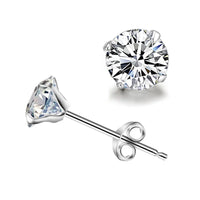
The piece they're describing → CZ Ohrstecker für Damen — 925 Sterling Silber, Zirkonia, Hypoallergen
Personalize Yours


