


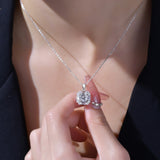
- A 1-carat natural diamond pendant typically retails from roughly $2,000 to $8,000+, depending on cut, color, clarity and the metal setting.
- Real diamonds can be identified with a fog test, a UV blacklight check, a jeweler's loupe inspection, or (most reliably) a GIA or AGS grading certificate.
- A diamond pendant is generally "worth it" if you want a permanent, appraisable, resalable piece — not if you mainly want the sparkle for everyday or occasional wear.
- Cubic zirconia (CZ) is the most common diamond simulant — it looks similar to the eye but is chemically different, softer, and far less expensive.
- AJLuxe does not sell mined or lab-grown diamonds — its pieces use CZ stones set in 925 sterling silver with 18K gold plating, priced $24.99–$79.99, as an honest diamond-look alternative.
Searching "diamond pendant" usually means one of two very different things: a genuine diamond investment piece, or a diamond-look pendant to wear without the price tag. This guide covers both honestly — what real diamond pendants actually cost, how to verify a stone is genuine, whether the purchase is worth it, and where a cubic zirconia alternative makes more sense than the real thing.
How Much Is a 1 Carat Diamond Pendant Worth?
A 1-carat natural diamond pendant typically retails from roughly $2,000 to $8,000 or more, because a diamond's price is driven by its cut, color, clarity and carat weight (the "4Cs") rather than carat weight alone. Two 1-carat stones can differ in price by thousands of dollars depending on how well they're cut and how clean and colorless they are. The metal setting adds to the total too — platinum and 18K gold settings cost more than a comparable 14K gold or sterling silver mount. Lab-grown diamonds of the same carat weight and grade generally sell for a fraction of natural diamond prices, which is why more buyers are considering them for pendants specifically.
How Much Does a Real Diamond Pendant Cost Overall?
A real diamond pendant can cost anywhere from a couple hundred dollars for a small accent-stone design to well over $10,000 for a large, high-grade center stone, so the honest answer is "it depends entirely on carat weight and grade." Smaller stones (under 0.25 carat) set as pendant accents are the most affordable entry point into genuine diamond jewelry. As carat weight climbs past 1 carat, price increases faster than weight alone would suggest, because larger clean, well-cut stones are rarer. Setting metal, brand markup, and certification (a graded stone with paperwork costs more than an ungraded one) all affect the final price too.
How Can You Tell If Diamonds Are Real in a Pendant?
The most reliable way to tell if a diamond is real is to have it examined by a jeweler with a loupe or microscope, or to check for an independent grading certificate — at-home tests can suggest a stone is fake but can't prove it's real. Common at-home checks include: breathing on the stone (a real diamond disperses heat too fast for fog to linger, while simulants stay fogged for a few seconds); holding it under a bright light (diamonds refract light in sharp, mixed flashes rather than one rainbow-colored flash); and checking if it's dense enough to sink quickly in water. None of these are conclusive on their own. The only definitive method is professional verification — an independent appraisal or a certificate from a recognized grading lab.
Are Diamond Pendants Worth It?
Diamond pendants are worth it if you want a durable, appraisable, potentially resalable piece and you're buying from a reputable source with grading documentation — they're a weaker choice if your main goal is simply wearing something that sparkles like a diamond day-to-day. A genuine diamond holds long-term value far better than most jewelry, is extremely hard-wearing (diamond is the hardest natural material, a 10 on the Mohs scale), and can be passed down or resold. On the other hand, diamonds carry a steep premium for that permanence and rarity, and most of that premium isn't recoverable if you resell — jewelry generally sells below retail on the secondary market. For special, symbolic, or investment-minded purchases, real diamonds make sense. For everyday styling, gifting, or trying a look before committing to it, a CZ diamond-style pendant delivers the same visual effect for a fraction of the outlay.
What to Look for When Buying a Diamond Pendant: The 4Cs
The 4Cs — cut, color, clarity and carat — are the industry-standard framework for judging any diamond, and cut has the biggest visible impact on sparkle. A well-cut stone reflects light evenly and looks brighter than a larger but poorly cut one.
| Factor | What it measures | Why it matters |
|---|---|---|
| Cut | How well the stone's facets are proportioned and polished | Determines brilliance and sparkle more than any other factor |
| Color | How colorless the stone is, graded D (colorless) to Z (visible tint) | Near-colorless stones look whiter and more valuable |
| Clarity | Presence of internal or external flaws (inclusions/blemishes) | Fewer visible flaws generally means a higher price |
| Carat | The stone's weight (1 carat = 0.2 grams) | Larger stones cost more per carat, not just proportionally more |
Ask any seller of a natural or lab-grown diamond pendant for independent grading documentation rather than relying on an in-house certificate alone.
Real Diamond vs. CZ Diamond-Style Pendant: How They Compare
A real diamond and a cubic zirconia diamond-style stone can look nearly identical to the naked eye, but they differ completely in material, cost, and durability. The table below lays out the honest trade-offs.

| Natural / Lab-Grown Diamond | CZ Diamond-Style Stone | |
|---|---|---|
| Material | Genuine mined or lab-grown diamond | Cubic zirconia, a manufactured diamond simulant |
| Typical pendant price | Roughly $200–$10,000+ | Roughly $25–$80 |
| Hardness | 10 on the Mohs scale (hardest natural material) | Around 8–8.5 — durable, but softer than diamond |
| Resale value | Retains meaningful value, especially certified stones | Minimal resale value; priced for wear, not investment |
| Best for | Milestone gifts, engagement pieces, long-term investment | Everyday wear, gifting, trying the diamond look affordably |
| Example | Certified jeweler or diamond retailer | AJLuxe Round Brilliant Cut CZ Necklace — 925 sterling silver, $39.99 |
Which Diamond Pendant Is Right for You?
Buy a certified real diamond pendant if permanence, resale value, and long-term investment matter to you and your budget allows for a few hundred dollars or more; choose a CZ diamond-style pendant if you want the same brilliant-cut look for daily wear, layering, or gifting without the four-figure commitment. AJLuxe doesn't carry mined or lab-grown diamonds, and we won't pretend otherwise — what we do carry is honestly labeled CZ diamond-style jewelry in 925 sterling silver with 18K gold plating options, hypoallergenic and gift-boxed as standard. The Round Brilliant Cut CZ Necklace ($39.99) is the closest match to a classic solitaire diamond pendant, cut in the same round-brilliant style that maximizes sparkle. If you'd rather have a birthstone-toned diamond-style pendant, the April Birthstone Diamond CZ Infinity Necklace ($59.99) and Zircon Birthstone Necklace ($27.99) are also in stock, and the Crystal Teardrop CZ Pendant ($34.99) offers a softer drop silhouette instead of a round stone. Whichever route fits your budget, buy from a seller who tells you plainly which one you're getting.
For an independent primer on how diamonds are graded, see the Gemological Institute of America: https://www.gia.edu.
Frequently Asked Questions
How much is a 1 carat diamond pendant worth?
A 1-carat natural diamond pendant typically retails from roughly $2,000 to $8,000 or more, depending on the stone's cut, color, clarity and the metal setting it's mounted in — lab-grown 1-carat diamonds generally cost significantly less than natural ones of comparable grade.
How to tell if diamonds are real in a pendant?
The most reliable way is professional verification — a jeweler's loupe inspection or an independent grading certificate — since at-home tests like the fog test or light-refraction check can only suggest a stone might be fake, not prove it's real.
Are diamond pendants worth it?
Real diamond pendants are worth it if you value permanence, appraisability, and resale potential and are buying from a reputable, certified source; if you mainly want the sparkle for everyday wear, a CZ diamond-style pendant delivers a similar look for a fraction of the price.
How much is a real diamond pendant?
A real diamond pendant can range from a couple hundred dollars for a small accent stone to well over $10,000 for a large, high-grade center stone, with price driven mainly by carat weight, cut quality, color and clarity rather than any one factor alone.
What's the difference between a diamond pendant and a CZ diamond-style pendant?
A diamond pendant is set with a genuine mined or lab-grown diamond, while a CZ diamond-style pendant uses cubic zirconia, a manufactured stone that looks similar to the eye but differs in hardness, composition and long-term value.
Does AJLuxe sell real diamond pendants?
No — AJLuxe sells CZ diamond-style pendants in 925 sterling silver with 18K gold plating options, priced $24.99–$79.99, and is upfront that these use cubic zirconia rather than mined or lab-grown diamonds.
Alle Marken, Markennamen und Produktnamen Dritter sind Eigentum ihrer jeweiligen Inhaber. AJLuxe steht in keiner Verbindung zu den in diesem Artikel genannten Marken Dritter und wird von diesen weder unterstützt noch gesponsert. Markennamen werden ausschließlich zur sachlichen vergleichenden Bezugnahme verwendet; Materialangaben entsprechen den eigenen veröffentlichten Produktangaben der jeweiligen Marke zum Zeitpunkt der Erstellung.
You Might Also Like
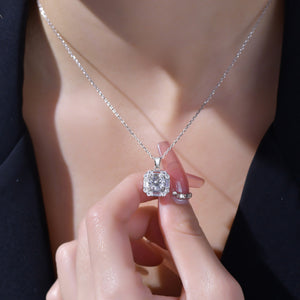
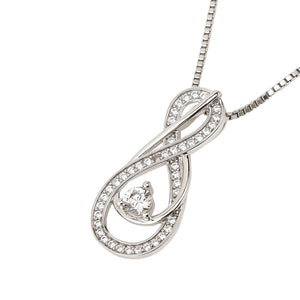
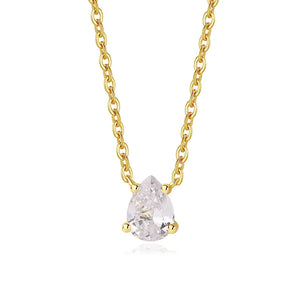
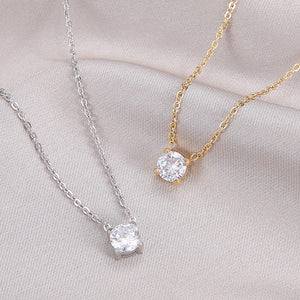
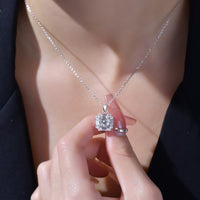
The piece they're describing → Halskette mit Zirkonia im Brillantschliff für Damen — 925er Sterlingsilber, diamantförmiger Anhänger
Personalize Yours


