

- "Blue sapphire necklace" covers three different stone types: natural mined sapphire, lab-created sapphire, and simulants like blue CZ — the label alone doesn't tell you which one you're buying.
- Genuine natural sapphire is a fine-jewelry-tier gemstone; expect fine-jewelry-tier pricing, not $30-$60.
- Sapphire is September's birthstone and is traditionally associated with wisdom, loyalty, and protection.
- Real sapphire is rated 9 on the Mohs hardness scale, second only to diamond, per the Gemological Institute of America (GIA).
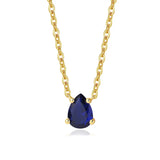
- AJLuxe's sapphire-blue pieces use a created/simulated stone set in solid 925 sterling silver with 18K gold-plating options — hypoallergenic and gift-boxed, from $34.99.
- If you want a genuine mined sapphire, a jeweler-graded certificate is the only reliable way to confirm it.
Type "blue sapphire necklace" into a search bar and you'll get results ranging from $35 pendants to $3,500 estate pieces, which is confusing until you realize they're not describing the same product. The word "sapphire" gets used loosely across jewelry marketing to mean anything from a mined gemstone to a blue-tinted piece of cubic zirconia. Here's how to tell the difference, what each option actually costs, and where an affordable, honestly-labeled sapphire-blue necklace fits into that picture.
What Is a Blue Sapphire Necklace, Exactly?
A blue sapphire necklace is defined by its center stone's color and cut, not by whether that stone is mined from the earth. Sapphire is a variety of the mineral corundum, and blue is its most famous and most searched-for color — but jewelry brands routinely use "sapphire" or "sapphire blue" as a color descriptor on pieces set with lab-created stones or blue cubic zirconia, which is not misleading as long as the material is disclosed. The honest version of this necklace is one that tells you upfront which of the three it is.
Genuine Sapphire vs. Created Sapphire-Blue Stone: What's the Difference?
The core difference is origin: natural sapphire formed in the earth over millions of years, lab-created sapphire has the same chemical and optical properties but is grown in a lab in weeks, and a simulant like blue cubic zirconia only mimics the color and sparkle without sharing sapphire's mineral structure. All three can look convincingly blue in a photo; only a jeweler's loupe, a certificate, or a lab report reliably tells them apart.

| Stone Type | What It Is | Typical Price Range | Best For |
|---|---|---|---|
| Natural mined sapphire | Genuine corundum gemstone, earth-formed | Fine-jewelry pricing; climbs quickly with carat weight and clarity | Heirloom pieces, investment jewelry |
| Lab-created sapphire | Same mineral, grown in a controlled lab environment | Mid-range; well below natural stone pricing | Buyers who want a real sapphire without fine-jewelry cost |
| Sapphire-blue simulant (e.g. blue CZ) | A different material colored/cut to resemble sapphire | $24.99–$79.99 in a 925 sterling silver setting | Everyday wear, gifting, birthstone styling |
Is Real Blue Sapphire Expensive?
Yes — real, natural blue sapphire is one of the more expensive colored gemstones you can buy, sitting alongside ruby and emerald in the traditional "big three" precious colored stones. Price is driven by the same factors as diamonds — color saturation, clarity, cut, and carat weight — and a deep, evenly-saturated "cornflower" or "royal" blue commands the highest prices because that exact hue is rare in nature.
How Much Does a Real Sapphire Necklace Cost?
A real sapphire necklace sits firmly in fine-jewelry territory, not costume-jewelry territory. Even a modest natural sapphire pendant in a precious-metal setting typically starts in the low hundreds of dollars, and prices climb steeply from there as carat size, clarity, and color quality increase — a large, high-clarity natural sapphire necklace can run into the thousands. If you see a "real sapphire" necklace priced under $50, that's a strong signal the stone is a simulant, not a mined gem, regardless of what the listing calls it.
What Does a Blue Sapphire Necklace Symbolize?
A blue sapphire necklace traditionally symbolizes wisdom, loyalty, and protection, and it's also the official birthstone for September. Historically, sapphire was associated with royalty and nobility — a reputation cemented by pieces like the British royal family's sapphire engagement ring — which is part of why the deep blue color remains one of the most requested gemstone shades in bridal and gift jewelry today.
How to Style a Blue Sapphire-Blue Necklace
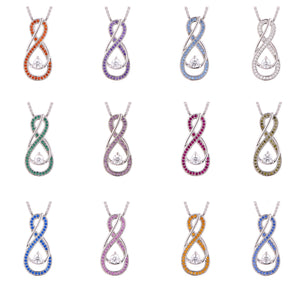
Style a blue sapphire-blue necklace by letting the stone's saturation do the work — pair it with a simple silver chain and minimal other jewelry so the blue stays the focal point. It reads richest against white, cream, navy, or black fabric, layers cleanly under a crewneck or blazer collar, and works equally for daytime (a small teardrop or infinity pendant) or evening (a bolder halo or cluster setting).
Which Blue Sapphire Necklace Should You Choose?
If you want the genuine mined gemstone, buy from a jeweler who provides a grading certificate and expect to pay fine-jewelry prices; if you want the sapphire-blue look for everyday wear or gifting without that price tag, a created-stone piece in solid 925 sterling silver is the honest, budget-friendly choice. Our Sapphire Pendant Necklace — Blue Sapphire Teardrop, 925 Sterling Silver ($34.99) is built exactly for that: a sapphire-blue teardrop stone set in solid sterling silver (not plated brass), so it's hypoallergenic and gift-boxed at no extra charge. If you're shopping specifically for a September birthstone gift, the September Birthstone Necklace — Sapphire Blue Infinity Pendant, 925 Sterling Silver ($59.99) pairs the same honest sterling-silver build with birthstone styling. Both ship with AJLuxe's standard hypoallergenic, gift-ready packaging, backed by the same catalogue that's served 40,000+ customers.
For readers who want to verify a stone's authenticity independently, the Gemological Institute of America (GIA) is the standard authority on sapphire grading and identification: https://www.gia.edu.
Frequently Asked Questions
Is real blue sapphire expensive?
Yes — natural blue sapphire is one of the more expensive colored gemstones, priced on the same factors as diamonds (color, clarity, cut, carat), with deep, evenly-saturated blue commanding the highest prices.
What does a blue sapphire symbolize?
Blue sapphire traditionally symbolizes wisdom, loyalty, and protection, and it's the official birthstone for September, historically linked to royalty and nobility.
How much does a real sapphire necklace cost?
A real sapphire necklace typically starts in the low hundreds of dollars for a modest natural stone and climbs into the thousands as carat weight, clarity, and color quality increase.
How can you tell if it's a real sapphire?
The only reliable way is a jeweler's loupe examination or a gemological lab certificate (such as one from GIA) — color alone can't confirm it, since lab-created stones and simulants are made to look identical to natural sapphire at a glance.
Is blue sapphire a birthstone?
Yes, blue sapphire is the official birthstone for September, one of the most requested gemstone colors for birthstone jewelry.
Can you wear a sapphire-blue necklace every day?
Yes, if it's set in solid 925 sterling silver rather than plated base metal — AJLuxe's sapphire-blue pieces are hypoallergenic and nickel-free, which is what makes daily wear comfortable for sensitive skin.
Alle Marken, Markennamen und Produktnamen Dritter sind Eigentum ihrer jeweiligen Inhaber. AJLuxe steht in keiner Verbindung zu den in diesem Artikel genannten Marken Dritter und wird von diesen weder unterstützt noch gesponsert. Markennamen werden ausschließlich zur sachlichen vergleichenden Bezugnahme verwendet; Materialangaben entsprechen den eigenen veröffentlichten Produktangaben der jeweiligen Marke zum Zeitpunkt der Erstellung.
You Might Also Like
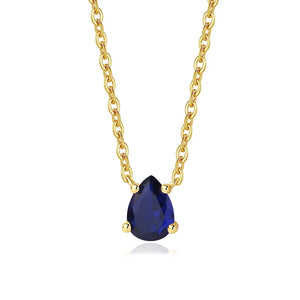
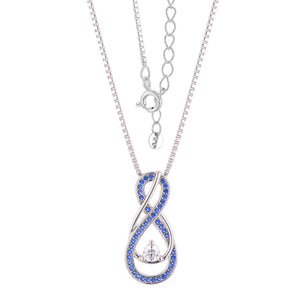
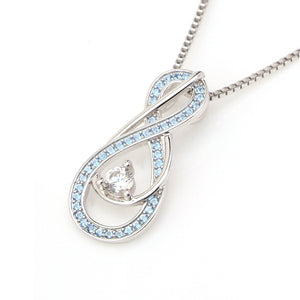

The piece they're describing → Saphir-Halskette für Damen — Blauer Saphir in Tropfenform, 925er Sterlingsilber
Personalize Yours


