


If you've started shopping for the best tennis bracelets, you've probably noticed the category splits into two very different worlds fast: $2,000+ diamond pieces from legacy jewelers, and $30–$150 CZ or moissanite versions that look nearly identical in photos. The gap between them isn't always about "fake vs. real" — it's about which combination of stone, setting, metal, and clasp actually holds up to daily wear, and whether you're buying an heirloom or a piece you'll wear every day without worrying about it. This guide walks through every buying decision that actually matters — stone type, setting style, metal, clasp safety, and sizing — before pointing you to the affordable-but-well-made options that skip the four-figure markup.
What Actually Makes a Tennis Bracelet "The Best"
A tennis bracelet is a single flexible row of stones, set in identical increments around a metal band, with no gaps between them — the same construction used in a tennis necklace, just scaled down to wrist length (see our full breakdown of what a tennis necklace is if you're comparing the two formats). The "tennis" name comes from a (probably apocryphal, but widely repeated) story about tennis player Chris Evert stopping a match in the 1970s to search for a diamond bracelet that had slipped off her wrist mid-game. That continuous-line design is exactly what makes tennis bracelets more fragile than most other bracelet styles: every stone sits in its own prong or channel, and if one setting fails, the whole line can gap open or the bracelet can come apart entirely.
Four factors decide whether a specific tennis bracelet is well-made, regardless of price point:
- Stone type and cut consistency — are the stones matched in size and cut, or does quality vary link to link?
- Setting style — prong, bezel, or channel, and how deep and secure each setting is.
- Metal and plating — solid metal vs. plated base, and whether the base metal is hypoallergenic.
- Clasp construction — box clasp with a safety catch, or a simpler lobster/spring-ring clasp that's more prone to failure under tension.
Diamond vs. CZ vs. Moissanite Tennis Bracelets
This is the comparison most tennis bracelet guides skip, because most of them are written by jewelers who only sell one stone type. Here's how the three most common options actually compare side by side:
| Stone | Typical Price (7" bracelet) | Hardness (Mohs) | Sparkle | Best For |
|---|---|---|---|---|
| Natural Diamond | $800–$10,000+ | 10 | Bright white fire, industry-standard brilliance | Investment pieces, heirlooms, resale value |
| Moissanite | $150–$1,200 | 9.25 | Higher refractive index than diamond — more rainbow flash | Diamond-level durability without the diamond price |
| Cubic Zirconia (CZ) | $25–$150 | 8–8.5 | Bright, glassy sparkle; slightly less fire than diamond/moissanite | Everyday wear, layering, trying the trend before committing |
The honest takeaway: moissanite is the closest thing to a "secret" in this category. It's harder than CZ, holds its shine longer, and most people — including most jewelers — can't tell it apart from a diamond in a casual glance. CZ is softer and can dull or scratch with years of daily wear, but at $25–$150 it's the lowest-risk way to wear the tennis bracelet look without worrying about loss or damage.

Setting Styles: Prong, Bezel & Channel Explained
The setting is arguably more important to a tennis bracelet's longevity than the stone itself, since it's what keeps each stone in place through thousands of small impacts a year.
- Prong setting — small metal claws (usually 4) hold each stone. This is the most common setting because it lets the most light hit the stone from the sides, maximizing sparkle. The tradeoff: prongs can catch on fabric and bend or wear down over years, which is the #1 reason stones eventually loosen.
- Bezel setting — a thin metal rim wraps fully around each stone. Much more secure and snag-resistant, but it blocks some light from entering the sides of the stone, so the bracelet reads slightly less sparkly overall.
- Channel setting — stones sit in a groove between two metal walls with no visible prongs. Very secure and smooth against skin, but individual stones are harder to replace if one is ever damaged.
If you're active — gym, kids, frequent hand-washing — a bezel or channel setting will hold up better day-to-day than a classic prong setting, even though prong is what you'll see most often at the luxury end of the category.
Metal Guide: Gold, White Gold, Platinum & Sterling Silver
Solid 14K or 18K gold and platinum are the traditional choices for diamond tennis bracelets because they're durable enough to hold prongs tightly for decades. For CZ and moissanite tennis bracelets, 925 sterling silver — plated in 18K gold or left in its natural rhodium-finished silver tone — is the standard, and it's a meaningfully better choice than base-metal alloys: sterling silver doesn't contain the nickel that causes most metal allergies, so it's the safer pick if you've ever had a reaction to costume jewelry. Gold-plated sterling silver gives you the warm-gold look at a fraction of the cost of solid gold, with the tradeoff that the plating will eventually thin with years of heavy, constant wear (typically 1–3 years depending on how often it's worn and whether it touches water, lotion, or perfume).
Clasp Safety: Why This Matters More Than People Think
This is one of the two things almost every tennis bracelet buying guide skips — and it's the actual reason tennis bracelets have a reputation for getting lost.
- Box clasp with a figure-8 safety — the gold standard. A box clasp locks shut, and a secondary figure-8 safety clasp hooks over the bracelet as a backup if the box ever pops open. Look for this on any bracelet you plan to wear daily.
- Lobster clasp — secure for necklaces, but on a bracelet a lobster clasp is under constant rotational stress from wrist movement, which is why it's a weaker choice for a piece you don't want to lose.
- Spring-ring clasp — the least secure of the three; fine for occasional-wear pieces, not ideal for a bracelet you'll wear daily for years.
If a listing doesn't specify the clasp type, that's worth asking about directly before buying — it tells you more about whether the bracelet was engineered for daily wear than the stone quality does.
Tennis Bracelet Sizing Chart: How to Measure Your Wrist
The second thing most guides skip: an actual sizing method. A tennis bracelet that's the wrong length either won't clasp comfortably or will constantly slide down and bunch at the back of your wrist — both of which increase the odds of it snagging and breaking a link.
| Wrist Measurement | Recommended Bracelet Length | Fit |
|---|---|---|
| 5.5"–6" | 6.5"–7" | Snug, classic tennis-bracelet fit |
| 6"–6.5" | 7"–7.5" | Comfortable everyday fit with slight give |
| 6.5"–7.5" | 7.5"–8" | Looser, layered look |
To measure: wrap a soft measuring tape (or a strip of paper, then measure the paper) snugly around your wrist bone, then add 0.5"–1" for how you like a bracelet to sit. Most tennis bracelets should sit with just enough slack to slide one finger underneath — tight enough not to spin constantly to the underside of your wrist, loose enough not to dig in.
Best Tennis Bracelets by Budget & Occasion
Rather than a generic "top 10" product list, here's how to think about which type of tennis bracelet actually fits different budgets and occasions:
| Budget/Occasion | Best Pick | Why |
|---|---|---|
| Under $50, everyday wear | CZ over 925 sterling silver | Hypoallergenic base, low financial risk if lost, still delivers the continuous-sparkle look |
| $150–$800, "diamond look" without diamond price | Moissanite on gold-plated silver or 14K gold | Diamond-level hardness (9.25 Mohs) and more fire than an actual diamond, at 10–20% of the cost |
| $2,000+, heirloom or investment | Natural diamond on 14K/18K gold or platinum, bezel or secure prong setting | Resale value, certification (GIA-graded stones), generational durability |
| Gift for a first tennis bracelet | CZ or moissanite, adjustable or standard 7" length with box clasp + safety | Lower stakes than gifting a diamond piece, still reads as a "real" tennis bracelet in photos and in person |

Want the tennis bracelet look without the four-figure price tag or the worry of wearing real diamonds daily? Shop our CZ Bangle Bracelet — a full channel of hand-set cubic zirconia stones on a 925 sterling silver base, available in gold or silver plating, built for the same continuous sparkle at everyday-wear pricing.
How to Tell If a Tennis Bracelet Is Real
"Real" can mean two different things here — whether the stones are genuine diamonds, or whether the piece is well-constructed — and it's worth separating them:
- Testing the stone: A jeweler can confirm a diamond with a thermal diamond tester in seconds (moissanite will sometimes register as diamond on older single-test devices, since it also conducts heat well — a combined thermal + electrical conductivity tester is needed to tell them apart). At home, a fog test (breathe on the stone) isn't reliable for telling diamond from moissanite or high-quality CZ — professional testing is the only accurate method.
- Checking the metal: Look for a hallmark stamp (925 for sterling silver, 14K/18K for gold) stamped near the clasp. No stamp at all is a red flag for a base-metal piece being sold as something else.
- Checking construction quality: Run a finger along the bracelet — stones should sit flush and even, with no visible gaps or wobble in any individual setting. Uneven stone sizes or crooked prongs are signs of poor manufacturing, regardless of what the stones are made of.
According to GIA's gem encyclopedia, professional gemological testing remains the only fully reliable way to distinguish diamond from its simulants, since visual and at-home tests can be misleading even for experienced buyers.
Tennis Bracelet vs. Tennis Necklace: Which to Buy First
If you're deciding between the two formats, the short answer is that a tennis bracelet is generally the easier first purchase — it uses fewer stones, so it's less expensive at any given stone type, and it's less exposed to everyday snagging than a necklace worn at the collarbone. For the full breakdown of cost, durability, and styling differences between the two, see our guide on tennis necklace vs. tennis bracelet. And if you're curious what the necklace version actually signals when worn as a gift or symbol, we cover that in what does a tennis necklace mean.
Layering & Styling a Tennis Bracelet
A single tennis bracelet worn alone reads as classic and understated. To build a stack, add 1–2 thinner chain bracelets in a matching metal tone, or a single bangle for contrast in texture. Avoid stacking two tennis-style bracelets of very different stone sizes on the same wrist — the mismatch reads as costume rather than intentional layering. For a deeper look at layering formulas that also apply to bracelets, our guide on how to style a tennis necklace covers the same principles for the neckline.
If you're weighing genuine diamond against a CZ tennis piece for the necklace format specifically, we've done that comparison in detail in CZ tennis necklace vs. diamond — the durability and cost math is nearly identical for bracelets.
Related reading: Diamond Pendant Buying Guide: Real Prices, How to Spot Fakes & CZ Alternatives (2026).
What Makes a Tennis Bracelet "Classic," and How to Judge Diamond Quality If You're Buying Genuine
A classic diamond tennis bracelet is a single line of uniform, round brilliant-cut diamonds set claw-to-claw in white metal (white gold or platinum), graded by the same four criteria jewelers use for any loose diamond — cut, color, clarity, and carat weight, known as the 4Cs. "Classic" specifically means round (not princess, oval, or emerald-cut) stones, a continuous prong-set line with no visible gaps, and a cool-toned metal — yellow gold and rose gold read as more of a modern or fashion take on the format, even though they've become common.
Because a tennis bracelet holds 15–30+ small stones instead of one large center stone, the 4Cs don't carry equal weight the way they do when you're grading a solitaire engagement ring:
| 4Cs Criteria | Why It Matters Here | What to Look For |
|---|---|---|
| Cut | The single biggest driver of visible sparkle across the whole line — more than color or clarity. | Very Good or Excellent cut grade; uneven cut quality link-to-link is a sign of a mixed, lower-quality batch. |
| Color | Small stones show color less obviously than a large solitaire, so you don't need to pay a premium for the top of the scale. | G–H color is the practical sweet spot — near-colorless to the eye at this size, at a meaningfully lower cost than D–F. |
| Clarity | Inclusions are harder to spot in small stones viewed from normal distance. | SI1–SI2 ("eye-clean") is standard for tennis bracelets; VVS/VS grades mostly add cost, not visible difference. |
| Carat | Listed as total carat weight (TCW) across all stones, not a single stone's weight. | Ask whether the quoted carat figure is TCW or per-stone — sellers sometimes blur this to make a bracelet sound larger than it is. |
Also ask for a matching certificate or grading report on the diamond quality used (not just an appraisal for insurance) — reputable sellers of genuine diamond tennis bracelets will disclose cut, color, and clarity ranges for the stone lot, not just a final price. Per the GIA's 4Cs education resource, cut is the factor most responsible for a diamond's brilliance, which is why it's worth prioritizing over color or clarity if you're working within a set budget.
If the certification, insurance, and four-figure-and-up cost of a genuine diamond version isn't what you're looking for, the moissanite and CZ comparison above walks through how closely those alternatives replicate the classic look on a hypoallergenic 925 sterling silver base.
Frequently Asked Questions
Which brand has the best tennis bracelet?
There's no single "best brand" — it depends on budget and priorities. Tiffany & Co. and other legacy jewelers lead for certified diamond pieces with resale value; independent and direct-to-consumer brands using moissanite or CZ over sterling silver lead for value and everyday-wear affordability without sacrificing the visual effect.
Is 14K or 18K gold better for a tennis bracelet?
18K gold is purer (75% gold) and has a richer, warmer tone, but it's also softer and slightly more prone to scratching. 14K gold (58.3% gold) is more durable for daily wear because the added alloy metals make it harder. For gold-plated pieces, 18K gold plating over sterling silver is standard because it gives the richest color while the sterling silver base provides the durability.
What is the best carat weight for a tennis bracelet?
3–5 total carats is the most popular range for diamond tennis bracelets — enough to read clearly from a distance without becoming impractical for daily wear. For CZ or moissanite versions, stone size is usually described in millimeters (2mm–4mm per stone is standard) rather than carat weight.
How do I know what size tennis bracelet to buy?
Measure your wrist snugly with a soft tape or paper strip, then add 0.5"–1" depending on how loose you like a bracelet to sit. Most adults fall in the 6.5"–7.5" finished-length range — see the sizing chart above for a full breakdown by wrist measurement.
Is a tennis bracelet clasp safe for everyday wear?
Only if it's the right type. A box clasp with a figure-8 safety catch is the most secure option for daily wear. Simple lobster or spring-ring clasps are more likely to fail under the repeated rotational stress a bracelet experiences on the wrist, so they're better suited to occasional-wear pieces.
How do I clean a tennis bracelet at home?
Soak in warm water with a few drops of mild dish soap for 10–15 minutes, gently scrub with a soft-bristled brush (an old toothbrush works), rinse, and pat dry with a soft cloth. Avoid ultrasonic cleaners on CZ or moissanite pieces with glued or delicate settings, and never use household cleaners containing chlorine or ammonia on plated metal.
What's the difference between a diamond and a CZ or moissanite tennis bracelet?
Diamond is the hardest natural material (10 on the Mohs scale) and holds long-term resale value; moissanite is nearly as hard (9.25) with more fire than diamond, at a fraction of the price; CZ is softer (8–8.5) and can dull with years of wear, but is the most affordable way to get the look. Visually, moissanite is very difficult to distinguish from diamond without professional testing.
Should I buy a fixed-size or adjustable tennis bracelet?
An adjustable clasp or extender chain is worth prioritizing if you're buying online without trying it on first, since wrist size can vary by 0.5" or more from typical size charts. A properly fitted fixed-size bracelet looks slightly cleaner, but only if you're confident in the sizing.
How can I tell if the stones in a tennis bracelet are loose?
Gently run a fingernail along the top of each stone — a loose stone will wiggle or click. Also hold the bracelet up to light and check that every stone sits flush and level; a stone sitting higher or at an angle compared to its neighbors is a sign the prongs have loosened.
Where is the best place to buy a tennis bracelet?
For certified diamond pieces, buy from a jeweler who provides grading documentation (GIA or equivalent) for the stones. For CZ or moissanite versions, prioritize sellers who specify the metal purity (925 sterling silver, not just "silver-tone"), the clasp type, and offer a return window — these details matter more to long-term wearability than the marketing photos.
What is the difference between a tennis bracelet and a tennis necklace?
Both use the same continuous-line-of-stones construction; a tennis necklace simply extends the format around the neckline instead of the wrist, which means more stones (and typically a higher price at any given stone type) and more exposure to snagging on clothing and hair. See our full comparison in tennis necklace vs. tennis bracelet.
Final Thoughts
The "best" tennis bracelet isn't automatically the most expensive one — it's the one whose stone, setting, metal, and clasp actually match how you plan to wear it. If you want an heirloom-grade investment piece with resale value, a certified diamond bracelet on solid gold or platinum is worth the cost. If you want the same continuous-sparkle look for daily wear, gifting, or layering without the financial stress of losing a four-figure piece, a well-made CZ or moissanite tennis bracelet on hypoallergenic sterling silver delivers nearly all of the visual impact at a fraction of the price.
Shop This Guide
Our CZ Bangle Bracelet delivers the classic tennis bracelet sparkle in a slip-on silhouette — 925 sterling silver base, hand-set cubic zirconia, available in gold or silver plating. Browse the full range in our chain bracelets collection.
Written by the AJLuxe Team. Last updated: July 2026. Sources: GIA Gem Encyclopedia.
Alle Marken, Markennamen und Produktnamen Dritter sind Eigentum ihrer jeweiligen Inhaber. AJLuxe steht in keiner Verbindung zu den in diesem Artikel genannten Marken Dritter und wird von diesen weder unterstützt noch gesponsert. Markennamen werden ausschließlich zur sachlichen vergleichenden Bezugnahme verwendet; Materialangaben entsprechen den eigenen veröffentlichten Produktangaben der jeweiligen Marke zum Zeitpunkt der Erstellung.
You Might Also Like
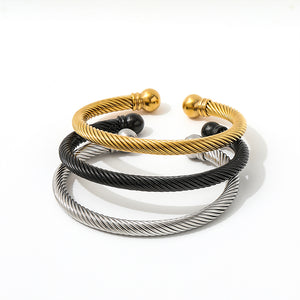

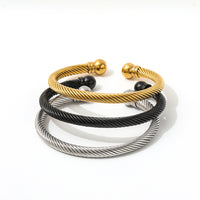
The piece they're describing → Kabelketten-Armreif für Damen – 18K vergoldet, offen, verstellbar
Personalize Yours


