


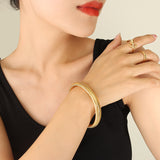
- Stretchy, no-clasp bracelets: 0.8mm+ stretch cord holds up best; thinner 0.5mm cord stretches out and snaps sooner.
- Knotted or clasped designs: braided nylon beading thread is stronger than stretch cord and won't sag over time.
- Heavy beads (gemstone, wood, large glass): nylon-coated beading wire, often sold as tiger tail, is the sturdiest option since it won't stretch or fray.
- Silk thread is the traditional choice for pearls knotted between each bead, but it's weaker than nylon and needs re-stringing more often.
- Cord diameter matters as much as material — match it to your bead hole size, since thicker cord generally survives more wear.
- Prefer a finished piece over a DIY project? AJLuxe's gold elastic bangle bracelet ($39.99) gives the stacked stretch-bracelet look already made, in 18K gold-plated sterling silver.
If you've stood in the beading aisle staring at spools of stretch cord, nylon thread, and beading wire wondering which one to grab, the honest answer is that the “best” string changes with what you're stringing and how you want the bracelet to wear. Below is a straight comparison of the five materials people actually use for bead bracelets, plus direct answers to the questions most searched alongside this one.
Bead Bracelet String Comparison
Stretch cord and nylon beading thread are the two most common choices, but beading wire and silk each solve a specific problem the other two can't.

| String Type | Best For | Stretches? | Clasp Needed? | Durability |
|---|---|---|---|---|
| Stretch/elastic cord | Stackable, slip-on bracelets | Yes | No | Moderate — degrades with sun, lotion, and repeated stretching |
| Braided nylon beading thread | Knotted patterns, seed bead work, clasped bracelets | No | Usually | High — resists fraying, holds knots well |
| Beading wire (tiger tail) | Heavy gemstone, wood, or glass beads | No | Yes, with crimp beads | Highest — won't stretch, fray, or rot |
| Silk thread | Pearls, knotted between each bead | Slightly | Usually | Lower — weaker than nylon, needs periodic restringing |
| Waxed cotton/linen cord | Wood, ceramic, or large-hole beads | No | Yes | Moderate — durable but bulkier, less refined finish |
What Thread Is Used for Bead Bracelets?
Most bead bracelets use either stretch (elastic) cord for slip-on styles or braided nylon beading thread for knotted and clasped designs. Nylon thread is the default for seed bead weaving and loom patterns because it's thin, strong, and doesn't stretch out of shape, while silk thread is reserved mainly for pearls that are knotted individually between beads. Waxed cotton or linen cord shows up on more rustic pieces with wood, ceramic, or large-hole beads, where a thicker, more textured cord suits the look. For a full breakdown of cord types and when to use each, see our guide to the best cord for bead bracelets.
What Is the Strongest Elastic for Bead Bracelets?
Thicker stretch cord in the 0.8mm-1mm range is the strongest elastic for bead bracelets, since it resists stretching out and snapping under repeated wear far longer than thin 0.5mm cord. Round stretch cord tends to hold its shape better than flat elastic over time, and running the cord through each bead two or three times (rather than once) meaningfully extends how long a stretch bracelet lasts before it needs restringing. Heat, sun exposure, and lotion or perfume all break down elastic cord faster, so storing stretch bracelets away from direct sunlight adds real wear life.
What Is the Strongest Thread for Bracelets?
Braided nylon beading thread is the strongest non-elastic thread for bracelets, holding up to knotting, tension, and everyday wear noticeably better than silk or plain cotton thread. It's the standard choice for anything strung with a clasp rather than stretched on, because it doesn't sag or stretch out the way elastic eventually does. For beads too heavy for any thread to carry safely — dense gemstone chips, large glass, or metal beads — nylon-coated beading wire is the sturdier option, since it's built to resist both stretching and fraying under load that would eventually cut through thread.
Which String Is Best for Making Bracelets?
For a first bracelet or a stack of simple slip-on styles, stretch cord is the best string to start with — it's forgiving, needs no clasp, and gets a finished look in minutes. Once you're working with a clasp, a repeating pattern, or beads heavier than lightweight glass, braided nylon thread or beading wire is the better call, since both hold up to years of wear where stretch cord eventually gives out. If stringing your own isn't the point and you just want the stacked, no-clasp bracelet look without the setup, AJLuxe's Gold Elastic Bangle Bracelet ($39.99) delivers that same stretch-fit, stackable style already made, in 18K gold-plated sterling silver that's hypoallergenic and gift-ready out of the box.

Frequently Asked Questions
What thread is used for bead bracelets?
Most bead bracelets use either stretch (elastic) cord for slip-on styles or braided nylon beading thread for knotted or clasped designs; silk thread is used for pearls, and beading wire (nylon-coated steel) is used for heavier gemstone or glass beads.
What is the strongest elastic for bead bracelets?
Thicker round or flat stretch cord in the 0.8mm-1mm range is the strongest elastic for bead bracelets — it resists stretching out and snapping under the weight of beads far longer than thin 0.5mm cord, especially when run through each bead two or three times.
Which string is best for making bracelets?
For most beginners, stretch cord is the easiest and best string for making simple slip-on bead bracelets, while braided nylon thread or beading wire is the better choice for bracelets with a clasp, pattern beads, or heavier stones that need to hold their shape.
What is the strongest thread for bracelets?
Braided nylon beading thread is the strongest non-elastic thread for bracelets, holding up to knotting and repeated wear better than silk or plain cotton thread; for maximum strength with heavy beads, nylon-coated beading wire outperforms any thread option.
Alle Marken, Markennamen und Produktnamen Dritter sind Eigentum ihrer jeweiligen Inhaber. AJLuxe steht in keiner Verbindung zu den in diesem Artikel genannten Marken Dritter und wird von diesen weder unterstützt noch gesponsert. Markennamen werden ausschließlich zur sachlichen vergleichenden Bezugnahme verwendet; Materialangaben entsprechen den eigenen veröffentlichten Produktangaben der jeweiligen Marke zum Zeitpunkt der Erstellung.
You Might Also Like

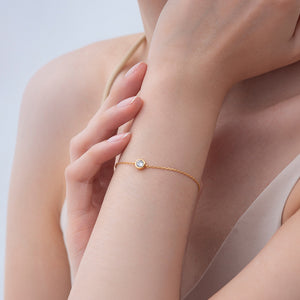
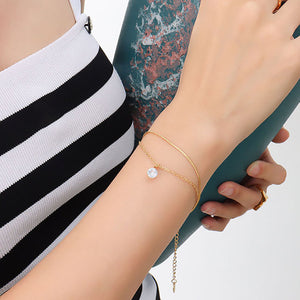
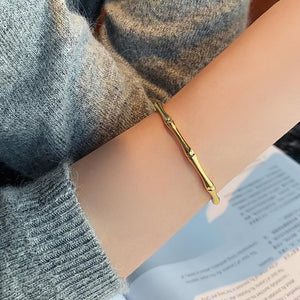
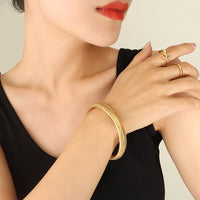
The piece they're describing → Elastisches Goldarmband für Frauen – 18K vergoldet, dehnbar, stapelbar
Personalize Yours


