


- A good stack mixes 3-5 pieces varying in width and texture — not one identical prepackaged set.
- Use an anchor-chain-accent formula: one wider cuff or bangle, then 1-2 slimmer chains layered around it.
- Odd numbers (3 or 5 pieces) read as more intentional than even-numbered stacks.
- Keep every piece in the same base metal — 925 sterling silver with matching 18K gold plating — so tone and tarnish rate stay consistent.
- Nickel-free, hypoallergenic pieces matter more in a stack, since more metal touches skin at once for longer.
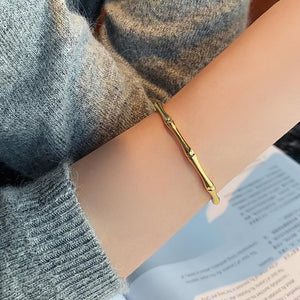
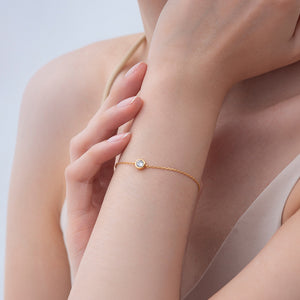
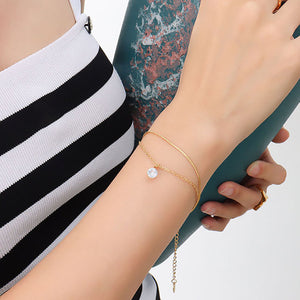
- AJLuxe's Bamboo Bangle Cuff Bracelet ($41.99) works as an anchor piece, layered with the CZ Chain Bracelet ($34.99) and Elastic Bangle Bracelet ($39.99).
“Bracelet stack set” makes it sound like something you buy in one box and clip on. In practice, the stacks that actually look good on real wrists are almost never one matched set — they're a handful of separately chosen pieces that someone built up over a few purchases. Below is the formula stylists actually use, a materials guide so you're not mixing metals that clash or irritate skin, and the mistakes that make an otherwise good stack look cluttered instead of curated.
What Makes a Good Bracelet Stack (vs. a Boxed Set)?
A good bracelet stack has visible contrast — different widths, different textures, one clear focal piece — while a boxed “stack set” is usually 3-5 bangles of the same width, finish, and metal sold together. The boxed version is fine as a cheap starting point, but because every piece is identical, it tends to sit flat on the wrist and move as one unit instead of layering. A built stack, by contrast, has a hierarchy: your eye lands on the widest or most textured piece first, then reads the slimmer pieces as support. That's the visual difference between “I bought a set” and “I put this together.”
How Many Bracelets Should You Stack?
Three pieces is the minimum for a stack to actually read as “stacked,” and odd numbers — three, five, occasionally seven — consistently look more balanced than even ones. Two bracelets tend to look like an accident; four or six can look symmetrical in a stiff, matched-set way. Three gives you room for an anchor, a chain, and an accent without crowding a smaller wrist, and five lets you add a second chain or a delicate extra layer once you're used to wearing a stack daily.
The Anchor-Chain-Accent Formula
Every stack that holds together visually is built in three roles, not three identical pieces: one anchor, one or two chain layers, and one optional delicate accent.

The Anchor Piece
The anchor is the widest or most textured piece in the stack, worn closest to the hand so it reads first. A bamboo-textured or hammered cuff does this job well because its surface catches light differently than a smooth chain sitting next to it — AJLuxe's Bamboo Bangle Cuff Bracelet ($41.99), in 18K gold-plated 925 sterling silver, is built specifically to anchor a stack rather than stand alone.
The Chain Layer(s)
Chain layers are slimmer pieces that add movement and shine without competing with the anchor for attention. A textured or stone-set chain, like AJLuxe's CZ Chain Bracelet ($34.99), works as a second layer because the cubic zirconia catches light at a different angle than a plain cuff, and its adjustable S-chain closure means it sits at a slightly different length than the anchor piece — which is exactly the point. A plain stretch bangle, such as the Elastic Bangle Bracelet ($39.99), can sit as a third, simpler chain layer for stacks that need one calmer piece between two busier ones.
The Delicate Accent
The delicate accent is the thinnest piece in the stack, worn closest to the hand or layered loosely, and it's the piece most people skip entirely. A fine dainty chain adds movement without adding visual weight, which is why it should always be your last piece added, not your first.
Stacking Bracelet Materials Compared
| Material | Tarnish Risk | Skin Reaction Risk | Typical Price |
|---|---|---|---|
| Solid 14K/18K gold | Very low | Very low | $400+ |
| Gold vermeil (thick gold over sterling silver) | Low, with proper care | Low | $60-$150 |
| 18K gold-plated 925 sterling silver (AJLuxe's construction) | Low-moderate, longer-lasting than base-metal plating | Low — nickel-free | $24.99-$79.99 |
| Gold-plated base metal or brass | High — plating wears within months | Higher — often contains nickel | $10-$30 |
The reason this matters more for a stack than a single piece: pieces rub against each other constantly, which accelerates plating wear on cheaper base-metal jewelry. Sticking to 925 sterling silver as the base for every piece — plated or not — means the stack ages evenly instead of one piece flaking while the others hold up.
Common Bracelet Stacking Mistakes
The most common mistake is buying a matched set instead of building contrast, but a few others show up just as often:
- Stacking pieces of the same length. If every bracelet sits at the same spot on your wrist, the stack looks like one thick band instead of layers.
- Mixing rigid materials without spacing. Two stiff bangles worn back-to-back will pinch and click together with every movement; let a chain sit between rigid pieces.
- Wearing a full stack on your watch wrist. Keep the watch side minimal — one slim piece at most — and put the full stack on the opposite wrist.
- Ignoring metal consistency. Mixing a warm gold-plated piece with a cool, slightly different silver tone reads as mismatched rather than intentionally eclectic.
Can You Use an Ankle Chain as an Extra Bracelet Layer?
Yes — a dainty anklet works as an extra delicate layer on a bracelet stack, especially for a petite wrist that needs the additional length. Ankle chains are cut longer than most bracelet chains, so a delicate piece like AJLuxe's Dainty Beach Anklet ($33.99) can be wrapped once loosely around a small wrist as a soft, thin fourth layer behind a cuff and chain, rather than pulled tight the way a proper bracelet is. It's not a substitute for a true bracelet stack's anchor piece, but it's a genuinely useful trick if your existing stack feels like it's missing one more delicate line without adding bulk.
18K gold plating option
Nickel-free, safe for daily wear
Boxed, no extra charge
Insured shipping, easy returns
Which Stacking Pieces Should You Start With?
Start with one anchor and one chain — the Bamboo Bangle Cuff Bracelet ($41.99) paired with the CZ Chain Bracelet ($34.99) — before buying a third piece, since that two-piece base already has the width contrast and shine contrast a stack needs, and it's easier to judge what's missing once you're actually wearing it than to guess from a product photo. Both are 18K gold-plated 925 sterling silver, hypoallergenic, and arrive gift-boxed, so they match each other in tone and in how they'll wear over time. Add the Elastic Bangle Bracelet ($39.99) as a third layer once you've settled on how full you want the stack, or the anklet as a delicate fourth if your wrist is on the smaller side.

For more on nickel allergy and choosing hypoallergenic jewelry, see the American Academy of Dermatology: aad.org.
Frequently Asked Questions
How many bracelets should be in a stacking set?
Three to five bracelets is the range that reads as an intentional stack rather than clutter, with odd numbers looking more balanced than even ones. Start with three — one anchor and two accents — and add a fourth or fifth once you know how much weight and movement you're comfortable wearing.
Do stacked bracelets tangle or get twisted?
Chains can tangle with each other if they're similar lengths and both very fine, but a mix of a rigid cuff, an adjustable chain, and a stretch bangle rarely tangles because each piece moves differently. Spacing out chain lengths by at least half an inch, rather than stacking two identical-length chains, is the simplest fix.
What metal is best for stacking bracelets?
925 sterling silver, either plain or 18K gold-plated, is the safest base for a stack because pieces rub against each other constantly and a nickel-free base metal won't react with skin over hours of contact. Cheaper base-metal or brass plating tends to wear faster in a stack specifically because of that constant friction between pieces.
Can you shower or swim with a stacked bracelet set on?
It's best to remove plated jewelry before showering, swimming, or applying lotion, since repeated exposure to water, chlorine, and skincare products wears down gold plating faster over time. Solid sterling silver pieces tolerate brief water exposure better than plated ones, but taking the whole stack off before water contact extends the life of every piece in it.
Is it OK to mix gold and silver in a bracelet stack?
Yes, mixing gold and silver tones in one stack is a current, deliberate styling choice rather than a mistake, as long as it's intentional rather than accidental. If you'd rather keep a cleaner look, stick to one tone — like an all-gold-plated stack — so nothing reads as mismatched instead of layered.
How do I stop stacked bracelets from sliding down my wrist?
A snug-but-not-tight anchor piece, worn closest to the hand, keeps the rest of the stack from sliding toward your fingers during the day. Adjustable chains, like an S-chain closure, let you fine-tune fit so the whole stack sits at the same general spot rather than migrating at different rates.
You Might Also Like

The piece they're describing → Bambus-Armreif für Frauen – 18K vergoldet, Manschettenarmreif, stapelbar
Personalize Yours


